Islamabad Turns a Fragile Peace into a Sales Pitch: The USD 10 Billion Ask from Washington
Islamabad seeks US $10 billion currency stabilization facility in return for Iran talks.
Total Views |


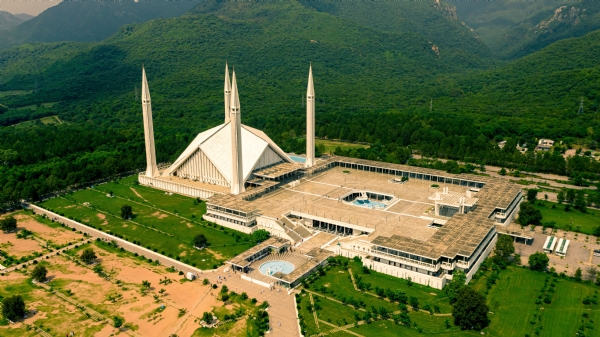
Barely a month after helping broker a short-lived ceasefire between the United States and Iran, Islamabad has walked into the US Treasury with a familiar item on its shopping list: money.
According to a Reuters exclusive published on 21 July 2026, Pakistan has formally asked Washington for a USD 10 billion Bilateral Exchange Stabilization Support Facility, structured as a five-year backstop that would give it access to dollars, swaps or guarantees whenever the Pakistani rupee comes under strain. The request landed on Treasury Secretary Scott Bessent's desk during Finance Minister Muhammad Aurangzeb's Washington visit. Neither side has publicly confirmed it and the US Treasury declined to comment.
The timing tells its own story. The pitch comes just weeks after the 17 June "Islamabad Memorandum of Understanding" between Washington and Tehran fell apart, with American strikes on Iran resuming in early July. Yet Islamabad is treating a broken agreement as the moment to cash in.
The instrument being requested is unusual. Exchange stabilization facilities are among the rarest tools in the US Treasury's kit. Aside from the long-standing USD 9 billion swap line with Mexico that dates back to the 1940s, the only comparable foreign-government arrangement since Uruguay in 2002 is the 2025 package for Argentina. Pakistan is essentially asking to be placed in the same bracket as a G20 economy, without the underlying credit profile.
That credit profile is precisely the problem. Since joining the Fund in 1950, Pakistan has been through 24 IMF programmes, one of the highest counts of any borrower globally. The current USD 7 billion Extended Fund Facility, along with a USD 1.3 billion climate resilience loan, has stabilised the Pakistani currency only by locking Islamabad into tax hikes, subsidy cuts and squeezed development spending. With all the social welfare cuts in a country with extreme poverty, the Pakistani state still found money to increase the budget of the Pakistani army, an establishment which practically owns the Islamic Republic.
That fragility is not theoretical. In April 2026, Pakistan had to repay roughly USD 3.5 billion to the United Arab Emirates (UAE), nearly one-fifth of Pakistan’s foreign reserves and stayed afloat only because Saudi Arabia rolled in USD 3 billion in fresh deposits. Pakistan’s foreign reserves, in other words, are borrowed reserves. Some analysts also observe that around USD 100 billion in external repayments fall due by 2027, against a debt-to-GDP ratio comfortably above 60 percent.
The deeper diagnosis comes from Pakistan's own analysts. Ayesha Siddiqa, senior fellow at King's College London and author of Military Inc., has long argued that Islamabad's cycle of bailouts is baked into a "hybrid state" where the army effectively runs the economy and structural reform is politically impossible. Pakistan has historically always been a rent seeking security state run by the Pakistani Army.
The Trump administration has already extended goodwill in unusual forms, a stablecoin arrangement with a Trump-family crypto affiliate, a memorandum on the Roosevelt Hotel in New York, and a USD 1.2 billion US Export-Import Bank line for the Reko Diq mine which is geographically placed in the disputed land of Balochistan.
But a backstop is not a strategy. Ten billion dollars does not buy Pakistan a new economic model, it only buys time till the dawn of the next economic crisis.