Russia charges Telegram founder Pavel Durov for ‘aiding terrorism,’ places him on international wanted list
Total Views |


Russia has escalated its confrontation with Telegram by charging the messaging platform's founder, Pavel Durov, with aiding terrorist activity and placing him on an international wanted list, a move that could expose the billionaire entrepreneur to life imprisonment if convicted under Russian law.
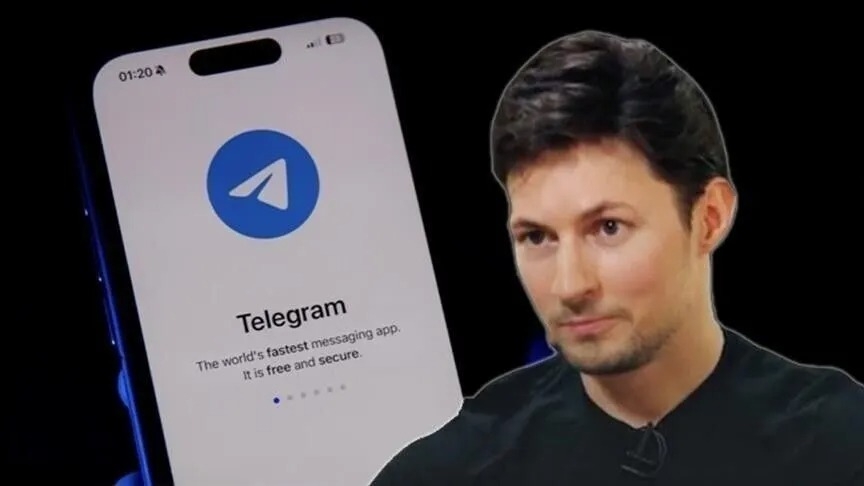
The charges were announced by Russia's Federal Security Service (FSB), which accused Telegram of failing to remove channels, chat groups and bots allegedly used by Ukrainian intelligence agencies, extremist organisations and cybercriminals to coordinate sabotage, terrorist attacks and online fraud within Russia.
According to the FSB, the investigation has been registered under Part 1.1 of Article 205.1 of Russia's Criminal Code, which deals with aiding or facilitating terrorist activity. The agency alleged that despite repeated warnings, Telegram's administration failed to act against accounts involved in planning attacks and recruiting individuals for criminal activities.
Among the allegations is the use of a popular Telegram dating chatbot, Dayvinchik, which investigators claim was exploited to recruit Russians aged between 12 and 22 for arson attacks and assaults on law enforcement personnel. Russian authorities said that since July 2025, 46 people across 10 regions have been detained in connection with these alleged recruitment efforts.
The charges represent the latest chapter in the Kremlin's long-running battle with Telegram, one of Russia's most widely used messaging platforms.
Who is Pavel Durov?
Born in 1984, Pavel Durov is a Russian-born technology entrepreneur often referred to as the "Russian Mark Zuckerberg." He founded VKontakte (VK), Russia's largest social networking platform, before launching Telegram. He left Russia in 2014 following disputes with authorities over user data and currently lives in Dubai.
Born in Russia in 1984, Pavel Durov founded the social networking platform VKontakte (VK) before launching Telegram in 2013. He left Russia in 2014 after refusing to provide user data to Russian authorities and later acquired French and UAE citizenship. He currently operates Telegram from Dubai.
Earlier this year, Durov disclosed that Russian authorities had quietly initiated criminal proceedings against him, accusing the Kremlin of using fabricated pretexts to suppress privacy and freedom of expression.
"Every day, the authorities come up with new pretexts to restrict Russians' access to Telegram, seeking to suppress the right to privacy and freedom of speech," Durov had said.
Russia has steadily tightened restrictions on Telegram since 2025 as part of broader efforts to regulate the internet following the Ukraine conflict. Users increasingly rely on Virtual Private Networks (VPNs) to access the platform, while the Russian government promotes its state-backed messaging application, MAX, as an alternative.
Legal troubles beyond Russia
The Russian case adds to Durov's mounting legal challenges overseas.
In 2024, French authorities arrested him in Paris over allegations that Telegram failed to adequately moderate content related to drug trafficking, money laundering and child sexual abuse material. After spending several months under judicial supervision, Durov returned to Dubai in early 2025.
In 2024, French authorities arrested him in Paris over allegations that Telegram failed to adequately moderate content related to drug trafficking, money laundering and child sexual abuse material. After spending several months under judicial supervision, Durov returned to Dubai in early 2025.
Although Russia has now placed him on an international wanted list, legal experts believe extradition remains unlikely because Durov currently resides in the United Arab Emirates, which has no straightforward extradition arrangement with Moscow for such cases.
The latest action nevertheless signals Moscow's continued push to tighten control over digital platforms and hold technology companies accountable for content shared on their services.
Telegram's controversial role: Security concerns and criminal misuse
Telegram has often found itself at the centre of global debates over privacy, encryption and online safety. While the platform is widely used by journalists, activists and ordinary users because of its privacy features, security agencies across several countries have repeatedly flagged its misuse by terrorist organisations, cybercriminals, drug traffickers and extremist groups.
Its ability to host large public channels, anonymous groups and bots has made it attractive for disseminating propaganda, coordinating illegal activities and circulating pirated or sensitive content. Governments in multiple jurisdictions have urged Telegram to strengthen content moderation while balancing user privacy and freedom of expression.
India and Telegram: NEET paper leak and temporary restrictions
Telegram came under intense scrutiny during the NEET-UG 2026 paper leak controversy, with investigators alleging that organised cheating networks used Telegram channels to circulate fake question papers, answer keys and misleading claims ahead of the re-examination. To prevent the spread of leaked material and misinformation, the Centre temporarily restricted Telegram across India until June 22, covering the June 21 NEET-UG re-exam.
The episode also revived concerns from the NEET-UG 2024 paper leak case, in which investigators found that encrypted messaging platforms, including Telegram, were used by criminal networks to share leaked exam material and coordinate with candidates. Although Telegram has not been banned in India, the platform continues to face regulatory scrutiny over its role in facilitating illegal activities and the spread of unlawful content.