A Family doctor
NewsBharati 04-Jul-2026 13:09:07 PM
Total Views |


"The good physician treats the disease; the great physician treats the patient who has the disease."
— William Osler
Those were the days
Good old days, life was much simpler, food and water were pure, and we hardly knew what air pollution was. One could just get down at a railway station and fill up a ‘surahi’ or a bottle with tap water, and that would see you through your journey. Food on the platform was tasty and less oily, and we rarely found anyone down with ‘food poisoning’.
Most importantly, there was trust. You could trust a co-passenger, you could even share food with others that you brought from home. One was careful to keep the luggage safe, but you were not as concerned and alarmed as one is today. Fraud is in the air- trust has vanished.
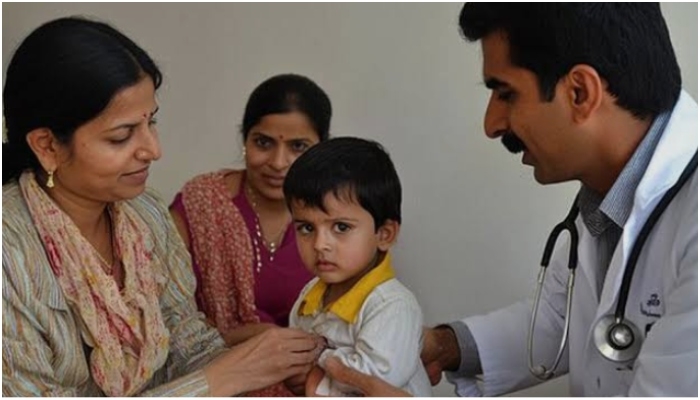
The healthcare system has also gone for a toss. You hear cases of unnecessary blood tests, CT scans, and many other complicated medical investigations being prescribed by doctors, which cost you a bomb. You do not know who is genuine and who is not.
Even serious ailments like heart disease are not spared. Researchers analysed around 2000 U.S. hospitals and found that 22% of coronary stents placed in Medicare patients met criteria for ‘overuse.’ It was actually not required in several cases. Even though there is a misuse of open-heart surgery. People view hospitals as ‘a money-making machine’ where doctors need to meet targets. All may not be bad, but the trust quotient is very low. Like people make a statement that all politicians are corrupt, this may be true to an extent, but not all can be put in one basket.
A family doctor of yesteryear
In the good old days, we had doctors who were GPs (general Practitioners) who did not have fancy degrees to flaunt, but they were the best for us. A family doctor was our friend, philosopher, and guide. You could go to his clinic, but he would come home if you request with a large leather bag with his usual medical paraphernalia. He would check your pulse, your tongue, your throat, your eyes, and your stomach. Using his stethoscope, he would examine the chest and back, tapping it lightly, giving instructions to inhale and exhale. If required, he would use a thermometer to check the temperature, looking into his simple wristwatch; he would satisfy himself with the medical examination and would tell you what was wrong and write down the prescription on a piece of paper and pack up his bag, and with a reassuring nod he would say ‘don’t worry, you will be fine in a week. Eat normal food, no spices or cold drinks.’ As he walked out, one of the family members would pick up his bag out of respect and see him off; of course, paying his fees as he got on to his scooter. ‘Beta, come and collect some medicine from the clinic later,’ he would say. The clinic was a two-man show, the doctor and his compounder sitting on a wooden stool in a small cabin at the back, making his mixtures and powders painstakingly, peeping out of a big hole-a window- in the wooden partition.
Unless the heavens fall, one would never go to a specialist.
"Wherever the art of medicine is loved, there is also a love of humanity." — Hippocrates
He is still important- in this chakravyu or maze of specialists sitting in a polyclinic.
Even today, he could be arguably the most vital point of contact in the healthcare ecosystem. While specialists are essential for deep dives into specific systems—like the heart, the skin, or the bones—the family doctor is the one who understands the whole human.
Think of them as the quarterback of your health, as in American football. They hold the "directory" for your entire medical history, factoring in your lifestyle, family genetics, and the nuances that an episodic visit to an urgent care clinic simply cannot capture. He is supposed to know each family member like the back of his hand.
Today, the medical maze is very complex, and for the common man, it could be overwhelming. He is your first line of defence, like a front-end processor of a mainframe computer. He acts like a filter.
Unlike a specialist you might see once, your family doctor tracks your trends over time. They notice the subtle shifts—a slight rise in resting heart rate or a persistent change in mood—that might signal a problem long before it becomes a crisis. He is like a mother knowing her child.
Visiting specialists is like going from one window to the other in a government department- tareek pe tareek. Some people are rude enough to say ‘bhai inke chakkar main phass gaye to nikalna mushkil hai’ (once you get into their net, it is difficult to get out). From Dr Sharma to Varma, to Kohli, to Desai, you can lose track of who said what.
A family doctor knows you, and you know him, one on one. He knows your history, your job stress, and your environment. When you go in with a headache, he is not treating the pain alone; he can evaluate whether it’s tension from your workload, a dietary issue, or something that warrants a deeper look by a specialist. They are skilled at managing common ailments and chronic conditions (like BP, diabetes, or rash) while knowing exactly when to refer you to a specialist. They prevent you from getting lost in the healthcare system. They also know which doctor is the best in town.
He is your medical advisor, like a financial advisor to handle financial instruments. Which stock to buy, where to invest, or when to buy gold, and manage your entire portfolio.
A medical advisor or your family doctor acts as a partner in longevity. He focuses on vaccinations and lifestyle modifications that keep you out of the hospital in the first place.
Most important is the “trust,” which is priceless. In today’s con world, you need someone you can trust. You get so much ‘sukoon’ or comfort once you know you are in the right hands and who will hand you over to another pair of right hands.
"A doctor’s greatest tool is not the stethoscope. It is the ability to listen when a patient speaks." — Knya
Virender Kapoor
A thinker, educationist and an inspirational guru. Kapoor is an Indian who wears many hats. An educationist of repute, he was the Director of a prestigious management Institute under the Symbiosis umbrella. He has emerged as a leading think tank in human behavior, motivation and success. As a celebrity author, his name appears with the likes of Thomas Friedman and Dale Carnegie. He has authored more than 30 books as of now which are on Amazon worldwide and several of his books are in the pipeline.