"Dear Indra, Please Update Your India"
Some nations become great because everyone walks in a straight line. India became great because millions took different paths towards the same destination and built the same civilisation.
Total Views |


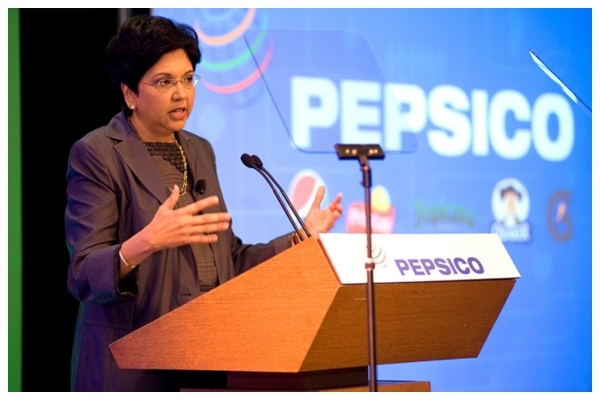
Former PepsiCo CEO Indra Nooyi has sparked controversy after describing India as a "chaotic country," citing scenes of cows on roads, congested traffic and apparent disorder while comparing India with China. Her remarks have triggered sharp criticism and a heated debate on social media. Here is an open letter by a Bharatiya to Indra Nooyi.
Dear Indra Nooyi,
We know. We live here. But here's a small request. The next time you describe India, kindly update your software.
The version you seem to be running is at least three decades old. You compared India with China. That's a fashionable comparison these days. China impresses the world with order. India exhausts the world with argument. China demonstrates discipline. India demonstrates democracy. One country prefers uniformity. The other cannot even agree on what to eat for breakfast. It is noisy. It is untidy. It is gloriously inconvenient. And yet, every few years, the same noisy democracy surprises those who mistake disorder for decline.
Dear Indra,
You also said you could never have become a CEO in India. Had you said that in 1988, we might have accepted it without protest. India then was a different country. Opportunity travelled slowly. Talent often stood in long queues behind bureaucracy. The economy was still learning how to breathe. But India of 2026 is not waiting outside anybody's office asking for permission to dream.
Today, Indian women lead banks, technology companies, research institutions, global businesses and billion-dollar startups. They command fighter aircraft, build satellites, negotiate international deals and manage enterprises spread across continents. Is India perfect? Not even close. Does discrimination still exist? Certainly. Should merit travel faster than it sometimes does? Without question. But saying India cannot produce or reward excellence today is like visiting a modern airport and complaining that the bullock cart is too slow.
Dear Indra,
Messy. Complicated. Sometimes contradictory. Sometimes frustrating. Often inspiring. Always impossible to ignore. Perhaps that explains why the world's biggest companies continue expanding in India despite complaining about traffic. They somehow survive our potholes. In fact, they survive them so successfully that they keep investing billions more. Apparently, corporate boardrooms are less frightened by Indian chaos than social media commentators are. Curious, isn't it?
There is an old management principle. If a system consistently produces good outcomes, perhaps the system deserves closer examination before being dismissed. India's system certainly tests everyone's patience. It also produces something rather extraordinary. A society where a vegetable vendor accepts digital payments. A startup founded in a small town competes globally. Young entrepreneurs build companies that serve millions. Scientists send missions into space. Engineers run technology giants. Doctors treat patients across continents. And yes, a nation that argues endlessly somehow still manages to move forward. Not because it is orderly. But because it refuses to stop.
Dear Indra,
It welcomes advice, not certification. And it certainly doesn't measure its confidence by the opinion of even its most distinguished daughters. So, the next time you visit, don't spend all your time looking at our traffic. Look at our airports. Our startups. Our laboratories. Our digital revolution. Our young entrepreneurs. Our confidence. You may still find India chaotic. Most of us do. The difference is that we no longer mistake chaos for weakness. Because history has taught us something remarkable.
Some nations become great because everyone walks in a straight line. India became great because millions took different paths towards the same destination and built the same civilisation.
Warm regards,
A happily chaotic Indian
P.S. Forgive the delay in publishing this letter. We were stuck behind a wedding procession, two political rallies and a cow. Oddly enough, the economy kept growing anyway.
Dear Indra Nooyi,
We read your latest remarks on India with great interest. You called India chaotic. First, thank you for not calling it boring. Chaos is one allegation India has never bothered to deny. Yes, our roads sometimes look like a live experiment in behavioural science. Traffic signals are occasionally treated as polite suggestions. Wedding processions still believe they enjoy diplomatic immunity.
A lone cow can command greater respect than a traffic constable. During festivals, google maps quietly gives up and leaves everything to divine intervention.
We know. We live here. But here's a small request. The next time you describe India, kindly update your software.
The version you seem to be running is at least three decades old. You compared India with China. That's a fashionable comparison these days. China impresses the world with order. India exhausts the world with argument. China demonstrates discipline. India demonstrates democracy. One country prefers uniformity. The other cannot even agree on what to eat for breakfast. It is noisy. It is untidy. It is gloriously inconvenient. And yet, every few years, the same noisy democracy surprises those who mistake disorder for decline.
Dear Indra,
You also said you could never have become a CEO in India. Had you said that in 1988, we might have accepted it without protest. India then was a different country. Opportunity travelled slowly. Talent often stood in long queues behind bureaucracy. The economy was still learning how to breathe. But India of 2026 is not waiting outside anybody's office asking for permission to dream.
ALSO READ: Pak’s Bulldozer Justice: Preaching Human Rights, Demolishing Gurdwaras
Dear Indra,
There is another charming tradition among successful Indians settled abroad. Every now and then, they return home carrying two suitcases. One contains gifts. The other contains unsolicited advice. The advice rarely changes. "The roads are bad." "The system is inefficient." "The people are noisy." "The traffic is impossible." We usually smile politely. Because no Indian has ever stepped out of Mumbai airport expecting Zurich. We don't wake up every morning hoping to become Singapore by lunchtime. India has never tried to become a photocopy of another nation. It has stubbornly insisted on remaining itself.
ALSO READ: ATS Cracks Down on Alleged JeM Network Across Gujarat and MP, Eight Arrested
Dear Indra,
Please continue criticising India. Confident nations should welcome criticism. Tell us to improve our cities. Tell us to make bureaucracy simpler. Tell us to create even greater opportunities for women.
Tell us to become cleaner, faster and more efficient. We'll happily take those suggestions. Just don't confuse a country that is unfinished with a country that is incapable. The India you remember helped shape your journey. The India of today is busy shaping its own. It seeks partnership, not validation.
Some nations become great because everyone walks in a straight line. India became great because millions took different paths towards the same destination and built the same civilisation.
Warm regards,
A happily chaotic Indian
P.S. Forgive the delay in publishing this letter. We were stuck behind a wedding procession, two political rallies and a cow. Oddly enough, the economy kept growing anyway.