Why Does Trump See Marx In Modern America ?
NewsBharati 07-Jul-2026 13:44:57 PM
Total Views |


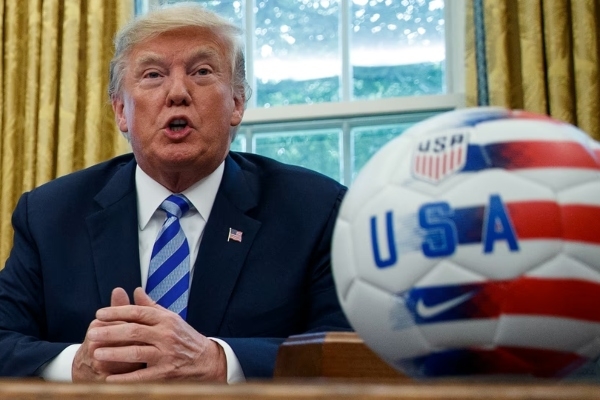
When President Donald Trump chose the 250th anniversary of American Independence to warn against Communism, the symbolism was striking. Trump has been attacking Communism for the past few months. His campaign slogan aimed at his conservative base.Trump is invoking Communism not merely to revive an old ideological battle but to frame contemporary American politics as a contest between constitutional capitalism and an expanding state. By warning against socialist, he seeks to mobilise conservative America around ideological clarity.
But the debate he has reignited extends far beyond the United States. It raises a larger question that has shaped global politics for more than a century, which is why has Communism repeatedly failed to deliver the promises it made, and why have democratic societies continued to outlast revolutionary regimes?
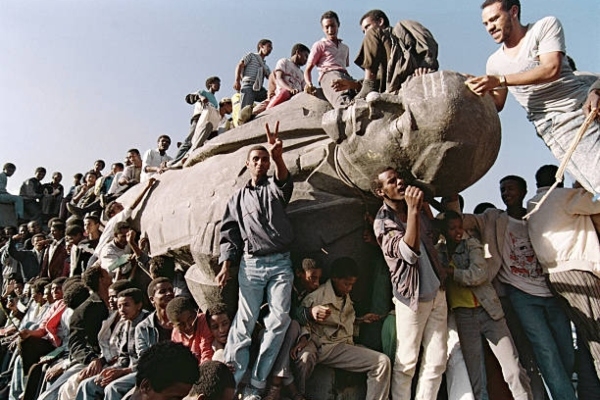
The twentieth century witnessed Communism emerge as one of the most influential political ideologies. From the Soviet Union to Eastern Europe, from China to Cuba and Vietnam, Communist movements promised equality, justice and a classless society. The dream appealed to millions who suffered poverty, inequality and exploitation. But, wherever Communist governments consolidated absolute power, political freedom became the first casualty. One-party rule, suppression of dissent, censorship, arbitrary imprisonment and economic centralisation became defining characteristics of Communist states.
ALSO READ: Delhi HC Steps In as Gymkhana Club Challenges Eviction Notice
Communist parties across the world gradually realised another uncomfortable truth: armed revolution was neither sustainable nor acceptable in modern societies. Instead of seizing power through violent uprisings, many were forced to abandon the path of revolution and enter electoral politics. They now contest elections, seek public mandates and function within constitutional democracies. This transformation is perhaps democracy's greatest victory. An ideology once committed to overthrowing democratic institutions now depends on those very institutions for its political survival.
This evolution is visible in many countries, including India. Parties that once celebrated revolution today participate in Parliamentary debates, coalition politics and electoral campaigns. The ballot has replaced the bullet. The Constitution has replaced the manifesto of violent class struggle. Democracy did not eliminate ideological differences but it absorbed them into a peaceful political process.
Trump's criticism of Communism, therefore, resonates with a historical reality, even if his rhetoric is often polarising. His argument reflects a broader recognition that free societies, despite their imperfections, possess an extraordinary ability to reform themselves. Democracies accommodate criticism, correct policy failures through elections and permit ideological competition without destroying constitutional order. Communist systems, by contrast, historically concentrated power to such an extent that peaceful correction became almost impossible.
None of this suggests that democracies are flawless. They face inequality, corruption, political polarisation and economic distress. However, democratic systems possess built-in mechanisms for self-correction. Governments can be voted out. Courts remain independent. The media, civil society and citizens continuously challenge authority. These checks and balances have enabled democratic nations to adapt and survive.
ALSO READ: Ramraksha or Paksharaksha?
The global decline of Communist influence over the past three decades reflects this reality. Many Communist parties have moderated their positions, embraced market reforms or accepted constitutional democracy as the only legitimate path to power. Even where Communist governments continue to rule, they increasingly rely on economic liberalisation and global integration rather than orthodox Marxist economics. Ideological purity has yielded to political pragmatism.
Trump's remarks should therefore be viewed in the historical context rather than merely through the prism of American electoral politics. The history of Communism is, in many ways, the history of an ideology that confronted only two options which was either change or perish. Democracy left it with little alternative. Unable to overthrow democratic systems through revolution, Communist parties gradually abandoned that strategy and sought relevance through electoral politics. What began as a doctrine determined to dismantle democracy ultimately became dependent on democratic institutions for its own survival.
The journey of Communist movements, which began from revolution to participation in elections is itself testimony to that transformation. That is why the most significant lesson is not about Donald Trump alone. It is about the enduring strength of democracy. Its greatest achievement is not merely defeating rival ideologies on the battlefield, but persuading them to lay down the gun, accept the ballot, and seek legitimacy through the consent of the people. Few political systems can claim a greater victory than that.

Editor's Desk
Editor's Desk