Child Abuse Does Not Know Muslim Personal Law
NewsBharati 08-Jul-2026 14:03:02 PM
Total Views |


The Allahabad High Court recently refused to quash criminal proceedings in a case involving allegations under the Protection of Children from Sexual Offences (POCSO) Act, despite arguments based on Muslim Personal Law. The Court held that no personal law can override parliamentary statutes enacted to protect children. The POCSO Act and the Prohibition of Child Marriage Act prevail over any conflicting religious or customary practice.
 Much of the public debate on this issue arises from a misunderstanding of the distinction between personal law and criminal law. Personal laws regulate civil relationships such as marriage, divorce, inheritance, succession and maintenance. Criminal law, on the other hand, protects society from acts considered offences against the State and the individual. Sexual assault, rape, trafficking and child abuse are crimes not matters of personal faith or community practice. Consequently, criminal law applies uniformly to every citizen irrespective of religion.
The Allahabad High Court has merely reiterated this settled constitutional principle. A girl below eighteen years remains a child under the POCSO Act. Her legal status does not change because a particular personal law presumes puberty at an earlier age or recognises marriage under different conditions. Parliament has consciously fixed eighteen as the threshold for child protection. Courts cannot permit personal law to dilute that protection.
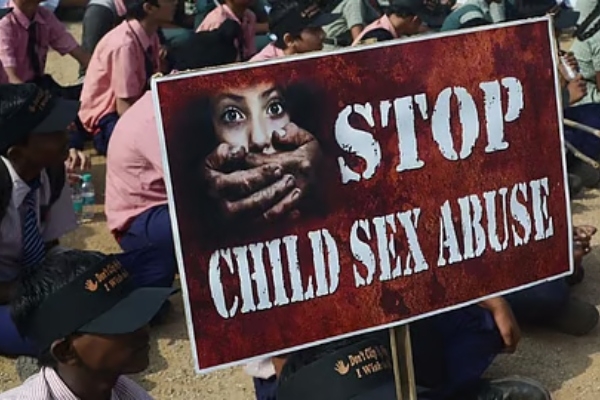 The impact extends beyond individual families. Child marriage perpetuates poverty, poor nutrition, high maternal mortality, infant mortality and low female workforce participation. It weakens national development by denying millions of girls the opportunity to become educated, skilled and economically productive citizens. Protecting children is therefore not merely a welfare measure but an investment in India's future.
The POCSO Act was enacted precisely to eliminate ambiguity. Parliament intended that every child below eighteen should enjoy identical legal protection irrespective of caste, religion or region. Allowing personal laws to create exceptions would destroy the uniformity that Parliament deliberately established. Criminal law cannot have different meanings for different communities. Such an approach would strike at the heart of Article 14 of the Constitution, which guarantees equality before the law and equal protection of the laws.
The judgment also strengthens the constitutional philosophy underlying the Uniform Civil Code. Although Article 44 deals with civil laws governing marriage, divorce, succession and inheritance, the present ruling demonstrates an important principle - where constitutional values and statutory rights conflict with discriminatory personal laws, constitutional values must prevail. India's personal law system was inherited from a different historical context. While freedom of religion remains a right, it was never intended to legitimise practices inconsistent with constitutional guarantees of equality, dignity and justice. Personal law cannot become a parallel legal system immune from constitutional scrutiny.
Experience has shown that different personal laws often produce unequal outcomes, particularly for women and children. Equality cannot depend upon the religion into which a citizen is born. A modern constitutional democracy cannot accept different standards of justice for different communities. Uniformity in civil rights does not threaten religious freedom; rather, it strengthens citizenship by ensuring that every Indian enjoys identical legal protection.
Several BJP-governed states have already initiated measures towards implementing aspects of the Uniform Civil Code. These efforts have naturally generated political debate, but they reflect a constitutional objective explicitly mentioned in Article 44. Reform of personal laws should proceed through democratic legislation and judicial scrutiny, guided solely by constitutional values rather than electoral considerations. Every step that reduces legal discrimination deserves support.
The Allahabad High Court has therefore done much more than interpret two statutes. It has reaffirmed the supremacy of Parliament, the primacy of the Constitution and the principle that child protection admits no religious exemption. The message is clear: personal law cannot be permitted to override criminal law enacted for the welfare of children.
The logical destination of this constitutional journey is equally clear. India must progressively move towards a legal framework where equality before law is not qualified by religion. Personal laws that perpetuate discrimination or conflict with constitutional rights require reform. The Uniform Civil Code is not about imposing uniformity in faith; it is about guaranteeing uniformity in justice.
The Constitution does not recognise unequal citizenship. Nor should the law. The Allahabad High Court's judgment is, therefore, not only a victory for child rights but also another significant step towards a more equal, modern and constitutionally consistent India.
The case involved a minor Muslim girl, who was allegedly subjected to repeated sexual assault after being married and later forced into nikah halala. The accused argued that the marriage was valid under Muslim Personal Law and sought quashing of the FIR. Rejecting this plea, the Allahabad High Court held that the POCSO Act and the Prohibition of Child Marriage Act override any contrary personal law.
The judgment deserves to be welcomed not merely because of its legal reasoning but because it reaffirms a foundational principle of the Indian Republic that the constitution stands above every personal law. No religious custom, however ancient, can become a defence against a criminal offence. When Parliament criminalises an act in the interest of protecting children, every citizen is equally bound by that law.
ALSO READ: Gujarat HC Upholds Death Sentence to 38 For Terrorist Attack
The Allahabad High Court has merely reiterated this settled constitutional principle. A girl below eighteen years remains a child under the POCSO Act. Her legal status does not change because a particular personal law presumes puberty at an earlier age or recognises marriage under different conditions. Parliament has consciously fixed eighteen as the threshold for child protection. Courts cannot permit personal law to dilute that protection.
This distinction is critical because child marriage is not a harmless social custom. It carries devastating consequences for girls and for society itself. Girls married before adulthood are far more likely to discontinue education, lose economic independence, suffer repeated pregnancies at a young age, face maternal health complications and remain vulnerable to domestic violence. Childhood is replaced by responsibility before physical, emotional and intellectual maturity has developed.
The POCSO Act was enacted precisely to eliminate ambiguity. Parliament intended that every child below eighteen should enjoy identical legal protection irrespective of caste, religion or region. Allowing personal laws to create exceptions would destroy the uniformity that Parliament deliberately established. Criminal law cannot have different meanings for different communities. Such an approach would strike at the heart of Article 14 of the Constitution, which guarantees equality before the law and equal protection of the laws.
The judgment also strengthens the constitutional philosophy underlying the Uniform Civil Code. Although Article 44 deals with civil laws governing marriage, divorce, succession and inheritance, the present ruling demonstrates an important principle - where constitutional values and statutory rights conflict with discriminatory personal laws, constitutional values must prevail. India's personal law system was inherited from a different historical context. While freedom of religion remains a right, it was never intended to legitimise practices inconsistent with constitutional guarantees of equality, dignity and justice. Personal law cannot become a parallel legal system immune from constitutional scrutiny.
ALSO READ: No Advocate Can Claim Out-of-Turn Listing as a Matter of Right: Madras HC
Several BJP-governed states have already initiated measures towards implementing aspects of the Uniform Civil Code. These efforts have naturally generated political debate, but they reflect a constitutional objective explicitly mentioned in Article 44. Reform of personal laws should proceed through democratic legislation and judicial scrutiny, guided solely by constitutional values rather than electoral considerations. Every step that reduces legal discrimination deserves support.
The Allahabad High Court has therefore done much more than interpret two statutes. It has reaffirmed the supremacy of Parliament, the primacy of the Constitution and the principle that child protection admits no religious exemption. The message is clear: personal law cannot be permitted to override criminal law enacted for the welfare of children.
The logical destination of this constitutional journey is equally clear. India must progressively move towards a legal framework where equality before law is not qualified by religion. Personal laws that perpetuate discrimination or conflict with constitutional rights require reform. The Uniform Civil Code is not about imposing uniformity in faith; it is about guaranteeing uniformity in justice.
The Constitution does not recognise unequal citizenship. Nor should the law. The Allahabad High Court's judgment is, therefore, not only a victory for child rights but also another significant step towards a more equal, modern and constitutionally consistent India.

Editor's Desk
Editor's Desk