Girish Mahajan's 'Black Day' remark revives debate: What G.B.S. Sidhu's book reveals about Operation Blue Star
NewsBharati 09-Jul-2026 16:20:47 PM
Total Views |


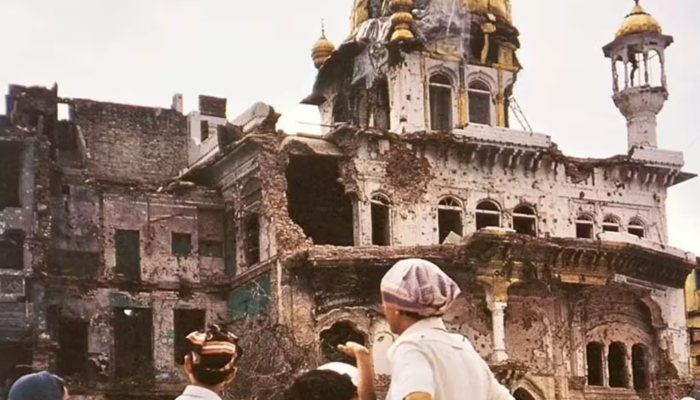
On the 10th of June, almost all the newspapers reported the statement made by Shri Girish Mahajan, a senior BJP leader and a minister in Maharashtra, in Amritsar. He described the Operation Blue Star day as a 'Black Day and those killed in action as 'Martyrs'. Obviously, he criticised the then Prime Minister Indira Gandhi ji; he even compared Operation Blue Star with the invasion of the Golden Temple by an Afghan ruler, Ahmad Shah Abdali.
For the first time, when we visited the Harmandir Saheb in Amritsar some 15 years ago, it was by chance a Shaheedi Divas. Kirtan was organised. Later read some articles and a book on the operation. A couple of years ago came across the book written by G B S Sidhu on the operation and the entire phenomenon, ' The Khalistan Conspiracy'. An IPS, a son-in-law of Sardar Swarn Singh, he worked with R&AW for 26 years and retired as a special secretary in 1998. He was involved in the merger of the princely state of Sikkim with the Indian Republic in 1975. He wrote a book on this chapter of the merger, too.
In his book 'Khalistan Conspiracy', he unfolds the events that led to the operation. He describes it as a conspiracy. The book was first published on 24th October 2020. It really shakes the conscience of any reader when reading.
He feels the objective assessment of Operation Blue Star ought to be shared with the nation. The reasons behind it, how it develops, and the objective of such a plan have to be brought to public discourse. The statements made by Shri Mahajan can be better understood in the light of the facts put forth by Shri Sidhu in his book.
He writes that in 1977, the Congress party lost state elections and the Akali and Janata Dal combine formed the government, but Giani Zail Singh and Sanjay Gandhi were trying to destabilise the coalition government. They took the support of Sant Jarnail Singh Bhindranwale in this endeavor and tried to plant pro-Khalistan ideas in the sikh psyche. It was a sort of operation to topple the Morarji Desai's government. In 1979, the one objective was fulfilled. After the support of Shri Charan Singh's government was withdrawn, Congress won the mid- term election in 1980. Giani Zail Singh became the president of the country.
For the next election, it was decided that by using Sant Bhindranwale, the party would create a rift between Hindus and Sikhs. The fear of Khalistan was to be planted in the minds of the majority community, that is Hindu. The strongest possible action was to be taken against Bhindranwale and his group. This would help Indira Ji to emerge as a strong and tall leader who saved the country by taking a courageous decision.
Around the same time, Sidhu was asked to brief R&AW officers at the headquarters on the concept of Khalistan. This, Sidhu writes, was Operation 2. Shri Sidhu was asked to visit Canada and the US.
Shri Raman presented a white paper on Khalistan and Sikh Extremism in early 1990. He stated that Sikhs never forgot the prestige and eminence of Maharaja Ranjit Singh's empire, and always wanted a similar era to return. This he related to the idea of Khalistan and blamed Sikh extremists.
_202607091709177319_H@@IGHT_400_W@@IDTH_700.jpg "Operation Blue Star")
Before 1980, only Jagjit Singh Chauhan was propagating the idea. Then he writes that before the January 1985 elections, Congress leaders had taken a conscious decision to create and then solve the issue of Khalistan to win it. He stated that ISI (the intelligence agency of Pakistan )chose to strengthen pro- Khalistan sentiments as a sort of retaliation for the loss in the Bangladesh war. Sidhu states that's probably the White Paper by Raman probably still exists even now in the department, but without his objections. He wrote the book to clear the cobwebs of disinformation or fictions and fabrications to an extent.
The author was posted to Canada after he completed his work in Sikkim by the end of February 1976.
Sikh immigration in Canada started around 1897; initially, most of them found jobs in farm-related and lumber-related areas. Later, they moved on to many other professions. They moved to the US too. During the Ghadar (rebellion) movement, around 3000 sikhs returned to Bharat.
Sidhu could build quite a large information bank in Canada. He had the knowledge of the problems of the people of Indian origin, especially of Punjabis and sikhs. He took note of external influence on the community, too. After 1977, the relation of the Janata Party and Canada government was not very warm.
There were several Gurudwaras in Canada; they were managed on the lines of Gurudwaras in Punjab. ( Gurudwaras usually are the centre of the activities of people attached to them ) The author observed that gradually they started working exclusively for sikhs, and discouraged Hindus to some extent. With the establishment of Gurudwaras, Granthis, Ragis, and Sevadars came from India, but the author specifically stated that the idea of Khalistan was totally unfamiliar in 1979, and so was the leadership of Bhindranwale.
He started building his contacts with the local sikh community. As Sidhu had good knowledge of Punjab affairs and Sikh history, he was often invited to give a short speech in the religious ceremonies. This helped him in his work too. Most of the Sikhs and Hindus there were first-generation immigrants, so they certainly wanted to have knowledge of developments in Punjab.
He observed that there were only 2 persons who openly affirmed and promoted pro-Khalistan views then, Kuldip Singh Sodhi and Jagjit Singh Chauhan (a professor). Jagjit Singh travelled in and out of India many times, wanted to keep the Khalistan movement alive, and died on 4th April 2007 in India.
Mahajan stated that Operation Blue Star was a military attack on the Holi shrine of Harmandir Sahib. Indira ji forcibly sent the army into the sacred place. He added that it caused deep pain to the community, that it was a deliberate act, and that nobody was punished.
For the first time, when we visited the Harmandir Saheb in Amritsar some 15 years ago, it was by chance a Shaheedi Divas. Kirtan was organised. Later read some articles and a book on the operation. A couple of years ago came across the book written by G B S Sidhu on the operation and the entire phenomenon, ' The Khalistan Conspiracy'. An IPS, a son-in-law of Sardar Swarn Singh, he worked with R&AW for 26 years and retired as a special secretary in 1998. He was involved in the merger of the princely state of Sikkim with the Indian Republic in 1975. He wrote a book on this chapter of the merger, too.
In his book 'Khalistan Conspiracy', he unfolds the events that led to the operation. He describes it as a conspiracy. The book was first published on 24th October 2020. It really shakes the conscience of any reader when reading.
It is really impossible to imagine that, to remain in power, our leaders would even go to this extent. He clearly mentions the names of the people involved and the plan.
ALSO READ: Lawrence Bishnoi, Goldy Brar "directed" killing of Khalistani extremist Nijjar, says US authorities arresting 24 from crime syndicate
He feels the objective assessment of Operation Blue Star ought to be shared with the nation. The reasons behind it, how it develops, and the objective of such a plan have to be brought to public discourse. The statements made by Shri Mahajan can be better understood in the light of the facts put forth by Shri Sidhu in his book.
He writes that in 1977, the Congress party lost state elections and the Akali and Janata Dal combine formed the government, but Giani Zail Singh and Sanjay Gandhi were trying to destabilise the coalition government. They took the support of Sant Jarnail Singh Bhindranwale in this endeavor and tried to plant pro-Khalistan ideas in the sikh psyche. It was a sort of operation to topple the Morarji Desai's government. In 1979, the one objective was fulfilled. After the support of Shri Charan Singh's government was withdrawn, Congress won the mid- term election in 1980. Giani Zail Singh became the president of the country.
For the next election, it was decided that by using Sant Bhindranwale, the party would create a rift between Hindus and Sikhs. The fear of Khalistan was to be planted in the minds of the majority community, that is Hindu. The strongest possible action was to be taken against Bhindranwale and his group. This would help Indira Ji to emerge as a strong and tall leader who saved the country by taking a courageous decision.
Around the same time, Sidhu was asked to brief R&AW officers at the headquarters on the concept of Khalistan. This, Sidhu writes, was Operation 2. Shri Sidhu was asked to visit Canada and the US.
Shri Raman presented a white paper on Khalistan and Sikh Extremism in early 1990. He stated that Sikhs never forgot the prestige and eminence of Maharaja Ranjit Singh's empire, and always wanted a similar era to return. This he related to the idea of Khalistan and blamed Sikh extremists.
Sidhu writes that he knew Sikh history in detail as he was a lecturer for 2 years before joining the IPS. He obviously put forth all the details about Ranjit Singh too, who donated gold to the Kashi Vishwanath temple along with a donation to Harmandir Sahib. Brought back the doors of the Dwarka temples, which Gazani carried away as a trophy. He wanted to offer the Kohinoor to Lord Jagannath at Puri. He also mentioned post independence, there was no demand for Khalistan by Sikhs. Renowned Martyrs like Bhagat Singh and Udham Singh did not lay their lives for Khalistan.
Before 1980, only Jagjit Singh Chauhan was propagating the idea. Then he writes that before the January 1985 elections, Congress leaders had taken a conscious decision to create and then solve the issue of Khalistan to win it. He stated that ISI (the intelligence agency of Pakistan )chose to strengthen pro- Khalistan sentiments as a sort of retaliation for the loss in the Bangladesh war. Sidhu states that's probably the White Paper by Raman probably still exists even now in the department, but without his objections. He wrote the book to clear the cobwebs of disinformation or fictions and fabrications to an extent.
The author was posted to Canada after he completed his work in Sikkim by the end of February 1976.
Sikh immigration in Canada started around 1897; initially, most of them found jobs in farm-related and lumber-related areas. Later, they moved on to many other professions. They moved to the US too. During the Ghadar (rebellion) movement, around 3000 sikhs returned to Bharat.
As per the 2011 census, more than 6 lakh sikh population is recorded in Canada; now the population is a little more than 7.77 lakh, which comprises 2.12% of the total population.
Sidhu could build quite a large information bank in Canada. He had the knowledge of the problems of the people of Indian origin, especially of Punjabis and sikhs. He took note of external influence on the community, too. After 1977, the relation of the Janata Party and Canada government was not very warm.
There were several Gurudwaras in Canada; they were managed on the lines of Gurudwaras in Punjab. ( Gurudwaras usually are the centre of the activities of people attached to them ) The author observed that gradually they started working exclusively for sikhs, and discouraged Hindus to some extent. With the establishment of Gurudwaras, Granthis, Ragis, and Sevadars came from India, but the author specifically stated that the idea of Khalistan was totally unfamiliar in 1979, and so was the leadership of Bhindranwale.
He started building his contacts with the local sikh community. As Sidhu had good knowledge of Punjab affairs and Sikh history, he was often invited to give a short speech in the religious ceremonies. This helped him in his work too. Most of the Sikhs and Hindus there were first-generation immigrants, so they certainly wanted to have knowledge of developments in Punjab.
He observed that there were only 2 persons who openly affirmed and promoted pro-Khalistan views then, Kuldip Singh Sodhi and Jagjit Singh Chauhan (a professor). Jagjit Singh travelled in and out of India many times, wanted to keep the Khalistan movement alive, and died on 4th April 2007 in India.

Prof. Vidya Deshpande
Professor Vidya Deshpande has had a journey of more than four decades in the field of education. Her main expertise is in the subject of Philosophy, and she has worked as a teacher of philosophy and logic with Nowrosjee Wadia college for 36 years. She has been associated with the Janakalyan Blood bank for last for 38 years and has also carried out the responsibility as a management committee member of Karve Stree Shikshan Sanstha for 10 years. Her special fields of interest are Philosophy of social sciences, school education, development of skills for self reliance, and top up skills to make students profession ready,