When Congress Takes India's Integrity Lightly
NewsBharati 09-Jul-2026 10:54:45 AM
Total Views |


The controversy over Congress spokesperson Dr. Ajoy Kumar referring to Sikkim as a "neighbouring country" should not be dismissed as an innocent slip of the tongue. Political leaders do make verbal mistakes, and no one is immune from an occasional lapse. But this episode deserves attention because it reflects something deeper than an individual's error. It raises questions about the intellectual training, historical awareness and national outlook of those who speak on behalf of the Congress party.
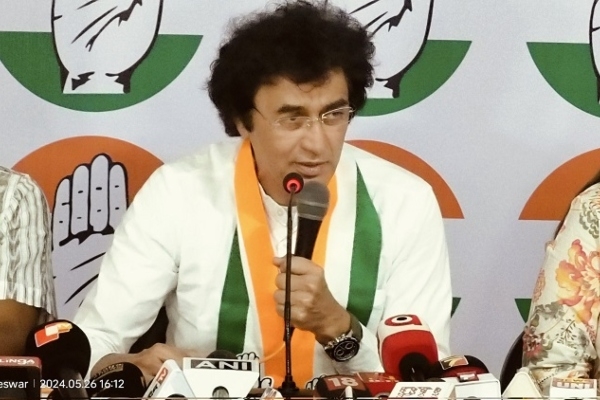
Dr. Kumar is not merely a private citizen. As an official spokesperson, he articulates his party's position before the nation. Such a responsibility demands familiarity with the geography, history and constitutional evolution of India. Forgetting that Sikkim has been an integral part of the Indian Union since 1975 is not a trivial oversight. Ironically, it was the Congress government that oversaw Sikkim's merger with India. A spokesperson representing that very party failing to remember this fact is both surprising and revealing.
ALSO READ: Mid-day meals to ISKON: HC asks govt. to file it's say
History provides enough examples. The Partition of 1947 remains the biggest setback to geographical integration in modern Indian history. While several factors might have contributed to partition, the Congress leadership ultimately accepted the division of the country as a political settlement. Barely fifteen years later came the Chinese aggression of 1962. India's humiliating defeat exposed serious failures in strategic assessment and national preparedness. Even more disturbing was the attitude that followed. The remark made by the then Prime Minister Jawaharlal Nehru shows the Congress's attitude. had then said that China had occupied a barren region "where not a blade of grass grows" came to symbolize a disturbing indifference towards every inch of Indian territory. National frontiers cannot be measured by economic value or vegetation. Every part of the nation carries equal sovereignty.
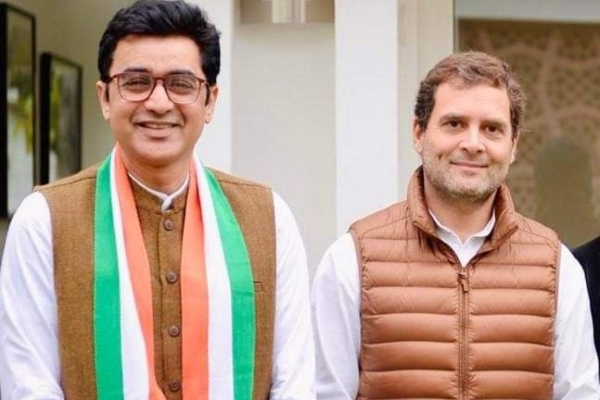
Underlying these episodes is an ideological difference about the very idea of India. The Congress and many intellectuals associated with it frequently describe India as merely a "Union of States," bound together by constitutional arrangements. Constitutionally, the expression appears in Article 1. But reducing India solely to a constitutional compact ignores the deeper civilisational reality that predates the Constitution by thousands of years. India did not come into existence in 1950. The Constitution gave legal expression to an ancient national civilisation that it did not create the nation itself.
India has always possessed a civilisational unity despite linguistic, regional and cultural diversity. Pilgrimage traditions, sacred geography, shared epics, philosophical traditions, trade routes and centuries of cultural exchange connected the subcontinent long before modern constitutional language was drafted. The Constitution recognised this continuity. It did not invent it. When political leaders fail to internalise this civilisational understanding, geographical errors become easier to make. If India is viewed merely as an administrative arrangement among states, emotional attachment to every part of its territory inevitably weakens. Sikkim then becomes just another name on a map rather than a proud chapter in India's national consolidation.
ALSO READ: No Advocate Can Claim Out-of-Turn Listing as a Matter of Right: Madras HC
The Congress would do well to introspect instead of treating the controversy as an unfortunate accident. A party that governed India for most of its independent history bears a greater responsibility to preserve historical memory, not dilute it. Its representatives should remember that Sikkim joined India under a Congress government, making the lapse even more difficult to explain. India today stands at a time when questions of national security, border management and territorial sovereignty have acquired unprecedented importance. Citizens expect political leaders to demonstrate seriousness, precision and pride while speaking about the nation. Casual references to India's map are no longer acceptable.
The Sikkim episode should therefore serve as a reminder that national integrity begins not only with military strength but also with intellectual clarity. A nation survives because its people recognise every part of it as their own. Indians must firmly reject ideas that reduce the country to a temporary constitutional arrangement. India is not merely a Union of States. It is an ancient nation whose constitution reflects an enduring civilisational unity. Those who aspire to lead it must first understand that fundamental truth.

Editor's Desk
Editor's Desk