India gets its first open-access ecoacoustic dataset, mapping 518 wildlife species through sound
Total Views |


NEW DELHI August 10 : India has taken a major step towards using sound to monitor biodiversity with the creation of the country’s first open-access, crowdsourced ecoacoustic dataset, bringing together recordings of 518 species across 25 states and Union Territories.
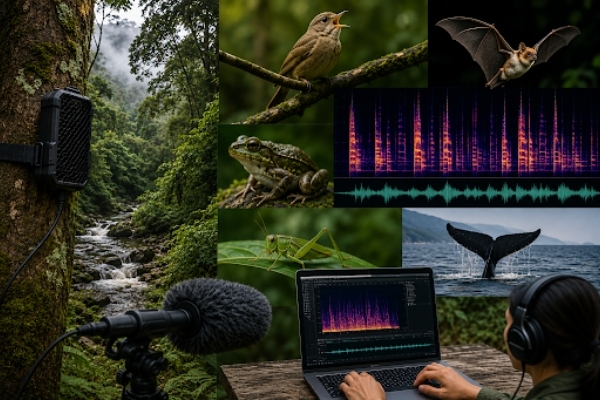
The dataset, published on July 21 on bioRxiv while undergoing journal review by Scientific Data, contains nearly 100 hours or 5,815 minutes of wildlife recordings collected from ecologically diverse regions, including the Western Ghats and the deciduous forests of the East Deccan.
A Sound Library Of India’s Wildlife
The recordings capture a wide range of sounds, with birds making up the largest share. The collection also includes calls and sounds from insects, frogs, bats, reptiles and marine animals.
Ecologists and volunteers listened to the recordings and identified the species behind individual sounds. Where possible, researchers also marked the precise timing and frequency of calls using spectrograms, which provide a visual representation of sound.
ALSO READ: Delhi’s ₹200-crore property fraud: How an elite lutyens’ bungalow became centre of an alleged scam
Of the total recordings, around 3,311 minutes have been precisely annotated with the timing and pitch of species calls, while another 2,504 minutes confirm species presence without detailed call annotation.
The project was developed by the Indian Ecoacoustics Network (IEN), which grew out of Project Dhvani, a collective started by ecologists during their doctoral studies at Columbia University.
Why India Needs Its Own Wildlife Sound Data
Ecoacoustics allows researchers to monitor wildlife without physically disturbing animals. Unlike traditional surveys that rely heavily on what researchers can see, sound recorders can continuously capture species activity, including sounds outside the range of human hearing.
The dataset could also help improve artificial intelligence systems used to identify wildlife. Researchers say many existing AI models, including BirdNET and Perch, are trained heavily on recordings from the Global North and can perform poorly in India's tropical ecosystems.
India's diverse soundscapes include endemic species, insects, weather disturbances and human-generated noise. Researchers therefore want AI models to learn from real-world Indian recordings, rather than only clean, isolated animal calls.
ALSO READ: Dating: Forbes confirms what Indian wisdom already knew
A Crowdsourced Scientific Resource
The project received contributions from 59 authors, with participants who submitted at least 30 minutes of usable recordings credited as co-authors. Independent experts also checked a random sample of the dataset, with 98% of the reviewed recordings found to be accurate.
Researchers believe the database could eventually help track changes in migration, animal behaviour and ecosystem health. Changes in rainfall, drought and water availability could potentially be detected through changes in wildlife calls.
The IEN plans to expand the dataset further, although the volunteer-driven project currently faces challenges involving storage, funding, annotation and verification.