Ambala Church Property Fraud: Forged power of attorney allegedly used to sell 2,529-sq-yard land; 15 named in FIR
The matter is particularly relevant in the wider context of scrutiny surrounding charitable and religious organisations that hold substantial immovable assets or receive public or foreign contributions.
Total Views |


A criminal case has been registered against 15 named persons and others in Ambala over the alleged fraudulent sale of church-owned property valued at several crores, raising questions over property management, documentation and financial accountability within religious trusts.
The allegations centre on a purported General Power of Attorney (GPA). According to the complaint, Joseph William allegedly registered a society called United Church of Northern India, Punjab Synod at Zira and prepared a forged GPA, which was registered with the Sub-Registrar at Ram Shahar in Himachal Pradesh on March 7, 2025. The complainant alleged that the document was subsequently used, along with the involvement of other accused persons and witnesses, to execute four sale deeds concerning the Ambala church property.
Four sale deeds allegedly executed
Two further transactions were allegedly executed on May 5. One involved 1,000 square yards valued at ₹25 lakh, transferred in favour of Navneet Aggarwal, Ankit and Digvijay, while another 1,000-square-yard parcel valued at ₹25 lakh was allegedly transferred to Jai Parkash Malhotra.
Ambala police have registered the case under several provisions of the Bharatiya Nyaya Sanhita, 2023, including sections relating to cheating, forgery, fraudulent use of documents and criminal conspiracy. Ambala Superintendent of Police Ajit Singh Shekhawat said the investigation was being conducted from all angles. No arrest had been made at the time of the report.
Questions over control and accountability of church assets
The matter is particularly relevant in the wider context of scrutiny surrounding charitable and religious organisations that hold substantial immovable assets or receive public or foreign contributions. Regulatory oversight under laws such as the Foreign Contribution (Regulation) Act (FCRA) concerns foreign contributions and their utilisation; it does not by itself determine ownership of domestic church property. Nevertheless, allegations involving the diversion or fraudulent disposal of institutional assets underscore why financial transparency and documented accountability remain important for all organisations receiving public or foreign funds.
The present case, however, concerns alleged criminal property fraud, and the allegations against the accused remain subject to investigation and judicial determination. Interestingly, the news report also refers to an earlier land-grab case involving the property in 2005, in which an FIR had been registered and the accused were subsequently imprisoned for three years.
The latest investigation will now have to establish how the alleged forged GPA was prepared and registered, how the accused obtained or represented authority over the property, the role of witnesses and officials named in the complaint, and whether the registered sale deeds can be legally sustained.
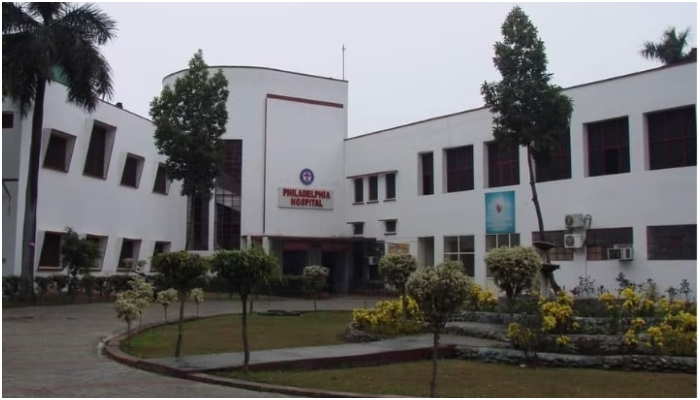
According to the FIR, the disputed property comprises 2,529 square yards on the premises of Philadelphia Mission Hospital in Ambala and is owned, possessed and managed by the Church of North India Trust Association. The complainant, Dr Sunil Kumar Sadik, director of Philadelphia Mission Hospital, alleged that the accused fabricated legal documents, impersonated authorised representatives of the trust and used the forged documents to execute multiple property transactions.
The allegations centre on a purported General Power of Attorney (GPA). According to the complaint, Joseph William allegedly registered a society called United Church of Northern India, Punjab Synod at Zira and prepared a forged GPA, which was registered with the Sub-Registrar at Ram Shahar in Himachal Pradesh on March 7, 2025. The complainant alleged that the document was subsequently used, along with the involvement of other accused persons and witnesses, to execute four sale deeds concerning the Ambala church property.
Four sale deeds allegedly executed
The FIR details several transactions involving portions of the disputed property. On April 22, 2026, one parcel measuring 338.330 square yards, valued at about ₹70 lakh, was allegedly transferred to Preeti Sharma, Poonam and Rishi Gaur. On the same day, another parcel measuring 253.61 square yards, valued at approximately ₹65 lakh, was allegedly transferred to Balraj Singh Antil.
Two further transactions were allegedly executed on May 5. One involved 1,000 square yards valued at ₹25 lakh, transferred in favour of Navneet Aggarwal, Ankit and Digvijay, while another 1,000-square-yard parcel valued at ₹25 lakh was allegedly transferred to Jai Parkash Malhotra.
Ambala police have registered the case under several provisions of the Bharatiya Nyaya Sanhita, 2023, including sections relating to cheating, forgery, fraudulent use of documents and criminal conspiracy. Ambala Superintendent of Police Ajit Singh Shekhawat said the investigation was being conducted from all angles. No arrest had been made at the time of the report.
Questions over control and accountability of church assets
The case is significant beyond the individual property dispute because the land is reportedly connected with a church-run hospital and falls under the management of a religious trust. The allegations, if established, would indicate that forged authorisation documents were allegedly used to transfer institutional property through registered sale deeds. Such cases also highlight the importance of transparent governance, proper asset registers, verification of authorised representatives and effective financial and property controls within religious and charitable institutions.
The matter is particularly relevant in the wider context of scrutiny surrounding charitable and religious organisations that hold substantial immovable assets or receive public or foreign contributions. Regulatory oversight under laws such as the Foreign Contribution (Regulation) Act (FCRA) concerns foreign contributions and their utilisation; it does not by itself determine ownership of domestic church property. Nevertheless, allegations involving the diversion or fraudulent disposal of institutional assets underscore why financial transparency and documented accountability remain important for all organisations receiving public or foreign funds.
The present case, however, concerns alleged criminal property fraud, and the allegations against the accused remain subject to investigation and judicial determination. Interestingly, the news report also refers to an earlier land-grab case involving the property in 2005, in which an FIR had been registered and the accused were subsequently imprisoned for three years.
The latest investigation will now have to establish how the alleged forged GPA was prepared and registered, how the accused obtained or represented authority over the property, the role of witnesses and officials named in the complaint, and whether the registered sale deeds can be legally sustained.