Vidyā Dadāti Vinayam: If education does not teach us respect, what are we learning?
A degree can give us qualifications, a university can give us knowledge, and the internet can give us endless information. But none of these automatically gives us wisdom, restraint, or character.
NewsBharati 11-Aug-2026 15:42:16 PM
Total Views |


India has always been a civilisation where disagreement and debate were deeply valued. From ancient philosophical traditions to modern democracy, questioning authority has never been considered wrong. In fact, the right to question, criticize, and protest is one of the essential features of a free society. But there is a line between dissent and disrespect. The recent protests associated with CJP have once again brought this critical question to the forefront. Alongside legitimate demands and political disagreements, we have also witnessed instances of abusive language, vulgarity, and personal attacks directed at the Prime Minister, the armed forces, police personnel, and even senior citizens. That should concern all of us—not because young people are protesting, but because the manner in which we disagree says something profound about the society we are becoming.
_202608111544044640_H@@IGHT_400_W@@IDTH_600.jpg "PM Modi")
This is particularly important when we talk about Gen Z. Young Indians are among the most connected generations in human history. They have unprecedented access to information, global conversations, and multiple viewpoints. They are uniquely capable of questioning institutions in ways previous generations could not. That is an undeniable strength. But with greater access comes greater responsibility. Social media has made outrage cheap and easy. A few seconds of raw anger can become a viral reel. A provocative insult can receive thousands of likes. Abuse can be mistaken for courage, vulgarity can be packaged as "being real," and sometimes, the loudest person in the room is treated as the most fearless.
The answer to vulgarity is not censorship; the answer is better civic education, stronger cultural grounding, and a renewed understanding of responsibility. Our young people do not need less freedom; they need to understand the responsibility that naturally comes with freedom. Because ultimately, the question is much bigger than one protest, one organization, or one political party. Where are we heading as a society? Are we creating a generation that knows how to debate or only how to attack? A generation that knows its rights but forgets its responsibilities? A generation that is highly educated but increasingly impatient with humility?
India's greatest strength has never been merely its accumulated knowledge. It has always been knowledge accompanied by character. Vidyā dadāti vinayam - education gives humility. If our education does not teach us respect, restraint, empathy, and dignity, then perhaps the real lesson we need to learn is not from another textbook, but from our own civilisational wisdom. Question freely. Protest peacefully. Criticize fearlessly. But never forget to respect the person you disagree with. That is not weakness; that is Vinaya. That is democracy. That is the Indian way.
Our civilisational wisdom has given us a remarkably simple definition of education: विद्या ददाति विनयं विनयाद्याति पात्रताम् । पात्रत्वाद्धनमाप्नोति धनाद्धर्मं ततः सुखम् ॥ “Vidyā dadāti vinayam, vinayād yāti pātratām; Pātratvād dhanam āpnoti, dhanād dharmaṁ tataḥ sukham.” Knowledge gives humility. Humility makes a person worthy. Worthiness brings prosperity; prosperity enables one to uphold dharma, which ultimately leads to happiness. The foundational lesson of true learning is Vinaya - humility, discipline, and respectful conduct. So we must ask ourselves an uncomfortable question: if education has increased, but respect has decreased, have we really become more educated? A degree can give us qualifications, a university can give us knowledge, and the internet can give us endless information. But none of these automatically gives us wisdom, restraint, or character.
A young person has every right to question the Prime Minister. A student has every right to question the government. A citizen has every right to criticize the police, and a protester has every right to disagree with policy decisions. But who gave anyone the right to abuse, humiliate, or threaten another person? That is where the crucial distinction between democracy and disorder becomes important. Democracy does not demand that we agree with one another. It demands that we learn to disagree without dehumanizing one another. You can say, "I strongly oppose this decision." You can say, "The government has failed on this issue." You can demand accountability, organize protests, and raise uncomfortable questions. But when criticism turns into obscene abuse, when disagreement becomes hatred, and when public figures, police personnel, soldiers, or ordinary citizens are reduced to targets of vulgar personal attacks, we are no longer strengthening democratic culture. We are actively weakening it.
This is particularly important when we talk about Gen Z. Young Indians are among the most connected generations in human history. They have unprecedented access to information, global conversations, and multiple viewpoints. They are uniquely capable of questioning institutions in ways previous generations could not. That is an undeniable strength. But with greater access comes greater responsibility. Social media has made outrage cheap and easy. A few seconds of raw anger can become a viral reel. A provocative insult can receive thousands of likes. Abuse can be mistaken for courage, vulgarity can be packaged as "being real," and sometimes, the loudest person in the room is treated as the most fearless.
Yet being loud is not the same as being brave. Real courage is being able to make a strong, unassailable argument without resorting to abuse. Real confidence is being able to face an opposing opinion without losing one's composure. Real education is knowing that the person sitting across from you is still a human being - even when you completely disagree with their worldview. India's protest culture should represent this civilisational maturity. We should be a country where students can march peacefully, citizens can question governments, opposition voices can challenge those in power, and young people can demand accountability - all while maintaining absolute dignity.
The answer to vulgarity is not censorship; the answer is better civic education, stronger cultural grounding, and a renewed understanding of responsibility. Our young people do not need less freedom; they need to understand the responsibility that naturally comes with freedom. Because ultimately, the question is much bigger than one protest, one organization, or one political party. Where are we heading as a society? Are we creating a generation that knows how to debate or only how to attack? A generation that knows its rights but forgets its responsibilities? A generation that is highly educated but increasingly impatient with humility?
India's greatest strength has never been merely its accumulated knowledge. It has always been knowledge accompanied by character. Vidyā dadāti vinayam - education gives humility. If our education does not teach us respect, restraint, empathy, and dignity, then perhaps the real lesson we need to learn is not from another textbook, but from our own civilisational wisdom. Question freely. Protest peacefully. Criticize fearlessly. But never forget to respect the person you disagree with. That is not weakness; that is Vinaya. That is democracy. That is the Indian way.
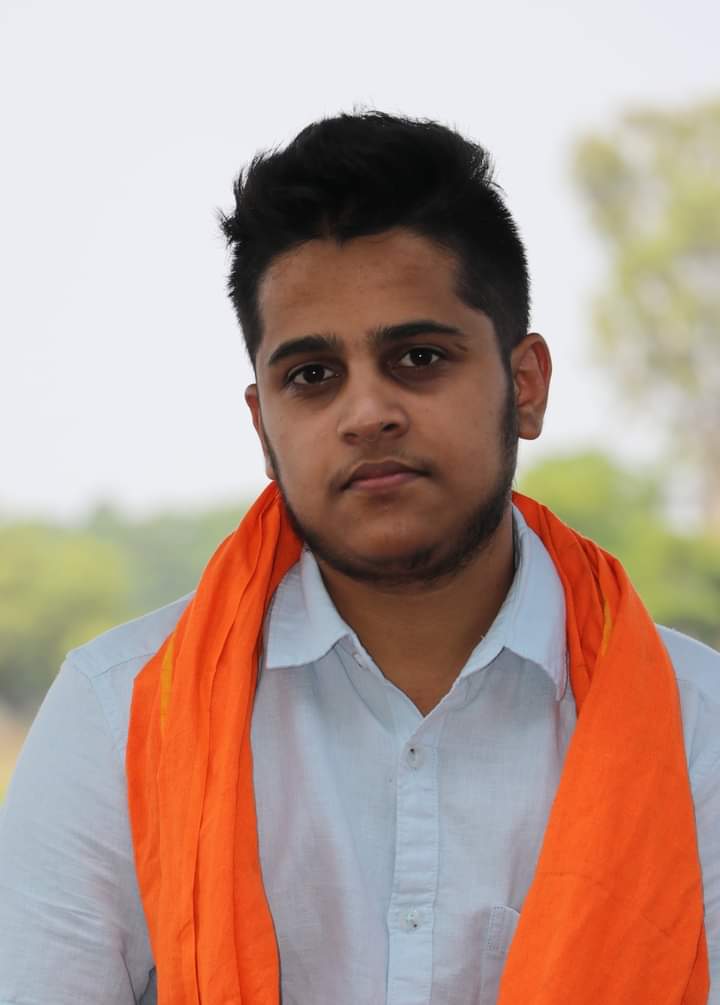
Nivane Kalanath Bhat
Nivane Kalanath Bhat is a Political enthusiast, blogger, and commentator.