“Mr Tharoor, why this hurry?
Total Views |


Shashi Tharoor is a man in a hurry. So much so that even three minutes and ten seconds of Vande Mataram appear to test his patience. His latest objection to the full rendition of the National Song has produced an argument that is difficult to take seriously. Standing through the complete version, he suggests, pushes the limits of human endurance. For a country that spent decades fighting for freedom and in which Vande Mataram became one of the most powerful expressions of that struggle, reducing the issue to three minutes and ten seconds is not merely casual. It is revealing.
The official six-stanza version of Vande Mataram takes approximately three minutes and ten seconds to sing or play. The Union Home Ministry's guidelines specify this duration and prescribe the circumstances in which the National Song is to be rendered. The government has also restored the complete version during the 150th anniversary year of the song. Akashvani began broadcasting the full version from March this year, replacing the two-stanza version that had traditionally been broadcast since Independence. So what exactly is the great difficulty?
A national symbol cannot be evaluated by the stopwatch. The significance of Vande Mataram lies not in its duration but in its history. Bankim Chandra Chattopadhyay's composition became an anthem of the freedom movement. It was sung by generations of freedom fighters when merely expressing nationalist sentiment could invite colonial repression. It carried emotional power at a time when the idea of India itself was being transformed into a political aspiration. The question, therefore, is not whether three minutes and ten seconds is long. The question is whether a citizen can spare three minutes and ten seconds to honour a song that became part of the emotional vocabulary of India's freedom struggle.
If three minutes and ten seconds is too long, where does this logic end? Should every expression of national sentiment be shortened because somebody is in a hurry? Should ceremonies be redesigned around the convenience of the audience rather than the dignity of the occasion? Should national symbols be judged by their entertainment value or their emotional and historical significance? There is something larger at stake.
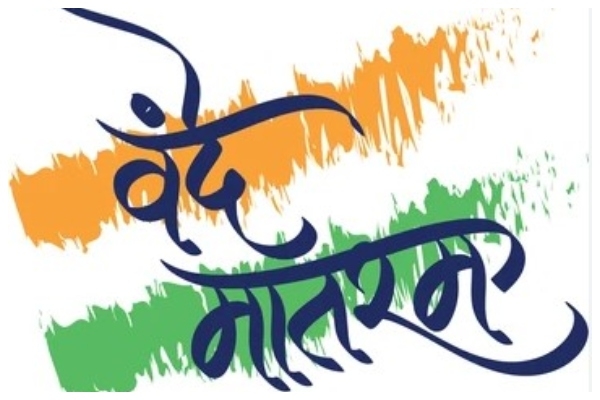
For years, India's public life has witnessed an unfortunate tendency to treat expressions of nationalism with suspicion. Vande Mataram has repeatedly been dragged into political controversies despite its extraordinary place in the history of India's freedom movement. The song deserves to be approached with historical confidence rather than political nervousness. It is equally important not to confuse respect for Vande Mataram with hostility towards anybody. A national symbol belongs to the entire nation.
India has changed dramatically since Independence. A younger generation is growing up in an India that is more confident, more prosperous and more conscious of its civilisational inheritance. The 150th anniversary of Vande Mataram provides an opportunity to reconnect that generation with the history behind the words. The full rendition is not simply an additional three minutes in a government programme but it is an opportunity to hear the composition in its entirety and understand why it occupied such a central place in India's national awakening.
ALSO READ: Two Bangladeshis sentenced to 3 years, 8 months’ rigorous imprisonment in Kolhapur
There is nothing wrong with being in a hurry in ordinary life. But there are moments when a nation should pause. There are symbols before which citizens can afford to stand still for a few minutes. Vande Mataram is one of them. Tharoor may be in a hurry. India need not be.