Goa’s fourteen-year wait: what Congress must answer
Total Views |


Why did Goa have to wait 14 years after India became independent to be liberated from Portuguese rule? This is not merely a question about history. It is a question about the priorities of the Congress leadership that governed India during those crucial years. It is also a question about national integrity, political will and the meaning of India as one nation.
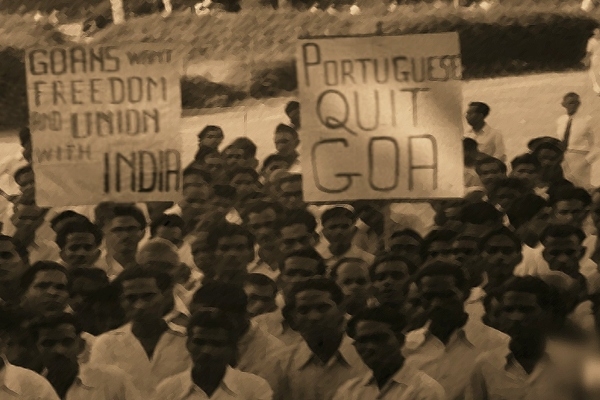
India became independent in 1947. But Goa remained under Portuguese rule until December 1961. Portugal was a small European country, nowhere comparable to the British Empire that had ruled India. Why, then, did Goa have to remain under foreign occupation for nearly a decade and a half? Why was the liberation of Goa not treated as an urgent national agenda by the Congress leadership?
This question becomes even more serious when viewed against the background of Partition. The Partition of India remains the most glaring example of how the Congress leadership of the time dealt with the geographical and civilisational unity of the country. Millions were displaced, countless lives were lost and an ancient civilisation was divided. However, the argument that India was merely a geographical arrangement or a collection of political units cannot explain the emotional and historical reality of the nation.
Goa presents another chapter of the same larger debate. If the geographical integrity of India was a national priority, why was Goa left under Portuguese rule for 14 years after independence? Portugal was not an invincible power. It was a small nation. There was every reason to believe that a determined political strategy could have forced an earlier settlement. Diplomatic pressure, international mobilisation and, if necessary, decisive action could have been considered much earlier. Instead, the Congress leadership did not take the initiative for Goa’s liberation.
ALSO READ: Kashmir: From fear to Tricolour
If the then Prime Minister was more concerned about his international image than about liberating Goa, it was a betrayal of the people of Goa and, by extension, of India. The reluctance to consider military action against Portugal raises questions that remain relevant even today.
The language used by the leadership in Goa reflected, at the very least, a striking degree of caution. But caution has its place in diplomacy; it cannot become an excuse for allowing a part of the country to remain under foreign rule indefinitely.
The people of Goa were as Indian as the people of Maharashtra, Karnataka, Gujarat or any other part of the country. Why should their liberation have been treated differently? The struggle for Goa’s liberation was not merely an isolated local movement. People from neighbouring Maharashtra and Karnataka participated because they regarded Goa’s freedom as part of the national cause. They crossed geographical and political boundaries because they believed that the liberation of Goa was the completion of India’s freedom.
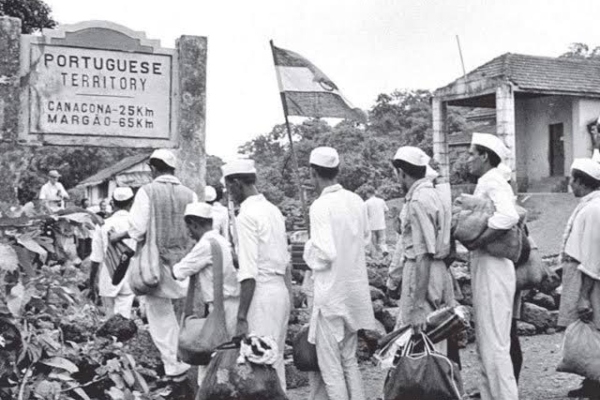
Instead of wholeheartedly supporting these freedom fighters, the national leadership distanced itself from them. Freedom fighters were reminded of the principles of satyagraha and, rather than receiving decisive governmental support, were left to continue their struggle. What was the propriety of reminding freedom fighters of satyagraha when they were fighting against foreign rule in what they regarded as Indian territory?
This attitude becomes even more striking when compared with Sardar Vallabhbhai Patel. Patel understood the importance of geographical and political integration. He played a decisive role in bringing princely states into the Indian Union because he believed in an integrated India. For him, national unity was not merely a constitutional phrase or an administrative arrangement. It was a political and emotional reality. Was that commitment equally strong in Pt Nehru? This is the question Congress must answer.
ALSO READ: Partition horrors remembrance day: PM Modi pays tribute to survivors, calls for unity
Congress must therefore answer whether its historical approach reflected an insufficient commitment to the geographical integrity of India. The concern becomes greater when sections of the Congress leadership increasingly describe India primarily through the constitutional expression “Union of States”. India is certainly a Union of States constitutionally, but the nation is much older and deeper than that constitutional description. India is also a historical, cultural and civilisational entity. If that national consciousness is weakened, negligence towards one part of the country can become easier to justify. Goa should not be forgotten. Nor should the people of Goa forget that their liberation came 14 years after India’s independence.