Modi's Message: Nation Needs Builders, Not Disruptors
Total Views |


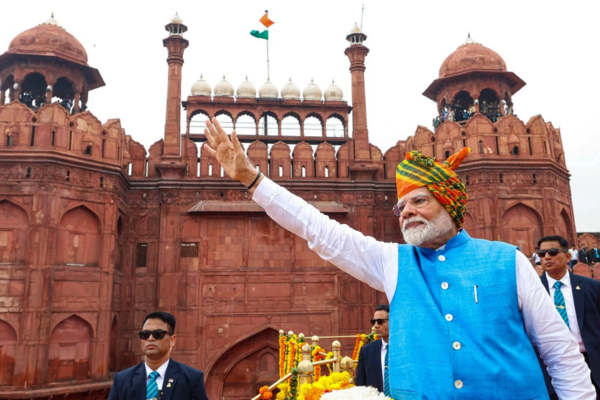
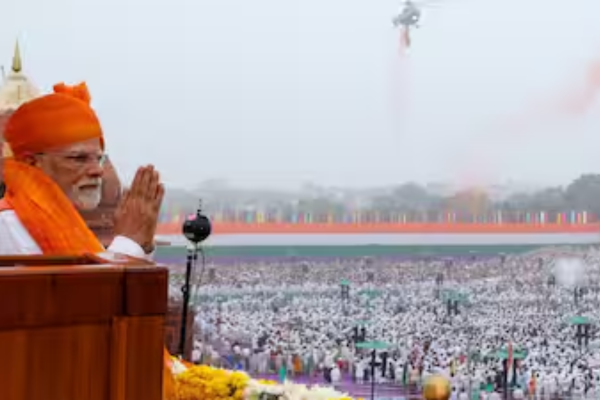
Narendra Modi’s 2026 Independence Day speech from the Red Fort was not merely a catalogue of government announcements. Its deeper message was about the India that is being asked to emerge between now and 2047—and, more importantly, about the generation that will have to build it. The most striking feature of the speech was its sustained focus on the youth. That focus deserves to be welcomed because India’s greatest advantage is not simply its size, natural resources or expanding economy. It is the energy, ambition and talent of its young population.
The Prime Minister was right to place the youth at the centre of the national agenda. India cannot become a developed nation by relying on yesterday’s capabilities. The India of 2047 will require young people equipped with artificial intelligence, advanced technology, scientific knowledge, entrepreneurial skills and the confidence to compete with the best in the world. The announcement of AI training for one crore young Indians is therefore more than an employment programme. It is an acknowledgement that the technological revolution cannot be left to a handful of countries. India must move from being a large consumer of technology to becoming one of its principal creators. If Indian youth are trained to design algorithms, build platforms, develop applications and create new technologies, the demographic dividend can become a strategic advantage.
The same logic applies to the proposed free coaching initiative for competitive examinations. For years, expensive coaching has created an additional barrier between talent and opportunity. A student from a modest family should not be defeated before the examination begins simply because his parents cannot afford a costly coaching centre. Expanding access to quality preparation is therefore not charity. It is an investment in merit and social mobility. The focus on sports is equally important. The proposed nationwide talent hunt among children is an overdue recognition that sporting excellence does not emerge overnight. Talent has to be identified early, nurtured scientifically and given sustained institutional support. India cannot aspire to become a sporting power while treating sport as an extracurricular activity. A young nation should produce champions on the playing field with the same confidence with which it produces engineers and entrepreneurs.
But Modi’s youth message goes beyond AI, coaching and sports. His emphasis on innovation, research and entrepreneurship points towards a much larger transformation. India needs a generation that does not merely seek employment but creates employment; does not merely use technology but invents it; does not merely consume global products but builds globally competitive Indian products. This is where the Prime Minister’s larger argument about Atmanirbharta becomes relevant. Self-reliance is often caricatured by its critics as economic isolation. That is a deliberate misreading. A self-reliant India is not an India cut off from the world. It is an India that can engage the world without being excessively dependent on it.
A country that produces its own defence systems, develops critical technologies, strengthens semiconductor capabilities, secures energy supplies and invests in research possesses greater freedom of choice. Political independence becomes meaningful only when it is supported by economic and technological capability. The Opposition would do well to understand this changing definition of freedom. Much of its politics still appears trapped in the vocabulary of protest, accusation and agitation. There is nothing wrong with questioning a government; that is the essence of democracy. But a political opposition must eventually answer a more important question: what is its alternative vision for India's young population?
India's youth do not need perpetual political mobilisation. They need opportunity. They do not need politicians constantly telling them that the country is failing. They need an India in which their talent can flourish. They need laboratories, universities, start-ups, factories, sporting infrastructure and access to new technologies. Above all, they need confidence that their country can compete and win.
This is why the idea of Viksit Bharat cannot be reduced to a government slogan. It is a national project. And its principal workforce will be today's young Indians. But there is another side to the youth question that cannot be ignored. A demographic dividend does not automatically become a national dividend. Young minds can build institutions, companies and technologies—or they can be poisoned by ideologies that turn frustration into hatred and rebellion. This is the context in which Modi’s reference to “dimagi Naxals” deserves attention.
The phrase will undoubtedly generate political controversy. Critics will accuse the Prime Minister of using a sweeping label. They are entitled to do so. But they should not use that controversy to evade the underlying issue. Armed Naxalism may have suffered a severe decline, but the ideology that romanticised violence, glorified revolution and portrayed the Indian State as an enemy did not disappear simply because the number of armed cadres declined. India has seen enough of this ideological ecosystem to know its consequences. Young minds were once attracted towards a politics that presented violence as resistance and destruction as revolution. Villages were emptied, infrastructure was destroyed, security personnel were killed and generations of young people were denied normal lives. The decline of armed Naxalism is therefore a welcome development, but ideological remnants cannot be dismissed merely because they no longer carry guns. There is a legitimate distinction between dissent and destructive ideology. Democracy protects dissent. It does not require the State to remain intellectually passive before an ideology that seeks to undermine democratic institutions through violence or systematic delegitimization.
The phrase “dimagi Naxal” may be provocative, but the question it raises is serious: who is shaping the minds of India's youth? If one side is asking young Indians to learn AI, conduct research, win medals, build businesses, develop technology and contribute to a developed India, then the nation has every right to be concerned about forces that attempt to turn youthful idealism into permanent hostility towards the country and its institutions. The battle for India's future will therefore not be fought only at the borders or in laboratories. It will also be fought in classrooms, campuses, digital spaces and, above all, in the minds of young Indians.
The freedom inherited in 1947 gave India the right to determine its own destiny. The responsibility of today's generation is to possess the capability to actually shape that destiny. Modi’s Red Fort message, at its core, was about this transition—from freedom to capability, from aspiration to achievement and from dependence to confidence. India's youth must be given every opportunity to build. But India must also have the confidence to tell them what not to become. The nation needs young minds that question, innovate and create—not “dimagi Naxals” who turn questioning into nihilism and dissent into an excuse for destruction. A developed India requires not merely young citizens, but young citizens with a constructive national purpose.