Dimagi Naxal: Why is Chidambaram so uncomfortable?
Total Views |


Congress leader and former Union Minister P. Chidambaram has done something politically revealing. Prime Minister Narendra Modi warned of the continuing ideological challenge posed by “dimagi Naxals” those who, even as armed Naxalism loses ground, continue to defend or romanticise the ideology behind it. Chidambaram's response was not denial, clarification or even outrage. He declared: “I am proud to be a dimagi Naxal.” That is not merely a clever political retort. It raises a much more uncomfortable question - what exactly is Chidambaram proud of?
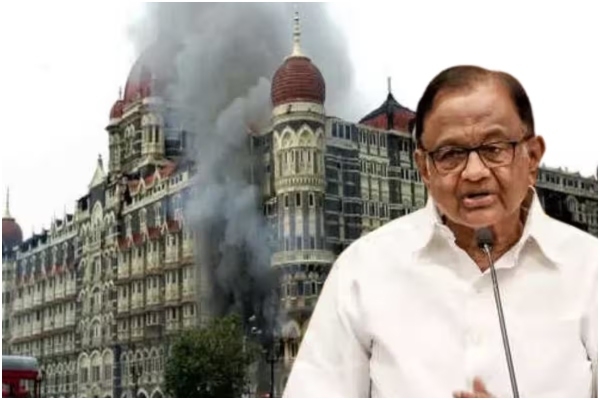
The question becomes particularly relevant because this is not an ordinary political commentator speaking from the comfort of an opposition bench. Chidambaram was India's Union Home Minister. He held the portfolio responsible for the country's internal security, including the fight against Maoist violence. His record therefore cannot be separated from his present boast.
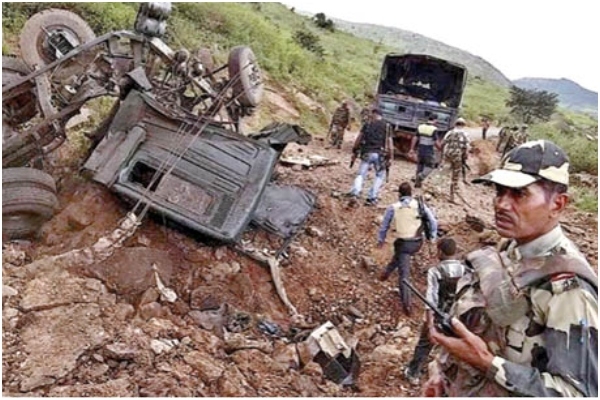
The most glaring episode was the Dantewada massacre of April 2010, when 76 CRPF personnel were killed in a Maoist ambush in Chhattisgarh. Chidambaram himself accepted responsibility, saying that “the buck stops at my desk.” He even offered his resignation to Prime Minister Manmohan Singh, which was rejected.
And yet, the same former Home Minister now wears the description “dimagi Naxal” as a badge of pride.
There is something profoundly disturbing about that political posture. Chidambaram may argue that “dimagi Naxal” refers only to intellectual dissent and not to support for violence. But the Maoist movement is not simply an academic proposition. Its ideological foundation has historically been linked to armed revolutionary violence and the rejection of India's constitutional democratic system. Thousands of security personnel and civilians have paid with their lives.
Indeed, during Chidambaram's own tenure, the government was struggling to contain precisely this threat. In May 2010, following another deadly Maoist attack in Dantewada, Chidambaram offered talks if the Maoists suspended violence for 72 hours, saying that security operations would also be halted during that period. Dialogue in a democracy is legitimate. But when dealing with an armed organisation committed to violence, the first responsibility of the Home Minister is to protect the state, its citizens and its security personnel. The record of that period was hardly one of decisive victory. Major Maoist attacks continued, including the killing of 76 CRPF personnel.
ALSO READ: BJP rejig: Energy meets experience, beyond dynasty
Assam Chief Minister Himanta Biswa Sarma has consequently struck at the weakest point in Chidambaram's bravado. Sarma said Chidambaram was not merely a “dimagi Naxal” but a “pure Naxal”, and called for scrutiny of his record as Home Minister. The language may be politically aggressive, but the underlying question deserves an answer. Chidambaram cannot have it both ways. He cannot demand to be taken seriously as a former Home Minister when discussing national security and then turn the ideological label associated with Maoist sympathisers into a fashionable badge when attacking the Prime Minister.
The larger irony is difficult to miss. A man who occupied India's most important internal-security office during one of the most violent phases of the Maoist insurgency now appears eager to appropriate the very label that the Prime Minister uses to describe the ideological ecosystem sustaining such extremism. This is not intellectual courage. Chidambaram and his Congress party demonstrate their ideology, where national unity and integrity has no space.
ALSO READ: From imports to exports: India's electronics industry enters a new phase
Chidambaram should therefore stop congratulating himself for being a “dimagi Naxal” and answer the harder questions.
What did his government achieve against Maoist violence? Why did the Dantewada disaster happen under his watch? Why did he accept responsibility for it? Why did his government continue to face devastating Maoist attacks despite its counter-insurgency strategy? Most importantly, what does he actually mean by being “proud” of the label? The armed Naxal is being pushed out of the jungle. That is precisely why the ideological Naxal is becoming politically uncomfortable. The gun is losing its battle. The argument is shifting to the mind. And Chidambaram has voluntarily announced which side of that argument he wants to stand on. That may have been intended as a witty political comeback. Instead, it has become an invitation to examine his own record. If being a “dimagi Naxal” is something to be proud of, Chidambaram owes the nation an explanation not a slogan.