Trump sees what Rahul & Congress refuses to see
NewsBharati 19-Aug-2026 14:11:02 PM
Total Views |


There is something deeply revealing about Donald Trump invoking India’s electoral system as an example for America while the Congress party, led by Rahul Gandhi, continues to portray the same system as fundamentally suspect. Trump has cited India’s 646 million voters, its photo-identification requirements and the extraordinarily small proportion of voters using postal ballots while arguing for stronger electoral safeguards in the United States.
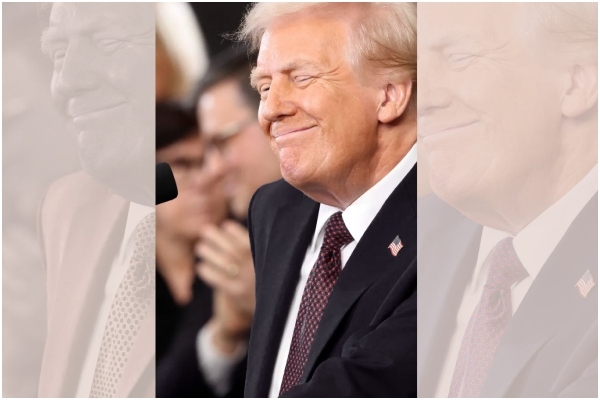 But Trump’s remarks have inadvertently exposed a serious political contradiction in the Congress narrative. For months, Rahul Gandhi has made “vote chori” a political slogan, accusing the Election Commission and the ruling establishment of electoral wrongdoing. He has even argued that BJP victories were the product of stolen votes.
But when an American President points to India's electoral arrangements as something America can learn from, the Congress response is not a reflection. It is ridiculous. Congress spokesperson Pawan Khera responded sarcastically by telling Trump to take Chief Election Commissioner Gyanesh Kumar to America and offering India's EVMs as well. That reaction deserves scrutiny. Why is Congress so uncomfortable when India receives praise from abroad?
The answer may lie in a peculiar political habit that has developed within sections of the opposition: India appears credible to them only when someone outside India validates their preferred narrative about the country. When a foreign commentator criticises India, there is celebration. When a foreign publication questions Indian institutions, it becomes ammunition. When a foreign politician expresses concern about Indian democracy, it is quoted extensively. But when a foreign leader points to something India may actually be doing well, suddenly the foreign opinion becomes irrelevant or worse, an occasion for mockery. This is not confidence. It is dependent. A self-confident political party does not need foreigners to condemn India on its behalf. It presents its evidence, takes its case before the appropriate institutions and persuades Indian citizens.
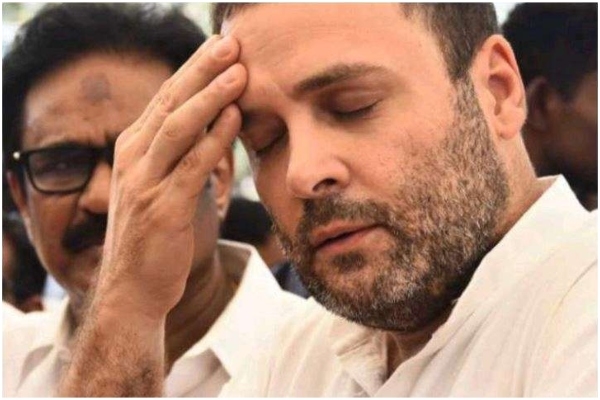
That is precisely why Trump's comments sting. They do not prove that every Indian election is perfect. They do not settle every controversy involving the Election Commission. They do not make criticism of electoral institutions illegitimate. They simply demonstrate that the picture Rahul Gandhi and Congress attempt to project is not the only picture visible to the world. And perhaps that is what hurts most.
For years, the Congress ecosystem has behaved as though India's democratic institutions need external certification or external condemnation to acquire political meaning. Trump has now turned the mirror around. America is debating whether it should adopt stronger voter-identification safeguards, while India already operates with such requirements. The appropriate Indian response should therefore not be chest-thumping. It should be confidence. We do not need Trump's approval. We did not need anybody else's approval either. India's democracy was not created in Washington, London or New York. It was created by the Constitution of India, with deep roots in civilizational thoughts and sustained by generations of Indian voters. That is the real slap for Rahul Gandhi and Congress.
Trump has not certified Indian democracy. Indian voters have. And if Rahul Gandhi wants to challenge the electoral system, he should do so before the Indian people and Indian institutions with evidence, not foreign applause. India does not need a foreign certificate. But Congress may have to explain why it so often seems to need a foreign audience.
The irony is difficult to miss. The political leadership in America is looking towards India for an electoral lesson. Rahul Gandhi and his party, meanwhile, have been looking abroad to reinforce their allegations against India’s electoral institutions. India does not need Donald Trump’s certificate of democratic credibility. Nor does Indian democracy become more legitimate because an American President praises one of its features. India’s electoral system derives its legitimacy from the constitution, the Election Commission, millions of election personnel and, above all, hundreds of millions of Indian voters who repeatedly exercise their franchise.
But when an American President points to India's electoral arrangements as something America can learn from, the Congress response is not a reflection. It is ridiculous. Congress spokesperson Pawan Khera responded sarcastically by telling Trump to take Chief Election Commissioner Gyanesh Kumar to America and offering India's EVMs as well. That reaction deserves scrutiny. Why is Congress so uncomfortable when India receives praise from abroad?
Rahul Gandhi has every democratic right to question the Election Commission. If elections are genuinely stolen, the remedy is evidence, procedure and law not an endless political campaign built around insinuation. And this is where Rahul Gandhi's politics encounters an uncomfortable question: if India's electoral system is so fundamentally compromised, why does Congress repeatedly participate in elections conducted under that very system? Why does a victory become the verdict of democracy while a defeat becomes evidence of electoral theft? Democracy cannot be selectively legitimate.
The Congress leadership should also understand the danger of repeatedly telling Indians that their votes cannot be trusted. The democracy itself has been stolen, is reckless politics. The Election Commission has defended the credibility of India's electoral process, while the Ministry of External Affairs has said its robustness and credibility are well established globally. The irony becomes even sharper because Rahul Gandhi has repeatedly taken his political arguments beyond India's borders. There is nothing inherently wrong with engaging international audiences. But when a domestic political dispute is repeatedly presented abroad as evidence of India's democratic collapse, the question naturally arises: is the objective to reform India or to damage India's reputation?
That is precisely why Trump's comments sting. They do not prove that every Indian election is perfect. They do not settle every controversy involving the Election Commission. They do not make criticism of electoral institutions illegitimate. They simply demonstrate that the picture Rahul Gandhi and Congress attempt to project is not the only picture visible to the world. And perhaps that is what hurts most.
ALSO READ: ED raids multiple locations linked to SP's Azam Khan over fund diversion; earlier demolition notices had been issued, details
Trump has not certified Indian democracy. Indian voters have. And if Rahul Gandhi wants to challenge the electoral system, he should do so before the Indian people and Indian institutions with evidence, not foreign applause. India does not need a foreign certificate. But Congress may have to explain why it so often seems to need a foreign audience.

Editor's Desk
Editor's Desk