When a Muslim-Majority Nation Says No to the Hijab
Hijab restrictions in Tajikistan challenge global claims that Muslim dress codes are always matters of personal choice.
Total Views |


Recently, a number of accounts on Indian social media once again rose to the defence of the hijab, some couching it in religious terms and others resorting to outright abusive posts. Every so often, pro-hijab arguments are stirred up in India and around the world alike. It is easy to dismiss these accounts as fringe voices, yet support for the hijab, especially among the world's self-styled liberals, is nothing new.
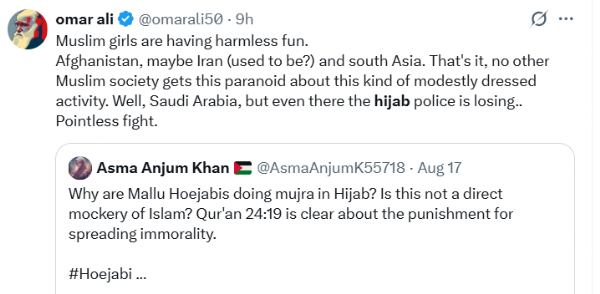
Image: X post by Asma Anjum Khan which went viral
For years, a certain kind of argument has echoed across the globe and India has heard its fair share too. The hijab, we are assured, is nothing more than personal choice. Back in 2022, when young women in Karnataka marched behind the slogan "Pehle Hijab, Fir Kitaab", first the veil, then the book, many self-styled liberals applauded. To them, wrapping a girl in cloth before she opened a textbook somehow amounted to a triumph for freedom. It was a strange sort of freedom, one that placed the covering ahead of the classroom. The liberal defence of the hijab is not merely a recent Indian episode but a global pattern.
What these voices rarely explain is why several Muslim-majority countries themselves have moved in the opposite direction. Tajikistan is the clearest recent example. In June 2024, its president signed Law No. 2048, which bans clothing "alien to national culture", plain language for the hijab. This is a nation where 98 percent of people are Muslim. If anyone could claim the veil as part of its Islamic heritage, it would be Tajikistan. Instead, its own government decided the garment was foreign to who they are.
The reasoning offered by the state deserves attention. The official statement said the law was meant to protect national culture, prevent superstition and fanaticism and lift the spirit of the Tajik people. Notice what is missing here. There is no talk of insulting Islam or abandoning faith. A country that prays five times a day simply concluded that a piece of cloth had become a marker of orthodoxy and backwardness rather than belief.
None of this happened overnight. Tajikistan had been quietly discouraging the hijab for nearly two decades before the 2024 law. Officials had long used the phrase "clothes alien to Tajik culture" and had even published a guidebook in 2018 advising women on acceptable colours, shapes and lengths of dress. The state pushed traditional Tajik outfits and treated the imported black veil as a symbol of a harder, imported version of religion. The 2024 law only turned a long-standing practice into formal rule.
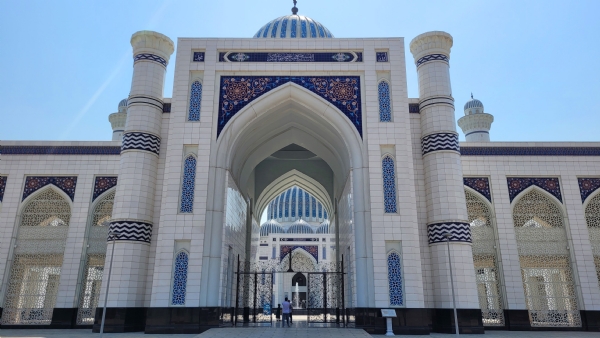
Image: Mosque in Dushanbe, Tajikistan
It is worth remembering that Tajikistan is not some hotbed of political Islam. It is a Central Asian republic that has consciously kept religious extremism at arm's length, sitting right next to Taliban-run Afghanistan and wary of what happens when orthodoxy is allowed to set the rules. Its leaders clearly see the veil not as harmless fashion but as the thin end of a wedge that can push a society toward rigidity, superstition and eventually, radical thought.
This is exactly the point that gets lost in the noise back home. Back in 2022, when Indian educational institutions asked for a common uniform in classrooms or insisted that schools stay free of religious display, they were not attacking any community. They are doing something rather ordinary, the same thing a Muslim-majority state like Tajikistan felt confident enough to do. Yet the reaction is telling. A secular republic asking for uniformity in a school is painted as intolerant, while an Islamic nation banning the veil outright is met with awkward silence from the very people who claim to champion Muslim women.
That silence exposes the contradiction. If the hijab were purely about free will, its defenders would be marching against Dushanbe today. They are not. The truth is that "choice" is often invoked selectively, loudly when it can be used to embarrass one government, quietly forgotten when an actual Muslim nation calls the garment a tool of orthodoxy.
Indians can learn one simple lesson from this. Asking public spaces to stay neutral and asking girls to walk into class as students first and nothing else, is not bigotry. It is common sense, the same common sense a nation of ninety-eight percent Muslims arrived at on its own.
Image: Mosque in Dushanbe, Tajikistan
It is worth remembering that Tajikistan is not some hotbed of political Islam. It is a Central Asian republic that has consciously kept religious extremism at arm's length, sitting right next to Taliban-run Afghanistan and wary of what happens when orthodoxy is allowed to set the rules. Its leaders clearly see the veil not as harmless fashion but as the thin end of a wedge that can push a society toward rigidity, superstition and eventually, radical thought.
This is exactly the point that gets lost in the noise back home. Back in 2022, when Indian educational institutions asked for a common uniform in classrooms or insisted that schools stay free of religious display, they were not attacking any community. They are doing something rather ordinary, the same thing a Muslim-majority state like Tajikistan felt confident enough to do. Yet the reaction is telling. A secular republic asking for uniformity in a school is painted as intolerant, while an Islamic nation banning the veil outright is met with awkward silence from the very people who claim to champion Muslim women.
That silence exposes the contradiction. If the hijab were purely about free will, its defenders would be marching against Dushanbe today. They are not. The truth is that "choice" is often invoked selectively, loudly when it can be used to embarrass one government, quietly forgotten when an actual Muslim nation calls the garment a tool of orthodoxy.
Indians can learn one simple lesson from this. Asking public spaces to stay neutral and asking girls to walk into class as students first and nothing else, is not bigotry. It is common sense, the same common sense a nation of ninety-eight percent Muslims arrived at on its own.