All roads, one week: Why India is talking to everyone at once
India engages Russia, China, West and Japan simultaneously asserting strategic autonomy this week
Total Views |


In the span of a few days in late August 2026, top Ministers of India fanned out across four of the world's most important capitals at the same time. External Affairs Minister S. Jaishankar was in Russia. National Security Adviser Ajit Doval was in China. Finance Minister Nirmala Sitharaman set off for Canada and the United States. And Commerce Minister Piyush Goyal was in Japan. Four heavyweight visits, four different power centres, one week. That is not a coincidence; it is a signal about where India sees itself in a world that is rearranging itself.
Start with the backdrop, because it explains the urgency. Through much of 2025, Washington had piled tariffs on Indian goods until they hit 50 percent, among the steepest levied on any partner, partly over India's purchases of Russian oil. That squeeze eased only in February 2026, when the two sides struck an interim deal cutting the rate to 18 percent. India did not fold under the pressure; it kept buying where it needed to, kept talking and widened its options. This week's flurry of visits is the follow-through, a country that refused to be boxed in, now cashing in on its independence by engaging every major pole at once.
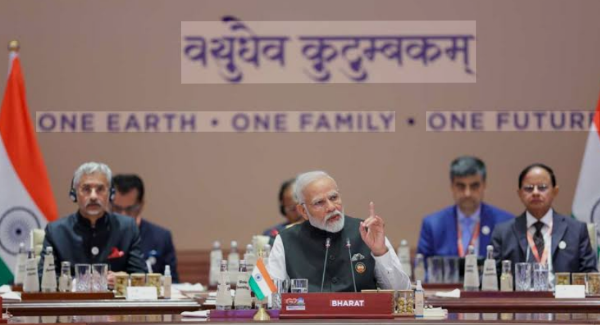
Take them one by one. In Moscow, Jaishankar co-chaired the 27th session of the India-Russia Inter-Governmental Commission and met his counterpart Sergey Lavrov and the Russian Head of State, President Vladimir Putin. The message: a decades-old partnership on energy and defence stays intact, whatever outside pressure exists.
In Beijing, Doval held the 25th round of boundary talks with Wang Yi and called on Vice President Han Zheng. This matters because it comes with fresh tension along Arunachal Pradesh, yet both sides chose to keep talking. The visit also lays groundwork for the BRICS summit next month, where Xi Jinping is expected in India, potentially his first trip here in seven years.
Sitharaman's nine-day tour is the economic engine of the week. In Toronto, she opens the first-ever India-Canada Economic and Financial Dialogue, with the two countries chasing a trade pact by end-2026; their trade already touched USD 8.66 billion in 2025. She then leads India's delegation to the G20 finance ministers' meeting in Asheville and courts investors in Chicago and New York.
ALSO READ: Goyal in Japan uses Jack Ma's example to tell Japanese investors why they should pick India and not China
ALSO READ: Goyal in Japan uses Jack Ma's example to tell Japanese investors why they should pick India and not China
And in Japan, Goyal is leading India's largest-ever business delegation, more than 200 representatives across Tokyo, Nagoya and Osaka, covering semiconductors, clean energy, autos and startups. This builds on the 10 trillion yen (about USD 67 billion) investment target Japan set for India over the next decade. Bilateral trade already sits at roughly USD 27.5 billion, with over 1,400 Japanese firms operating in India.
Look at the pattern rather than the pieces. India is not picking a side; it is standing at the centre and drawing lines out to Russia, China, the West and East Asia all at once. This is what diplomats mean by strategic autonomy, the freedom to do business with rivals without asking anyone's permission. A weaker economy could not attempt it. India can, because it grew at a five-quarter high of 7.8 percent in the first quarter of 2025-26, giving every negotiating table a reason to make room.
For young Indians, that is the real headline. The jobs, the factories, the semiconductor lines and the startup capital being discussed this week in four capitals are not abstractions, they are the runway for the generation now entering the workforce. A country that can talk to everyone, on its own terms, is a country building leverage for the people who will inherit it.
The outcomes will unfold over months: a Canada trade deal, Japanese investment landing on the ground, a calmer border with China, steady ties with Russia. But the intent is already clear. In a fractured world, India has chosen not to hide behind one alliance. It has chosen to be everywhere at once and to negotiate from strength.