Caste census: Count caste, but do not make it the currency of politics
NewsBharati 26-Aug-2026 11:50:50 AM
Total Views |


India should count caste. It is a social reality. If caste continues to influence education, employment, economic opportunity and social mobility, the State needs credible data to understand the problem and design targeted policies. But there is a larger question Congress must answer. Is the purpose of counting caste to ultimately reduce its influence or to make caste the permanent currency of Indian politics?
 The first major post-Independence attempt to systematically examine backward classes came through the Kaka Kalelkar Commission, appointed by the Nehru government in 1953. The Commission submitted its report in 1955, identifying socially and educationally backward communities and recommending measures for their advancement. The Congress government, led by Jawaharlal Nehru, did not accept its recommendations. Then came the Mandal Commission. Appointed in 1979, it submitted its report in 1980 and recommended, among other measures, 27 per cent reservation for OBCs in central government employment. But the report remained unimplemented through the Congress governments that followed. It was by the V.P. Singh government, supported by BJP, announced implementation in 1990. Rajiv Gandhi, then Leader of the Opposition, strongly criticised the Mandal decision in Parliament. It is on record.
Then came another opportunity. The Congress-led UPA government conducted the socio-economic and caste census in 2011. But the caste component became entangled in classification and verification problems, and comprehensive caste data were never released in a publicly usable form. Rahul Gandhi has subsequently acknowledged that the UPA government's failure to release the data was a mistake.
What has changed now? The political transformation is visible in Rahul Gandhi's present vocabulary. Caste census is no longer presented merely as a statistical exercise. It has increasingly been linked to representation, institutional power and entitlement. Rahul Gandhi's formulation of “jitni abadi, utna haq” - the greater the population, the greater the share takes the argument beyond counting. Congress's 2024 election manifesto promised a nationwide caste census and proposed removing the 50 per cent ceiling on reservations for SCs, STs and OBCs.
 Suppose the census establishes that a particular caste constitutes 12 per cent of the population. Does that automatically create a 12 per cent claim over political power? If another community constitutes 18 per cent, does it acquire an 18 per cent entitlement to public institutions? Should every caste begin negotiating with the State according to numerical strength? If that becomes the political logic, India will not be weakening caste. It will be rewarding caste identity with greater political value. Reservations have a legitimate constitutional and social purpose. They have helped historically disadvantaged communities enter institutions from which they were excluded. But reservation cannot be the only language of social justice. The ultimate objective must be educational advancement, economic mobility, employment, entrepreneurship and dignity conditions in which caste gradually loses its determining power.
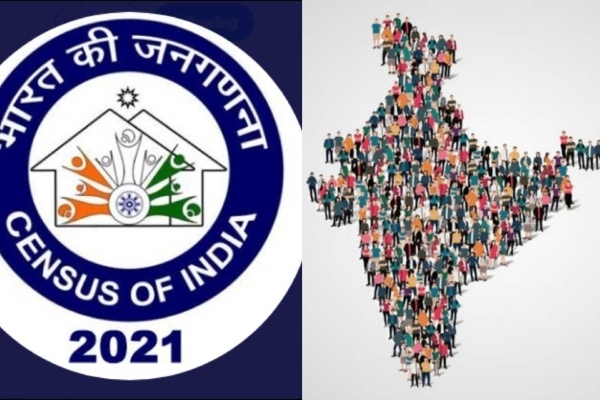
A caste census can actually help achieve that objective. Reliable data can expose genuine deprivation. It can reveal whether benefits are concentrated within relatively advanced sections of broad categories. It can help governments design better interventions in schools, scholarships, skills, healthcare, employment and economic opportunity. But facts must lead to reform, not permanent identity mobilisation. The Modi government has already taken the decisive step. On April 30, 2025, the Cabinet Committee on Political Affairs decided to include caste enumeration in the forthcoming Census.
The question Congress demanded has now received an answer. The political challenge has consequently shifted. It is no longer simply whether India will count caste. It is what India will do with the numbers. Congress has every right to demand an accurate methodology. Its concerns about classification should be debated seriously. But it also owes the country an explanation of where its caste politics ultimately leads. If the objective is social justice, the destination must be a society in which caste matters nothing.
Count caste. Understand inequality. Correct injustice. But do not make caste the permanent currency of power. The success of the caste census should not be measured by how many new quotas it produces or how many political claims it generates. It should be measured by whether, ten or twenty years from now, an Indian's caste matters less to his or her future than it does today. That is the real test of social justice. And Congress must answer the fundamental question - Does it want to eliminate the consequences of caste or keep caste politically alive by turning every number into a new claim for power?
That question is particularly relevant today because Congress president Mallikarjun Kharge and Rahul Gandhi have demanded that the government scrap the existing questionnaire for the forthcoming caste enumeration and redesign it after wider consultation. They object to the open-ended format, arguing that different names, sub-castes and regional variations could fragment communities and produce unreliable data. Congress is likely to come up with a few suggestions and objections till the caste census is completed. But Congress cannot escape its history with the caste question.
This history does not diminish the importance of affirmative action. But the contrast is impossible to ignore. A party that once hesitated over backward-class recommendations and opposed the political handling of Mandal now presents caste enumeration as one of the defining requirements of social justice.
What has changed now? The political transformation is visible in Rahul Gandhi's present vocabulary. Caste census is no longer presented merely as a statistical exercise. It has increasingly been linked to representation, institutional power and entitlement. Rahul Gandhi's formulation of “jitni abadi, utna haq” - the greater the population, the greater the share takes the argument beyond counting. Congress's 2024 election manifesto promised a nationwide caste census and proposed removing the 50 per cent ceiling on reservations for SCs, STs and OBCs.
This is where India needs to draw a line. Caste census and caste politics are not the same thing. India should know how many people belong to different social groups. It should know their educational and economic condition, whether government benefits are reaching those who need them and whether historical disadvantage continues to affect opportunity. But the numbers should be used as evidence for policy not ammunition for electoral mobilisation. There is a dangerous progression India must guard against- Demand representation. Demand a corresponding share of power. Expand quotas. Mobilise the caste again. Repeat at the next election. That is how a legitimate exercise in social diagnosis can become a permanent system of caste arithmetic. Congress needs to explain its exit strategy.
A caste census can actually help achieve that objective. Reliable data can expose genuine deprivation. It can reveal whether benefits are concentrated within relatively advanced sections of broad categories. It can help governments design better interventions in schools, scholarships, skills, healthcare, employment and economic opportunity. But facts must lead to reform, not permanent identity mobilisation. The Modi government has already taken the decisive step. On April 30, 2025, the Cabinet Committee on Political Affairs decided to include caste enumeration in the forthcoming Census.
ALSO READ: ‘Breaking coconuts is wrong’: Christian missionaries distribute pamphlets calling Hindu practices ‘Wrong’ in Tamil Nadu
Count caste. Understand inequality. Correct injustice. But do not make caste the permanent currency of power. The success of the caste census should not be measured by how many new quotas it produces or how many political claims it generates. It should be measured by whether, ten or twenty years from now, an Indian's caste matters less to his or her future than it does today. That is the real test of social justice. And Congress must answer the fundamental question - Does it want to eliminate the consequences of caste or keep caste politically alive by turning every number into a new claim for power?

Editor's Desk
Editor's Desk