Mr. Bhagwat in New York: Why Are His Critics So Afraid?
Total Views |


RSS chief Mohan Bhagwat has landed in America and before he has even spoken at Madison Square Garden, his opponents have already begun shouting. The New York mayor does not want him there. American advocacy groups want the event cancelled. A Democratic congressional candidate declares that there is “no room” for Bhagwat and the RSS in New York. The United States Commission on International Religious Freedom (USCIRF) wants sanctions against RSS members. And in India, Congress leaders are eagerly cheering this chorus.
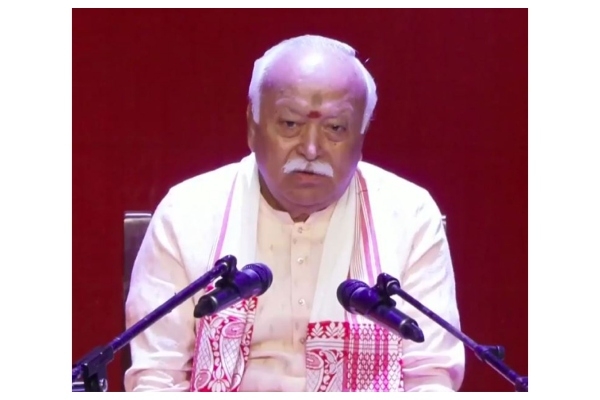 Why? The answer is uncomfortable. They are not afraid of Bhagwat's audience. The RSS has spent decades being defined by its opponents. Its critics have created a convenient vocabulary around it “extremist”, “majoritarian”, “exclusionary”, “anti-minority” and then repeated those labels until they are expected to function as facts. Bhagwat's American tour threatens that monopoly. He is now getting an opportunity to speak directly to an international audience. That is what his opponents cannot tolerate.
New York Mayor Zohran Mamdani has made his opposition explicit. He says he does not support the Madison Square Garden event, while admitting that the city may not have the legal authority to cancel a private gathering. That admission exposes the weakness of the campaign. If the event is lawful, private and attended voluntarily, on what democratic principle should a mayor decide which Indian organisation deserves a platform? Mamdani invokes pluralism. But pluralism is not the freedom to hear only those with whom the mayor agrees. Pluralism is precisely the ability to coexist with ideas one dislikes.
If Mamdani believes Bhagwat is wrong, let him say so. If he believes the RSS is wrong, let him debate it. But the moment a politician begins talking about whether a private audience should be permitted to hear a particular ideological voice, the language of tolerance begins to sound remarkably like censorship. And Mamdani is not alone. Brad Lander, a Democratic congressional nominee, has reportedly declared that there is “no room” for Bhagwat and the RSS in New York. “No room”? New York has room for every conceivable political ideology, protest movement and radical cause. It has room for Communists, socialists, Islamists, anarchists, separatists and activists of every description. But suddenly there is “no room” for the head of the world's largest Hindu voluntary organisation?
This is not pluralism. This is selective pluralism. The campaign becomes even more revealing when organisations such as Hindus for Human Rights and the Indian American Muslim Council join the demand to cancel the event. They have every right to protest Mr Bhagwat. They have every right to criticise the RSS. But demanding that Madison Square Garden cancel a private event because they dislike its speaker crosses a different line.
The irony is almost impossible to miss. Those claiming to defend diversity are trying to decide which Hindu voice is sufficiently acceptable to represent Hindu Americans. Who appointed them? Who gave them the authority to speak for millions of Hindus? And why should an American Hindu who wants to hear Bhagwat be treated as though he needs ideological permission?
The USCIRF intervention is even more troubling. Instead of allowing debate, it has called for sanctions against RSS members and opposed official engagement with Bhagwat. A religious-freedom body should be particularly careful here. Religious freedom cannot mean freedom only for communities whose political positions are approved by the institution. It must also protect the right of unpopular or controversial communities to organise, assemble and express their beliefs within the law. Otherwise, the guardians of religious freedom become gatekeepers of acceptable religion.
And then comes the most revealing Indian intervention. Nana Patole has claimed that America has declared the RSS a terrorist organisation. That is a spectacular allegation. It should not be thrown around casually in a political speech. If Congress possesses an official US designation proving the claim, it should produce it. If it does not, then it owes the public an explanation for making such a serious assertion. But perhaps the more embarrassing question is this - Why is an Indian political leader taking his cue from opposition to Bhagwat in New York?
Mamdani opposes Bhagwat. Congress applauds Mamdani. American advocacy groups attack the RSS. Congress repeats the allegations. A foreign political controversy is imported into Indian politics and presented as though it were a verdict on the RSS. This is not political courage. It is ideological outsourcing.
Congress should answer a simple question: since when did an American politician's dislike for the RSS become evidence against the RSS? The RSS has been part of India's public life for a century. Its critics have every opportunity to challenge it here. They do not need New York politicians as their ideological referees. And Bhagwat's visit has exposed something else.
The RSS is no longer willing to allow its opponents to tell the world what it is without answering them. Its centenary outreach is explicitly intended to engage Indian-origin and Hindu communities abroad and counter what it considers misconceptions about India, Hindu society and the RSS. That is precisely what should happen. Let Mr Bhagwat speak. Let his critics speak. Let the audience judge. That is the democratic marketplace of ideas.
The desperate demand to cancel the event suggests that Mr Bhagwat's opponents have more confidence in cancellation than in their own arguments. If the RSS is truly as irrelevant and discredited as they portray it, why are they mobilising politicians, religious organisations, advocacy groups and international institutions against one speech? Perhaps because they understand something their rhetoric refuses to admit.
The RSS has survived because it cannot be wished away. It survived political hostility. It survived bans. It survived decades of ideological vilification. It expanded socially while its critics continued explaining why it should disappear. Now, in its centenary year, its Sarsanghchalak is addressing a packed American audience. That sight clearly unsettles them.
But Mr Bhagwat does not need a certificate from Mamdani. The RSS does not need an endorsement from USCIRF. And India certainly does not need Congress to import American opposition as proof of its domestic political arguments. The real test in New York is not whether Bhagwat can speak. He will.
The real test is whether his opponents can tolerate a Hindu voice they cannot control. If they can, they should debate him. If they cannot, their repeated invocation of pluralism stands exposed as political theatre. Mr Bhagwat is not the problem in New York. The problem is the intolerance of those who claim to represent tolerance. And the louder they demand that he be silenced, the more they advertise their fear of what he has come to say.
What an extraordinary demonstration of fear. Mr Bhagwat has not gone to America to seek political office. He has not gone to dictate American policy. He has not asked New York to endorse the RSS. He is travelling as the head of an organisation completing one hundred years and is addressing people who have chosen to listen to him. But his opponents behave as though a speech by the Sarsanghchalak represents an existential threat to New York.
New York Mayor Zohran Mamdani has made his opposition explicit. He says he does not support the Madison Square Garden event, while admitting that the city may not have the legal authority to cancel a private gathering. That admission exposes the weakness of the campaign. If the event is lawful, private and attended voluntarily, on what democratic principle should a mayor decide which Indian organisation deserves a platform? Mamdani invokes pluralism. But pluralism is not the freedom to hear only those with whom the mayor agrees. Pluralism is precisely the ability to coexist with ideas one dislikes.
If Mamdani believes Bhagwat is wrong, let him say so. If he believes the RSS is wrong, let him debate it. But the moment a politician begins talking about whether a private audience should be permitted to hear a particular ideological voice, the language of tolerance begins to sound remarkably like censorship. And Mamdani is not alone. Brad Lander, a Democratic congressional nominee, has reportedly declared that there is “no room” for Bhagwat and the RSS in New York. “No room”? New York has room for every conceivable political ideology, protest movement and radical cause. It has room for Communists, socialists, Islamists, anarchists, separatists and activists of every description. But suddenly there is “no room” for the head of the world's largest Hindu voluntary organisation?
ALSO READ: Nepal’s deluge: When nature meets human arrogance
The irony is almost impossible to miss. Those claiming to defend diversity are trying to decide which Hindu voice is sufficiently acceptable to represent Hindu Americans. Who appointed them? Who gave them the authority to speak for millions of Hindus? And why should an American Hindu who wants to hear Bhagwat be treated as though he needs ideological permission?
The USCIRF intervention is even more troubling. Instead of allowing debate, it has called for sanctions against RSS members and opposed official engagement with Bhagwat. A religious-freedom body should be particularly careful here. Religious freedom cannot mean freedom only for communities whose political positions are approved by the institution. It must also protect the right of unpopular or controversial communities to organise, assemble and express their beliefs within the law. Otherwise, the guardians of religious freedom become gatekeepers of acceptable religion.
And then comes the most revealing Indian intervention. Nana Patole has claimed that America has declared the RSS a terrorist organisation. That is a spectacular allegation. It should not be thrown around casually in a political speech. If Congress possesses an official US designation proving the claim, it should produce it. If it does not, then it owes the public an explanation for making such a serious assertion. But perhaps the more embarrassing question is this - Why is an Indian political leader taking his cue from opposition to Bhagwat in New York?
ALSO READ: Christian Missionaries at it again -- begin ‘disaster evangelism’ in Nepal
Congress should answer a simple question: since when did an American politician's dislike for the RSS become evidence against the RSS? The RSS has been part of India's public life for a century. Its critics have every opportunity to challenge it here. They do not need New York politicians as their ideological referees. And Bhagwat's visit has exposed something else.
The RSS is no longer willing to allow its opponents to tell the world what it is without answering them. Its centenary outreach is explicitly intended to engage Indian-origin and Hindu communities abroad and counter what it considers misconceptions about India, Hindu society and the RSS. That is precisely what should happen. Let Mr Bhagwat speak. Let his critics speak. Let the audience judge. That is the democratic marketplace of ideas.
The desperate demand to cancel the event suggests that Mr Bhagwat's opponents have more confidence in cancellation than in their own arguments. If the RSS is truly as irrelevant and discredited as they portray it, why are they mobilising politicians, religious organisations, advocacy groups and international institutions against one speech? Perhaps because they understand something their rhetoric refuses to admit.
ALSO READ: Godavari tragedy: Coercion, conversion & silence of secularism
But Mr Bhagwat does not need a certificate from Mamdani. The RSS does not need an endorsement from USCIRF. And India certainly does not need Congress to import American opposition as proof of its domestic political arguments. The real test in New York is not whether Bhagwat can speak. He will.
The real test is whether his opponents can tolerate a Hindu voice they cannot control. If they can, they should debate him. If they cannot, their repeated invocation of pluralism stands exposed as political theatre. Mr Bhagwat is not the problem in New York. The problem is the intolerance of those who claim to represent tolerance. And the louder they demand that he be silenced, the more they advertise their fear of what he has come to say.