UPI@10: India’s digital leap
Total Views |


Ten years ago, India was experimenting with an idea that looked deceptively simple - make money move as easily as a message. Today, the Unified Payments Interface, or UPI, has become one of the most visible symbols of India’s digital transformation. The pilot was launched in April 2016. A decade later, it is no longer merely a payment system. It is a habit, an infrastructure and, increasingly, an Indian export.
 The real test of technology is not whether the affluent can use it. It is whether the person at the bottom of the economic pyramid can use it without feeling that technology is intimidating. UPI passed that test. The neighbourhood vegetable seller displays a QR code. The roadside tea stall accepts a digital payment. The auto-rickshaw driver receives money without asking whether the passenger has exact change. A small shopkeeper can accept payment without installing an expensive card machine. A domestic worker, student, farmer, migrant worker or elderly person can transfer money directly from a bank account with a mobile phone. This is financial inclusion in a form that does not require a seminar on financial inclusion.
The World Bank has described UPI as demonstrating that real-time payments can work at population scale, while its interoperability between banks and non-bank providers helped accelerate innovation and merchant acceptance. The Reserve Bank of India has similarly noted that UPI has transformed India's digital-payment ecosystem and become the country's largest retail payment system by transaction volume. There is an important distinction here. UPI did not simply digitise an existing transaction. It changed the Indian consumer's expectation of what a transaction should be. Instant. Simple. Available round the clock. Interoperable. That change in expectation is an economic asset.
For decades, developing countries were expected to follow a familiar technological sequence - first build conventional infrastructure, then gradually migrate towards sophisticated digital systems. India has demonstrated that there can be another route digital leapfrogging. Instead of reproducing every stage of the traditional banking and payments journey, India built interoperable digital public infrastructure and allowed banks, fintech companies and technology platforms to compete on top of common rails. The result is remarkable.
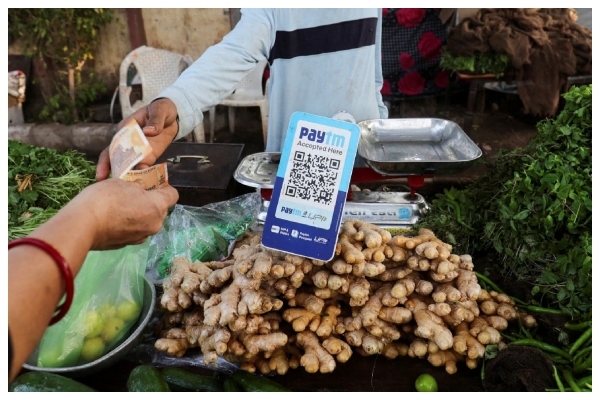
And there is something distinctly Indian about it. India did not demand that its citizens become technology experts before they could participate in the digital economy. Technology was made sufficiently simple for ordinary citizens to appropriate it for their own purposes. The last-mile Indian did not wait for a policy paper to explain the digital revolution. He simply scanned the QR code.
There will, inevitably, be critics. Some will dismiss UPI as merely another payment application. Others will focus exclusively on fraud, cyber risks, outages or the absence of direct monetisation for some participants. These concerns deserve attention. A system handling billions of transactions cannot afford complacency. Cybersecurity, consumer protection, privacy, fraud prevention, system resilience and financial literacy must remain permanent priorities. But criticism becomes intellectually lazy when it refuses to acknowledge scale. The question is not whether UPI is perfect. No financial system is. The question is whether India has created something consequential. The answer is unmistakably yes. The critics of India's digital transformation should occasionally step outside their familiar ideological comfort zone and look at the person actually using the system. The street vendor is not conducting a seminar on whether UPI fits somebody's political narrative. He is accepting payment. Reality, as usual, is moving faster than the commentary around it.
The first decade of UPI was about adoption. The next could be about globalisation, integration and innovation. UPI is already expanding beyond India's borders. NPCI's international initiatives allow Indian users to make QR-based merchant payments in selected countries, while UPI One World enables foreign visitors to India to make payments across more than 700 million QR codes without needing an Indian bank account or mobile number. In 2026, the facility was extended to delegates from more than 40 countries attending the India AI Impact Summit. That opens a much larger possibility.
UPI can become part of India's broader digital-public-infrastructure diplomacy alongside Aadhaar, digital identity, account infrastructure and emerging digital-credit systems. The future may see UPI interacting more deeply with artificial intelligence, embedded finance, cross-border payments, digital commerce and programmable financial services. RBI has already highlighted innovations such as conversational payments, UPI Lite and offline NFC-based payments.
The decade ahead, therefore, is not about celebrating the number of QR scans. It is about asking what happens when a billion-plus people become comfortable with instantaneous digital transactions. That creates a population increasingly prepared to adopt the next technological change. UPI's greatest achievement is not that Indians learned to pay digitally. It is that Indians learned to trust change. A decade ago, India launched a payment interface.
Today, it has created something much larger - a national digital habit and perhaps one of India's most powerful demonstrations that when technology is designed for the last person in the queue, the last person can become the engine of transformation.
The numbers tell only part of the story. The larger story is about behaviour. In May 2026 alone, UPI processed 23.2 billion transactions worth nearly ₹29.9 lakh crore, according to the National Payments Corporation of India (NPCI). More than 700 banks and payment institutions now live on the system. The scale is difficult to comprehend - billions of transactions every month, many involving sums so small that conventional banking systems would once have considered them economically insignificant. That is precisely where UPI's real revolution lies.
ALSO READ: Nepal turns down foreign rescue teams as flash flood death toll rises to 469
For decades, developing countries were expected to follow a familiar technological sequence - first build conventional infrastructure, then gradually migrate towards sophisticated digital systems. India has demonstrated that there can be another route digital leapfrogging. Instead of reproducing every stage of the traditional banking and payments journey, India built interoperable digital public infrastructure and allowed banks, fintech companies and technology platforms to compete on top of common rails. The result is remarkable.
Between July and September 2025, UPI processed approximately 59 billion transactions more than Mastercard's global total of roughly 54 billion transactions during the same period and approaching Visa's roughly 82 billion. The comparison is not a claim that UPI has replaced either global network; it demonstrates the extraordinary volume achieved by an Indian domestic payment infrastructure. That should make India pause not in self-congratulation, but in confidence. For once, the question is not, "When will India catch up?" The question is - "How far ahead can India go?"
UPI's greatest achievement may not be financial at all. It is psychological. India has often been described as a country resistant to change, too traditional, too cautious, too dependent on familiar practices. UPI has quietly demolished that stereotype. The same person who once preferred cash can now scan a QR code in seconds. The same small merchant who distrusted digital transactions can maintain a digital payment trail. The same consumer who once stood in a queue at an ATM can transfer money from a phone. This is not simply technological adoption. It is behavioural adaptation at an extraordinary scale.
And there is something distinctly Indian about it. India did not demand that its citizens become technology experts before they could participate in the digital economy. Technology was made sufficiently simple for ordinary citizens to appropriate it for their own purposes. The last-mile Indian did not wait for a policy paper to explain the digital revolution. He simply scanned the QR code.
There will, inevitably, be critics. Some will dismiss UPI as merely another payment application. Others will focus exclusively on fraud, cyber risks, outages or the absence of direct monetisation for some participants. These concerns deserve attention. A system handling billions of transactions cannot afford complacency. Cybersecurity, consumer protection, privacy, fraud prevention, system resilience and financial literacy must remain permanent priorities. But criticism becomes intellectually lazy when it refuses to acknowledge scale. The question is not whether UPI is perfect. No financial system is. The question is whether India has created something consequential. The answer is unmistakably yes. The critics of India's digital transformation should occasionally step outside their familiar ideological comfort zone and look at the person actually using the system. The street vendor is not conducting a seminar on whether UPI fits somebody's political narrative. He is accepting payment. Reality, as usual, is moving faster than the commentary around it.
ALSO READ: Imran Khan’s son raise alarm over his health, claim former Pakistan PM faces isolation in jail
UPI can become part of India's broader digital-public-infrastructure diplomacy alongside Aadhaar, digital identity, account infrastructure and emerging digital-credit systems. The future may see UPI interacting more deeply with artificial intelligence, embedded finance, cross-border payments, digital commerce and programmable financial services. RBI has already highlighted innovations such as conversational payments, UPI Lite and offline NFC-based payments.
The decade ahead, therefore, is not about celebrating the number of QR scans. It is about asking what happens when a billion-plus people become comfortable with instantaneous digital transactions. That creates a population increasingly prepared to adopt the next technological change. UPI's greatest achievement is not that Indians learned to pay digitally. It is that Indians learned to trust change. A decade ago, India launched a payment interface.
Today, it has created something much larger - a national digital habit and perhaps one of India's most powerful demonstrations that when technology is designed for the last person in the queue, the last person can become the engine of transformation.