No Violence, No Abuses, No Azadi slogans - Only a plea for fair exams: Jharkhand students protest shows the real Gen-Z
Jharkhand"s recruitment controversy has entered a new phase, with student leader Devendra Nath Mahato launching an indefinite hunger strike in Ranchi. Braving heavy rain and difficult conditions, hundreds of government job aspirants continue their peaceful sit-in, demanding cancellation of the 14th JPSC Preliminary Test, an independent probe into alleged examination irregularities and sweeping reforms to restore faith in the state"s recruitment system.


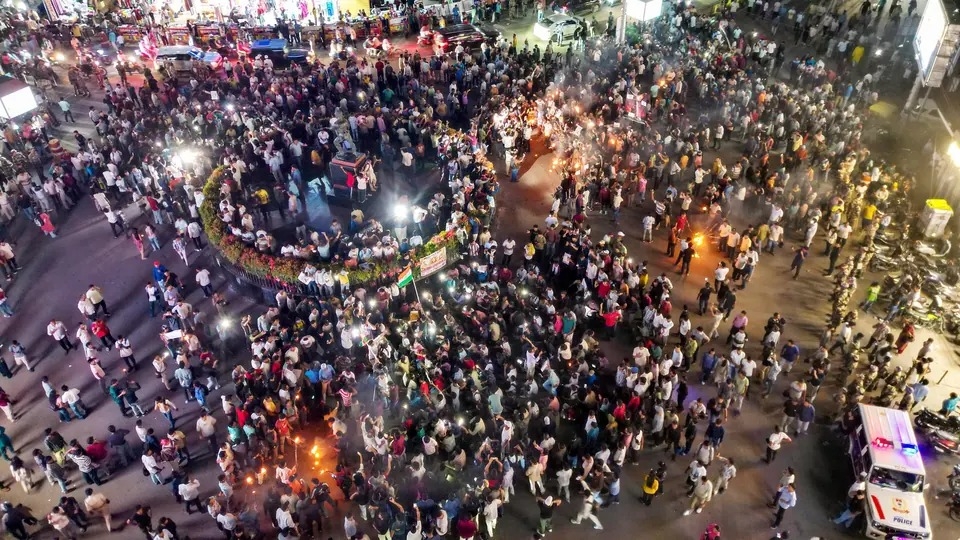
The agitation intensified on August 2, after student leader Devendra Nath Mahato launched an indefinite hunger strike at Jaipal Singh Munda Stadium in Ranchi, where hundreds of students have been staging a sit-in demanding transparency in recruitment examinations conducted by the Jharkhand Public Service Commission (JPSC) and the Jharkhand Staff Selection Commission (JSSC).
The protesters are seeking cancellation of the 14th JPSC Preliminary Test, an independent investigation into allegations of paper leaks, OMR discrepancies and other examination irregularities, as well as structural reforms to restore credibility to the state's recruitment process.
Addressing supporters, Mahto recalled that the movement began after the declaration of the 14th JPSC Preliminary Test results around a month ago. Since then, students have met Governor Santosh Gangwar and Chief Minister Hemant Soren, organised marches, burned effigies, submitted memoranda and provided evidence that eventually led to official action and arrests in connection with some allegations.
"The current attitude of both the Jharkhand government and the Commission is demoralizing students across the state," he said.
For those gathered at Jaipal Singh Munda Stadium, however, the protest has become much more than a political or administrative issue. It is a story of perseverance.
Many of the students have spent years preparing for competitive examinations, often sacrificing employment opportunities, family time and financial stability in pursuit of a government job. Today, those same aspirants are spending their days and nights under temporary shelters at the protest site, refusing to abandon what they describe as a fight for fairness.
Heavy monsoon showers have done little to weaken their resolve.
Videos from the protest site show students huddled beneath makeshift tarpaulin sheets, sharing plastic covers to protect one another from the rain. Others can be seen cleaning the protest area, arranging drinking water and helping fellow aspirants continue the sit-in despite the difficult weather.
JPSC Protest In Ranchi, Jharkhand Amidst The Rain
— India Strikes YT 🇮🇳 (@IndiaStrikes_) August 2, 2026
Students are braving heavy rain, protect one another using makeshift tarpaulin umbrellas..
While, State govt is absent from public, CJP is escaping from its discussion.#JPSCProtest #JharkhandNews #CJP https://t.co/skpphJg4IB pic.twitter.com/1hO8AANL1r
Unlike large political rallies with elaborate infrastructure, the atmosphere at the protest site has remained modest. Volunteers and fellow students have been coordinating basic necessities, while protesters themselves have organised food distribution, medical assistance and other essential arrangements to sustain the agitation.
Participants say the movement has survived because of collective determination rather than organisational strength.
On the evening of August 2, the protest gathered further momentum as thousands of aspirants participated in a torchlight procession from Jaipal Singh Munda Stadium to Albert Ekka Chowk, carrying placards and raising slogans demanding transparency and accountability in recruitment. Visuals of them chanting ‘Vande Matram’ and confronting those chanting “Azadi slogans” came up on social media. All they want this to be a students protest and nothing more than that.
The protestor can be seen telling, “This is not Jantar Mantar, no azadi slogans here, no political sloganeering here.”
Genuine Demands In JPSC Protest Needs To Be Kept Separate From Any Type Of Politics
— India Strikes YT 🇮🇳 (@IndiaStrikes_) August 3, 2026
Students speak up against all those doing political and separatist sloganeering like 'Azadi'
Kudos! Full support for not just clarity but stopping the genuine issue from getting Hijacked… https://t.co/brT9lmrIpU pic.twitter.com/fAKwlvl6uh
Throughout the agitation, participants have maintained that their struggle is centred on examination reforms.
The protesters have demanded a CBI and Enforcement Directorate investigation into alleged irregularities across multiple recruitment examinations, including JPSC and JSSC-CGL, citing repeated allegations of paper leaks, leaked OMR sheets, procedural lapses and delayed accountability.
Although the Jharkhand government has ordered a CID investigation and arrests have followed in connection with certain allegations, many students say they lack confidence in a state-level probe and continue to press for an independent investigation.
One striking feature of the Ranchi protest has been its disciplined character.
Participants have repeatedly appealed to fellow protesters to keep the movement focused on examination transparency and avoid unrelated political messaging. Videos circulating on social media show students urging one another to ensure that the protest remains centred on the aspirations of job seekers rather than partisan issues.
The protest site has echoed with chants of "Vande Mataram", while participants have continued their demonstrations without reports of widespread violence or vandalism.
JPSC Protest In Jharkhand
— India Strikes YT 🇮🇳 (@IndiaStrikes_) August 2, 2026
Chants of 'Vande Mataram', No Violence, No Vandalism, No Abusive Language
Genuine people being fed up of the Govt and system, peacefully marching to demand justice in an organized manner WITHOUT A FACE.
No Political Agenda... But CJP Silent!
Or… https://t.co/wsIciuO51c pic.twitter.com/AL15pngKgI
Several social media users have praised the students for attempting to preserve the focus of the agitation on recruitment reforms, arguing that the core issue should not be overshadowed by broader political debates.
The Ranchi agitation has inevitably drawn comparisons with recent protests at Delhi's Jantar Mantar over national examination issues.
Compared with the recent protest at Delhi's Jantar Mantar, the Ranchi agitation presents a markedly different picture. At Jaipal Singh Munda Stadium, students have been enduring rain with only makeshift tarpaulin sheets for shelter, relying largely on mutual support and basic volunteer arrangements to sustain their sit-in.
Protesters have repeatedly asserted that their movement is centred on examination transparency rather than calls for political resignations. Many participants say their objective is simple: a fair, impartial and credible investigation into the examination irregularities so that deserving candidates are not deprived of opportunities they have spent years preparing for.
While several political parties and student organisations participated in the Delhi protest, including Left student groups such as AISA, SFI, AISF, DISHA, KYS, AIDSO, PDSU and the Agragami Chhatra Naujawan Sabha, the Ranchi agitation has primarily revolved around alleged irregularities in Jharkhand's recruitment examinations.
Meanwhile, Chief Minister Hemant Soren has assured that strict action will be taken against anyone found responsible for wrongdoing. Opposition leaders have also visited the protest site, expressing solidarity with the aspirants.
Yet, for the students sleeping under plastic sheets in Ranchi, the issue extends beyond politics.
Each face in the crowd represents years of preparation, countless examinations, financial sacrifices made by families and dreams built around the hope of securing a government job through merit. Many say they are not seeking confrontation but confidence, that examinations will be conducted fairly, answer sheets will remain secure and deserving candidates will not lose opportunities because of alleged malpractice.
As Mahato's hunger strike enters its next phase, the atmosphere at Jaipal Singh Munda Stadium reflects both determination and uncertainty. The students insist they will continue their peaceful movement until their demands are heard.
For them, the protest is not merely about one examination or one recruitment cycle. It is about restoring faith in a system that thousands of young people depend upon to shape their future.