Seventy Nine Years, Not One Full Term
Pakistan marks Seventy Nine years without one prime minister completing a full term.
Total Views |


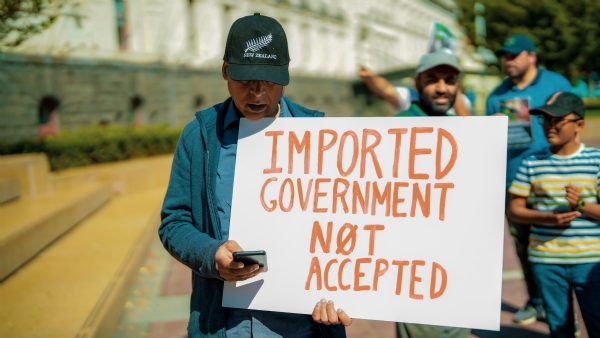
When Pakistan marks its Seventy Nine years of creation this month, it will do so with a record no other large democracy carries: since 1947, not a single prime minister has served out a full term. Assassinated, dismissed, jailed, exiled, forced to resign under army pressure, the ways change, but the ending is always early. The country has burned through 29 prime ministers, and on 18 occasions they were pushed out before their time. The shortest lasted two weeks.
That single fact tells you almost everything. A democracy is supposed to let voters decide when a leader's time is up. In Pakistan, someone else usually decides, and that someone wears the Islamic Republic’s Military uniform.
Do the arithmetic on those 79 years and the picture sharpens. Roughly three decades were spent under open military dictatorship: Ayub and Yahya from 1958 to 1971, Zia from 1977 to 1988, Musharraf from 1999 to 2008. Another long stretch ran under what looked like civilian government but answered to the Army Generals behind it. Genuine, unbothered civilian rule adds up to barely a decade. The men in Rawalpindi have shaped policy, picked and dropped premiers and set the country's direction for most of its life.
None of this is hidden. In early 2026, Prime Minister Shehbaz Sharif himself told a room of business leaders that a "hybrid regime" , his phrase, was keeping the country afloat and credited the army chief for pulling the economy back from default. When the elected head of government publicly thanks a general for running things, even the pretense of being a democracy is gone.
The last two years made the arrangement official. After a short conflict with India in May 2025, army chief Asim Munir was promoted to field marshal, only the second man ever to hold the rank. Then in November, parliament passed the 27th Constitutional Amendment, which handed him a brand-new post, Chief of Defence Forces (CDS), putting the army, navy, air force and the nuclear command under one person, along with lifelong immunity from prosecution. An analysis in the Carnegie Endowment described the result plainly: the military has entrenched its dominance through a weak and compliant civilian government. Elections still happen. They just decide less and less.
There is a second drift running alongside the first and it is older. When General Zia seized power in 1977, he needed something to replace the votes he lacked, so he reached for Islamism. His government wrote blasphemy laws into the penal code, poured money into hardline Islamic seminaries and rewrote school textbooks. The Hudson Institute and Pakistan's own Friday Times have traced how that project seeded decades of sectarian Sunni Islamist violence and militancy that outlived the man himself.
Those laws never left the books and the forces they empowered only grew. Groups like Tehreek-e-Labbaik and many others built street movements powerful enough to shut down whole cities over blasphemy. A provincial governor who merely questioned the blasphemy law was shot dead by his own guard in 2011 and the killer was cheered by the population of Pakistan. That itself speaks volumes about the state of Islamic radicalism in Pakistan. No civilian government since that incident has dared touch the issue. The state, as scholars put it, is now held hostage by the very Islamist forces it once armed.
Put the two trends together and the trajectory is hard to miss. A country that started without a real democratic footing has spent nearly eight decades handing power upward to the barracks and to the pulpit. The vote survives as a ritual. The direction is set elsewhere.