'If you are unhappy, do not come to work," one of the rarest good things China has ever introduced
The ruling didn"t end overwork culture overnight- laws rarely do, but it cracked the surface. Some major tech firms began adjusting their hours in the years that followed, nudging closer to what the law actually allowed.
NewsBharati 07-Aug-2026 15:21:47 PM
Total Views |


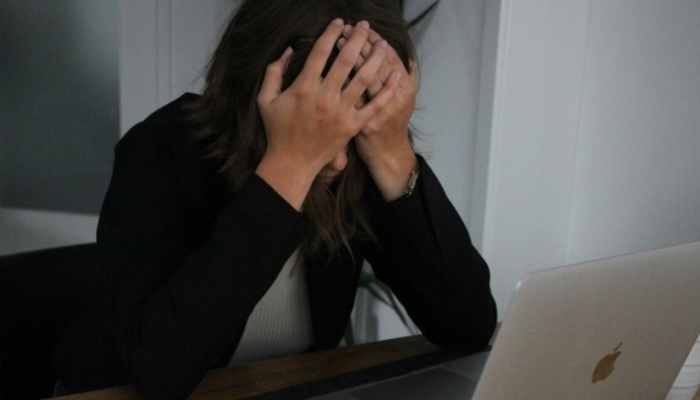
There's a peculiar kind of exhaustion that doesn't show up on a thermometer or a medical certificate. It's the kind that makes you stare at your ceiling fan at 6 am, fully aware you have to get up, fully aware you don't want to, and fully aware that "I just don't feel like it today" has never been an acceptable reason to skip work, anywhere, in any country, in any century. Until, in one corner of central China, someone decided it should be.
His reasoning was almost disarmingly simple. He said everyone has times when they're not happy, and if you're not happy, you shouldn't come to work. And in case any manager got tempted to quietly veto the whole idea, Yu made sure there was no room for interpretation: the leave could not be denied by management, and refusing it would be treated as a violation of policy. For a company culture built around rigid hierarchy and long hours, that's not a small clause. That's a boss handing his own authority over to his employees' moods.
Why now, and why in China
Unhappy leave, then, wasn't invented in a vacuum. It arrived at the exact moment China's workforce was already asking, loudly, whether exhaustion was really supposed to be the price of a paycheck.
Understanding the philosophy behind the decision
Pang Dong Lai's broader employment terms back this up. Employees reportedly work a seven-hour day, get weekends off by default, and are already entitled to well above the industry-standard leave allowance before "unhappy leave" even enters the picture. In an economy where overtime has often been worn like a medal, that alone was already unusual. The extra ten days simply pushed the idea further, treating a bad mental health day with the same seriousness as a bad physical one.
The Global view of this
And yet, dismissing it purely as a gimmick misses the point a little. Around the world, the language of workplace wellness has usually taken the form of curated perks, wellness apps, quiet rooms, the occasional mental health webinar, offered on the company's terms, at the company's convenience. Doesn't unhappy leave flip that arrangement? It asks employees to trust their own emotional state enough to act on it, and it asks employers to trust their employees enough not to ask why. That's a much harder thing to institutionalize than a yoga session in the break room, and maybe that's exactly why it made headlines in the first place. One of the rarest good things China has ever introduced.
Whether "unhappy leave" becomes a genuine global movement or remains a fascinating footnote from one retail chain in Henan, it has already done something worth noticing. It forced a conversation that most workplaces avoid- what happens on the days we simply don't have it in us, and whether that has to be a problem we hide, or one we're finally allowed to name out loud.
Last year, in April 2024, Yu Donglai, the founder and chairman of Pang Dong Lai, a retail chain based in China's Henan province, did something that made an entire country sit up and pay attention. He announced that his employees, on top of their existing 30 to 40 days of annual leave, weekends off, and Lunar New Year holidays, would now be entitled to ten additional days of what he called "unhappy leave." No doctor's note. No manager's approval. No justification required. If you woke up unhappy, you simply didn't come in.
His reasoning was almost disarmingly simple. He said everyone has times when they're not happy, and if you're not happy, you shouldn't come to work. And in case any manager got tempted to quietly veto the whole idea, Yu made sure there was no room for interpretation: the leave could not be denied by management, and refusing it would be treated as a violation of policy. For a company culture built around rigid hierarchy and long hours, that's not a small clause. That's a boss handing his own authority over to his employees' moods.
Why now, and why in China
To understand why this policy landed like a small earthquake, we need to understand the ground it was standing on. China's modern work culture has, for over a decade, revolved around something known as "996", a schedule that runs 9 am to 9 pm, six days a week, first embraced by tech giants chasing explosive growth. It was romanticized for years, even by industry icons, as a badge of ambition rather than a warning sign. But the human cost eventually became impossible to ignore. Burnout, sleep deprivation, and a wave of publicized worker deaths pushed the issue into the national conversation, and in 2021, China's Supreme People's Court formally declared the practice illegal.
The ruling didn't end overwork culture overnight- laws rarely do, but it cracked the surface. Some major tech firms began adjusting their hours in the years that followed, nudging closer to what the law actually allowed. Meanwhile, a younger generation of workers started quietly rebelling in their own way, through movements like "lying flat", a rejection of the relentless hustle their parents had accepted as the price of prosperity. Against that backdrop, a 2021 workplace survey found something telling, 'more than 65 percent of China's working population described themselves as either tired or unhappy at work, citing low wages, tangled office politics, and the glorification of overtime as the root causes.'
Unhappy leave, then, wasn't invented in a vacuum. It arrived at the exact moment China's workforce was already asking, loudly, whether exhaustion was really supposed to be the price of a paycheck.
Understanding the philosophy behind the decision
What makes the policy interesting isn't just its existence; it's the philosophy behind it. Yu Donglai has been fairly explicit about not wanting his company to chase scale for its own sake. He's been quoted as saying he doesn't want the company to be big; he wants employees to have a healthy, relaxed life, so that the company can have one too. It's a small sentence, but it flips a very old corporate assumption on its head, the idea that a company's wellbeing and an employee's wellbeing are separate accounts, one funded by draining the other.
Pang Dong Lai's broader employment terms back this up. Employees reportedly work a seven-hour day, get weekends off by default, and are already entitled to well above the industry-standard leave allowance before "unhappy leave" even enters the picture. In an economy where overtime has often been worn like a medal, that alone was already unusual. The extra ten days simply pushed the idea further, treating a bad mental health day with the same seriousness as a bad physical one.
The Global view of this
The idea has since last year traveled well beyond China's borders, popping up in conversations about workplace wellness from India to the United States, usually met with a mix of fascination and skepticism. There's an obvious limitation: a ten-day "unhappy leave" policy is far easier to implement in a retail head office than on a factory floor, in a hospital ward, or on a construction site, where staffing gaps aren't easily absorbed.
ALSO READ: Book Review: Climate Change 2100- Survive or Thrive
And yet, dismissing it purely as a gimmick misses the point a little. Around the world, the language of workplace wellness has usually taken the form of curated perks, wellness apps, quiet rooms, the occasional mental health webinar, offered on the company's terms, at the company's convenience. Doesn't unhappy leave flip that arrangement? It asks employees to trust their own emotional state enough to act on it, and it asks employers to trust their employees enough not to ask why. That's a much harder thing to institutionalize than a yoga session in the break room, and maybe that's exactly why it made headlines in the first place. One of the rarest good things China has ever introduced.
Whether "unhappy leave" becomes a genuine global movement or remains a fascinating footnote from one retail chain in Henan, it has already done something worth noticing. It forced a conversation that most workplaces avoid- what happens on the days we simply don't have it in us, and whether that has to be a problem we hide, or one we're finally allowed to name out loud.

Siddhi Somani
Siddhi Somani is known for her satirical and factual hand in Economic, Social and Political writing. Having completed her post graduation in Journalism, she is currently engaged in completing her Masters in Politics. The author meanwhile is also exploring her hand in analytics and statistics.