Congress: The “Naraz Fufa” of Indian Politics
NewsBharati 10-Sep-2026 13:05:21 PM
Total Views |


Every Indian family has one. The uncle, who arrives at a wedding with a long face, finds fault with the arrangements, complains that nobody consulted him, refuses to smile for the family photograph and, just when everyone is enjoying the celebration, announces: “In our time, things were done differently.”
He is the “naraz fufa.”
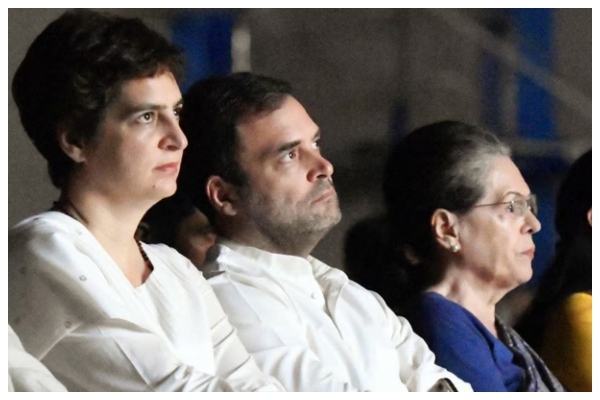
The metaphor may sound humorous. But there is a serious political phenomenon underneath it. For decades, Congress was accustomed to being the centre of India's political family. It governed much of independent India's history. It occupied the political drawing room, decided the agenda and expected others to adjust their chairs. Then the political family changed. The voter changed. The Congress lost power.
And, perhaps more importantly, it lost the psychological certainty that India naturally belonged to it. That is where the “naraz fufa” syndrome begins. Look at the pattern. If the government takes a major decision, Congress objects. If India achieves something internationally, questions are raised. If a national symbol is celebrated, controversy follows. If the government announces a programme, its motives are questioned. If the Prime Minister receives international recognition, the opposition searches for a reason to dismiss it.
The problem is not that an Opposition should criticise the government. Criticism is the oxygen of democracy. The problem arises when criticism becomes a permanent posture and opposition becomes an emotional response rather than a political alternative. A healthy Opposition says: “Here is what the government is doing wrong, and here is what we would do differently.” The “naraz fufa” says: “Why wasn't I consulted?”
ALSO READ: After 80 Years in Darkness, Electricity Finally Reaches Elderly Couple’s Home in Bengal
The old entitlement has collided with a new electorate. And the result is often visible in the language of Congress politics - outrage, accusation, suspicion and indignation.
The “naraz fufa” is never merely unhappy about the food. He is unhappy that someone else organised the wedding. That is the deeper political metaphor.
Congress's challenge is therefore not simply electoral. It is intellectual.
It must decide whether it wants to remain the party that constantly explains why the present is wrong or become a party capable of explaining what India's future should look like. A national opposition cannot survive merely by opposing Narendra Modi. It needs a positive theory of India. What is its economic vision? Its national-security doctrine? Its approach to technology? Its understanding of India's civilisational inheritance? Its position on terrorism? Its strategy for global diplomacy? Its answer to the aspirations of young Indians? These questions cannot be answered by indignation.
Nor can every political disagreement be converted into a moral catastrophe.
The Indian voter has become far more demanding. He is interested in roads, infrastructure, employment, technology, national security, welfare delivery, India's global standing and opportunities for the next generation. He may listen to political rhetoric. But increasingly, he asks a simple question - “What is your alternative?”This is where the “naraz fufa” metaphor becomes uncomfortable for Congress
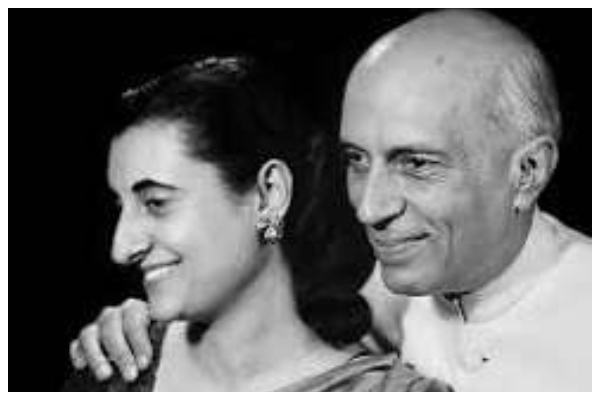
A relative can sulk indefinitely at a family function. A political party cannot.
Democracy does not guarantee anyone permanent importance. Every election is a reminder that political relevance has to be earned afresh. Congress once represented the political mainstream because it successfully occupied the space between India's many regions, communities and ideological currents. Its historic achievement was precisely its ability to absorb differences.
Today, however, it often appears trapped between its historical legacy and its present political reality. The party still behaves as though it is entitled to be taken seriously merely because it once governed India. But history is not a permanent electoral mandate. The past can explain a party. It cannot substitute for a future.
There is another danger in the “naraz fufa” mentality: it can make a party mistake opposition to the government for opposition to the country. These are not the same thing. A government can and must be criticised. Policies can be challenged. Ministers can be questioned. Parliament can be confrontational. Courts can scrutinise executive action. But national achievements, national institutions and national interests should not become collateral damage in a partisan battle.
There is nothing wrong with being angry. There is nothing wrong with being disappointed. There is certainly nothing wrong with losing an election and questioning the government that defeated you. But remaining permanently angry at the family because the family stopped listening is not politics. It is narazgi.
And a political party cannot build a national future merely by sitting in the corner with folded arms and declaring that the wedding is badly organised. The music is playing.
The country is moving. The only question is whether Congress will eventually join the celebration or continue behaving like the naraz fufa, who is angry because nobody asked him to conduct the band.

Editor's Desk
Editor's Desk