Kerala’s Kurup Controversy: Congress and the Politics of Selective Freedom
Total Views |


There is a revealing contradiction unfolding in Kerala. A Congress-led government speaks loudly about women’s freedom, gender equality, freedom of expression and constitutional values. But when a woman journalist challenges a conservative religious argument about women, the machinery of the state moves against her.
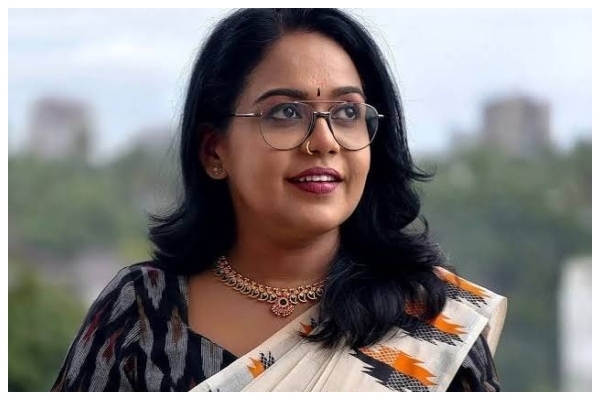 The immediate issue is the case against senior television journalist Aparna Kurup, who anchored a television debate on controversial remarks by Sunni cleric Kanthapuram A.P. Aboobacker Musliyar concerning women’s presence in public spaces. Kurup criticised the remarks during the debate and invoked the example of Colonel Sofia Qureshi, a Muslim woman who has represented India in uniform. She has now been booked following complaints alleging that her comments hurt religious sentiments.
The irony is almost impossible to miss. The controversy began because a prominent cleric suggested that women should remain confined to their homes and that their presence in public celebrations and stages was contrary to Islamic norms. The statement generated considerable criticism in Kerala. Even Chief Minister V.D. Satheesan publicly rejected the idea that women should be restricted to their homes and asserted the principle of gender equality.
Quite right.
But then comes the question - what happens when a woman exercises her own freedom to criticise that patriarchal idea?
Does freedom end where religious sensitivity begins?
If so, what exactly is the Congress government defending when it talks about women's empowerment?
A woman does not become free merely because a chief minister says she is free. She becomes free when she can speak, question, disagree and criticise without being intimidated by religious pressure or threatened with the criminal law.
That is the real test.
Congress has long presented itself as the custodian of secularism. But Indian secularism cannot mean that the political establishment must be extraordinarily cautious whenever an issue concerns a particular minority community. Constitutional secularism means equal citizenship. It cannot mean unequal courage.
There is a particularly disturbing pattern here. When conservative Hindu practices are criticised, Congress leaders and its wider ecosystem rarely hesitate to invoke patriarchy, misogyny, communalism and constitutional morality. Quite properly, regressive practices deserve criticism. But precisely the same standard must apply when the regressive argument comes from a Muslim cleric.
Women cannot have one set of rights inside a temple and another set of rights outside a mosque. Patriarchy does not become progressive because it is wrapped in religious vocabulary. Nor can religious sentiment become a veto over democratic debate. The Congress leadership therefore has a simple choice. It can stand by its proclaimed commitment to women's equality and freedom of expression, or it can allow political calculations to determine where those principles apply.
The contradiction becomes sharper because the Indian Union Muslim League, an important Congress ally in Kerala, has been cautious in dealing with the cleric's remarks. That political relationship inevitably raises questions about whether the Congress is prepared to confront the social conservatism of an influential section of its electoral alliance. This is where the language of secularism often becomes selective.

The larger issue is therefore bigger than Aparna Kurup. It concerns whether India will allow religious sensitivities to become a permanent exception to free expression. The constitution does not guarantee a right to be immune from criticism. Religion has freedom; religious institutions have freedom; individuals have freedom. But none of these freedoms creates a constitutional right to silence criticism.
Congress should remember its own rhetoric. If women must be free, let them be free to enter public life. If journalists must be free, let them question religious authority. If secularism means anything, let the same constitutional standard apply to every community. And if freedom of expression is truly a democratic value, Congress cannot defend it selectively. The real test of secular politics is not how loudly one condemns patriarchy when it is politically convenient. The real test is whether one has the courage to confront patriarchy when confronting it may cost votes.
The Kurup episode ultimately raises a question far bigger than one television anchor or one controversial remark - does freedom of expression remain a constitutional right when the subject becomes politically inconvenient? Free speech cannot depend on the religious identity of the person being criticised, nor can opposition to patriarchy be suspended to protect a particular vote bank. A democratic society must allow women to question patriarchal attitudes, journalists to ask uncomfortable questions and citizens to criticise religious or political authority without fear. If Congress genuinely believes in liberal values, it must defend freedom of expression consistently—not selectively, cautiously or according to electoral convenience.
This is not merely another Kerala controversy. It exposes the uncomfortable limits of Congress secularism: freedom of expression is celebrated until it collides with the political sensitivities of the Muslim vote.
The irony is almost impossible to miss. The controversy began because a prominent cleric suggested that women should remain confined to their homes and that their presence in public celebrations and stages was contrary to Islamic norms. The statement generated considerable criticism in Kerala. Even Chief Minister V.D. Satheesan publicly rejected the idea that women should be restricted to their homes and asserted the principle of gender equality.
Quite right.
But then comes the question - what happens when a woman exercises her own freedom to criticise that patriarchal idea?
Does freedom end where religious sensitivity begins?
If so, what exactly is the Congress government defending when it talks about women's empowerment?
A woman does not become free merely because a chief minister says she is free. She becomes free when she can speak, question, disagree and criticise without being intimidated by religious pressure or threatened with the criminal law.
That is the real test.
ALSO READ: Congress: The “Naraz Fufa” of Indian Politics
There is a particularly disturbing pattern here. When conservative Hindu practices are criticised, Congress leaders and its wider ecosystem rarely hesitate to invoke patriarchy, misogyny, communalism and constitutional morality. Quite properly, regressive practices deserve criticism. But precisely the same standard must apply when the regressive argument comes from a Muslim cleric.
Women cannot have one set of rights inside a temple and another set of rights outside a mosque. Patriarchy does not become progressive because it is wrapped in religious vocabulary. Nor can religious sentiment become a veto over democratic debate. The Congress leadership therefore has a simple choice. It can stand by its proclaimed commitment to women's equality and freedom of expression, or it can allow political calculations to determine where those principles apply.
The contradiction becomes sharper because the Indian Union Muslim League, an important Congress ally in Kerala, has been cautious in dealing with the cleric's remarks. That political relationship inevitably raises questions about whether the Congress is prepared to confront the social conservatism of an influential section of its electoral alliance. This is where the language of secularism often becomes selective.
A political party cannot demand the courage to confront one community's orthodoxy while treating another community's orthodoxy as politically delicate. That is not secularism. It is vote-bank sensitivity masquerading as secular principle. And the Aparna Kurup case makes the contradiction personal.
A woman journalist was doing precisely what a democratic media is expected to do: questioning an argument placed before the public. She was not demanding that a religious community surrender its faith. She was challenging a proposition about the place of women in public life. The answer to such criticism should have been another argument. Not a police case.
The larger issue is therefore bigger than Aparna Kurup. It concerns whether India will allow religious sensitivities to become a permanent exception to free expression. The constitution does not guarantee a right to be immune from criticism. Religion has freedom; religious institutions have freedom; individuals have freedom. But none of these freedoms creates a constitutional right to silence criticism.
ALSO READ: Kerala Journalist Aparna Kurup Apologises After Death Threats Over Cleric Remarks
The Kurup episode ultimately raises a question far bigger than one television anchor or one controversial remark - does freedom of expression remain a constitutional right when the subject becomes politically inconvenient? Free speech cannot depend on the religious identity of the person being criticised, nor can opposition to patriarchy be suspended to protect a particular vote bank. A democratic society must allow women to question patriarchal attitudes, journalists to ask uncomfortable questions and citizens to criticise religious or political authority without fear. If Congress genuinely believes in liberal values, it must defend freedom of expression consistently—not selectively, cautiously or according to electoral convenience.