Weaving Cultural Values into Global Diplomacy: Inside the 18th BRICS Summit Goodie Bag
Over 1,200 international journalists and global delegates gathered at Bharat Mandapam for the BRICS Summit. They received a carefully packed goodie bag.Unzipping the official BRICS goodie bag feels less like opening press swag and more like unboxing a vibrant, moving map of the subcontinent.
Total Views |


When international journalists jet into global summits, they usually brace themselves for a predictable haul of corporate clutter: cheap plastic pens, generic lanyards, and forgettable branded notebooks destined to be left in hotel room trash cans. But India just threw out the rulebook.
Over 1,200 international journalists and global delegates gathered at Bharat Mandapam for the BRICS Summit. They received a carefully packed goodie bag.Unzipping the official BRICS goodie bag feels less like opening press swag and more like unboxing a vibrant, moving map of the subcontinent.
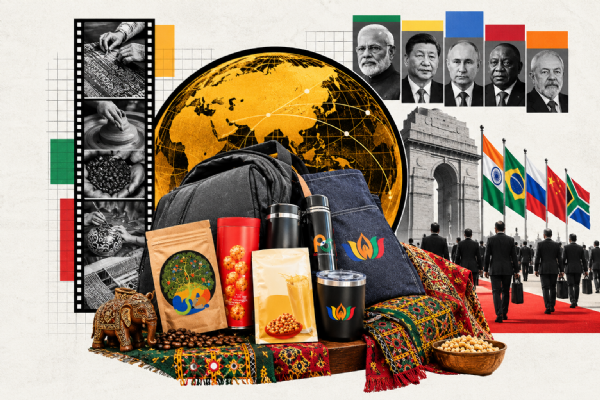
It holds nine unique items. This is not just a welcome gift. It is a smart way to share local.stories.The items support the "Vocal for Local" campaign. They bring attention to the One District One Product initiative. Each piece connects back to a specific region and its craft.
Every item tucked inside the sleek, tech-forward tote bag (equipped with an ingenious built-in charging port) tells a story of India’s grassroots economy, deeply rooted in regional geography, traditional craftsmanship, and ancient dietary wisdom. Rather than presenting generic souvenirs, India has packaged its rich heritage directly from the hands of local artisans and farmers to a global audience.
A Culinary and Cultural Journey Across States
The contents of the hamper read like an inclusive map of India’s micro-economies, seamlessly bridging diverse cultures into a unified national identity:
Bihar's Protein Powerhouse and Sacred Snack: The hamper proudly features sattu, the nutrient-dense roasted gram flour that has served as a traditional northern Indian staple for centuries. Alongside sattu is makhana (fox nuts), an aquatic superfood witnessing a massive global surge. By introducing international journalists to these Bihari staples, the kit promotes indigenous health foods that hold immense potential for the global wellness market.
The Tribal Highlands of Odisha: Representing the Eastern Ghats, the hamper includes 100 percent Arabica specialty coffee sourced directly from the tribal hill regions of Odisha’s Koraput district. Grown by smallholder tribal farmers, this aromatic coffee brings a piece of Odisha’s lush landscape to the world stage, highlighting sustainable tribal livelihoods.
The Regal Craftsmanship of Gujarat: Adding a touch of vibrant textile heritage, the hamper includes an exquisite block-printed stole or dupatta from Gujarat. Showcasing intricate hand-block printing techniques passed down through generations, this piece symbolizes the unparalleled dexterity of Indian textile artisans.
Branding Local Products Through the ODOP Lens
By weaving the philosophy of the One District One Product (ODOP) initiative into the summit's core, India is championing a powerful narrative of self-reliance and rural empowerment. When international media personnel and foreign delegates carry these treasures back across continents, they carry living testaments to India’s micro-economies. This strategic branding elevates everyday indigenous goods into global ambassadors of soft power, proving that true diplomatic warmth lies in sharing the authentic, unvarnished soul of the country.
Beneath the clever optics lies a deeper commitment to grassroots livelihoods. Every item tucked into the tech-forward tote bags serves as a commercial lifeline. The inclusion of single-origin coffee from Odisha’s Koraput hills is not merely an exotic novelty; it is a vital promotional nudge for smallholder tribal farming cooperatives striving for global market recognition. The same economic logic applies to Bihar's protein-packed sattu and the intricate hand-block-printed Gujarati stoles. Behind each artifact and superfood sits an artisan community or agricultural collective standing to gain tangible economic momentum if their craft catches the eye of a foreign correspondent.
When scaled across the roughly 350 meetings and engagements hosted throughout India's 2026 BRICS chairship—spanning more than 25 cities—these hampers cease to be mere footnotes. They function as repeatable, highly effective units in a broader national strategy: utilizing every diplomatic milestone as an international shop window for products that might otherwise remain confined to their home districts.
Whether a Bihari superfood or a Koraput bean ultimately secures a permanent spot on a European breakfast table because of a tote bag handed out at Bharat Mandapam remains to be seen. Yet, the intent is unmistakable. Every journalist walking out of New Delhi with local treasures in hand is unknowingly transforming into an economic ambassador, carrying the authentic, beating pulse of India's cultural economy directly out into the world.