Allahabad HC Seeks Production of Man Allegedly Detained After Converting to Islam, Marrying Muslim Woman
Total Views |


Prayagraj , September 14: The Allahabad High Court has directed Uttar Pradesh authorities and the father of a 31-year-old man to produce him before the court after allegations that he was being illegally detained following his decision to convert to Islam and marry a Muslim woman against his father's wishes.
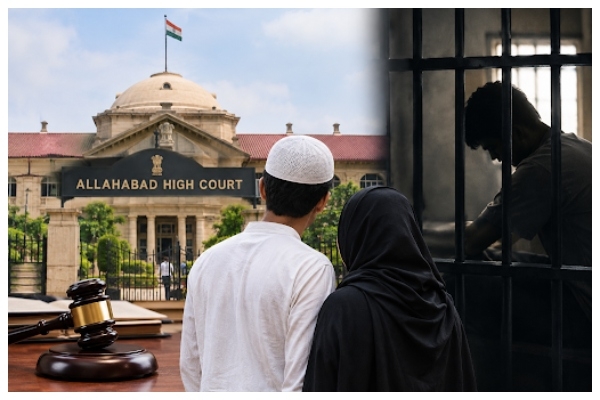
A bench of Justice Sandeep Jain passed the order on September 9 while hearing a habeas corpus petition filed by the man's friend, Sultan. The court directed the State authorities and the man's father, Devraj Singh Malik, to ensure that Ayush Malik is produced before it on September 16.
The petition alleged that Ayush voluntarily renounced Hinduism and converted to Islam without coercion, undue influence or inducement. He subsequently married Chandni Qureshi despite opposition from his father.
According to the petition, Ayush's father lodged an FIR against Chandni and her relatives at Shamli police station on June 6, 2026. The case was registered under Sections 5(1) and 3 of the Uttar Pradesh Prohibition of Unlawful Conversion of Religion Act, 2021, along with several provisions of the Bharatiya Nyaya Sanhita.
The Shamli Conversion Controversy (2026): In a highly publicized case in Uttar Pradesh, India, a young Hindu man named Ayush Malik converted to Islam (taking the name Mohammad Ali) to marry his Muslim partner. The case triggered strict state anti-conversion laws after his family…
— RAKESH VAID (@rakeshvaid) September 11, 2026
The petitioners claimed that the FIR was false and motivated and alleged that State authorities, in collusion with Ayush's father, had facilitated his detention. They further alleged that Ayush was being kept in his father's custody and deprived of his personal liberty.
After examining the material placed before it, the High Court observed that the documents prima facie indicated that Ayush had voluntarily converted to Islam and married Chandni against his father's wishes.
ALSO READ: “Judiciary and Criticism: The Test Is Democratic Temperament”.
The court, however, did not make any final finding on the allegations. It said the claims concerning Ayush's personal liberty were serious and required immediate consideration.
The matter has been listed as fresh on September 16.