The Veto Must Go: An Imperial Relic in a Changed World
Total Views |


The debate over reform of the United Nations Security Council has once again acquired urgency, with BRICS calling for a more democratic, representative and effective UN and greater representation for developing countries. India’s legitimate claim to a permanent place in the Security Council is an important part of this debate. But there is a larger question that the world must confront: Should the veto itself continue to exist? The answer should increasingly be no.
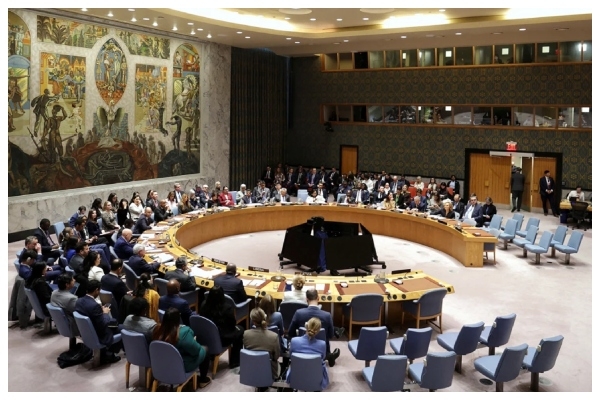 The world has changed dramatically. Colonial empires have disappeared. Asia and Africa have emerged as political and economic forces. Scores of new sovereign states have joined the UN. The demographic, economic and strategic centre of gravity of the world has shifted. Yet the ultimate decision-making privilege remains concentrated in five countries. This is the fundamental contradiction.
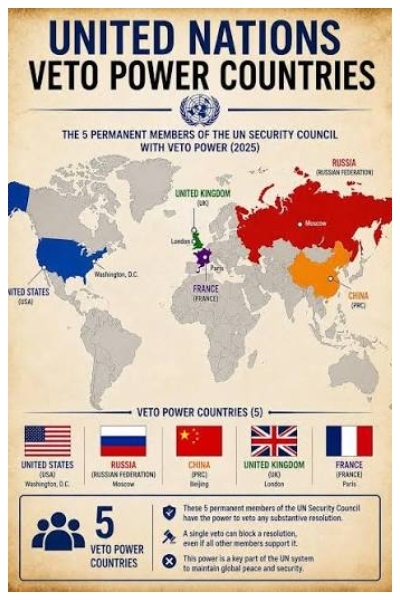
The UN operates on the principle of sovereign equality of member states. The Security Council, however, institutionalised inequality by giving five countries a power denied to all others. The Council has 15 members, each with one vote, but a negative vote by any permanent member can prevent a substantive resolution from being adopted. The UN itself maintains a historical record of vetoes cast since 1946. In other words, one country can overrule fourteen. Can such a system genuinely be called democratic?
The problem becomes more serious when the veto is used by a country that is itself a party to the dispute before the Council. Russia's vetoes concerning Ukraine illustrate the structural absurdity. A permanent member involved in a major international conflict can use its privileged position to prevent the Security Council from taking action against it. The same fundamental problem exists whenever a permanent member uses the Council to shield an ally or protect its own strategic interests.
The Gaza conflict has provided another stark illustration. On June 4, 2025, the United States vetoed a Security Council resolution concerning the humanitarian situation in Gaza even though the other 14 members voted in favour.
The point is not to single out America or Russia. That would miss the real issue. The problem is the institution itself. A system that permits Russia to protect its interests today can permit America, China, Britain or France to protect theirs tomorrow. The nationality of the veto-holder may change; the democratic defect does not.
This is why the veto is better understood as an imperial residue of the old great-power system. It was never founded on the principle that all nations should have an equal voice. It was founded on the recognition that the great powers would not accept an international organisation capable of overriding their vital interests. The veto was therefore a bargain among powerful states, not an expression of democratic equality.
There is an additional danger. The veto can convert the Security Council from an instrument for collective security into an arena for geopolitical bargaining. National alliances, strategic interests, military calculations and spheres of influence can take precedence over the larger interests of international peace.
The history of the Council provides enough evidence of this paralysis. The UN itself has acknowledged that veto-wielding permanent members have at times impeded swift and effective action on major crises. The veto has been repeatedly deployed over conflicts in the Middle East, Ukraine, Syria and elsewhere. The result is not merely diplomatic frustration. When the Security Council cannot act, civilians can pay the price.
India should therefore be willing to make a larger argument. The objective should not be an Indian veto. The objective should ultimately be a world without vetoes. That is a far more difficult proposition, but also a far more principled one.
The argument that abolishing the veto would make the great powers leave or ignore the UN may have been compelling in 1945. Eight decades later, the international community should not remain permanently imprisoned by the political anxieties of the founding moment.
There are mechanisms available to deal with disagreement without giving five countries an absolute privilege. The General Assembly's 1950 “Uniting for Peace” resolution was itself developed precisely because the Security Council could become paralysed when its permanent members could not agree.
The world has moved from the age of empires to the age of interdependence. Climate change, terrorism, pandemics, cyber threats, artificial intelligence, food security and global economic instability do not respect the spheres of influence of five victorious powers from 1945. Nor should international peace.
The veto may once have been the price of creating the United Nations. Today it has increasingly become one of the reasons the United Nations struggles to fulfil its purpose.
The real reform of the Security Council, therefore, should not be about deciding who gets the next veto. It should be about asking whether any country should have one at all.
The world needs a Security Council that reflects the 21st century not a power arrangement frozen in the aftermath of the Second World War. Reform the UN. Expand representation. Give the Global South its rightful voice. But ultimately, abolish the veto. That would be genuine democratisation of the international order.
The veto was born in the political circumstances of 1945. The Second World War had ended, the victorious great powers had emerged as the dominant military powers, and the United Nations was created around a bargain that gave five countries the United States, Soviet Union, Britain, France and China a permanent seat and veto. It may have been a political necessity at that moment. But a provision created to accommodate the power structure of 1945 cannot automatically claim legitimacy in 2026.
The UN operates on the principle of sovereign equality of member states. The Security Council, however, institutionalised inequality by giving five countries a power denied to all others. The Council has 15 members, each with one vote, but a negative vote by any permanent member can prevent a substantive resolution from being adopted. The UN itself maintains a historical record of vetoes cast since 1946. In other words, one country can overrule fourteen. Can such a system genuinely be called democratic?
The problem becomes more serious when the veto is used by a country that is itself a party to the dispute before the Council. Russia's vetoes concerning Ukraine illustrate the structural absurdity. A permanent member involved in a major international conflict can use its privileged position to prevent the Security Council from taking action against it. The same fundamental problem exists whenever a permanent member uses the Council to shield an ally or protect its own strategic interests.
ALSO READ: BRICS Success: How India Turned a Divided World into a Consensus Table
The point is not to single out America or Russia. That would miss the real issue. The problem is the institution itself. A system that permits Russia to protect its interests today can permit America, China, Britain or France to protect theirs tomorrow. The nationality of the veto-holder may change; the democratic defect does not.
This is why the veto is better understood as an imperial residue of the old great-power system. It was never founded on the principle that all nations should have an equal voice. It was founded on the recognition that the great powers would not accept an international organisation capable of overriding their vital interests. The veto was therefore a bargain among powerful states, not an expression of democratic equality.
There is an additional danger. The veto can convert the Security Council from an instrument for collective security into an arena for geopolitical bargaining. National alliances, strategic interests, military calculations and spheres of influence can take precedence over the larger interests of international peace.
The history of the Council provides enough evidence of this paralysis. The UN itself has acknowledged that veto-wielding permanent members have at times impeded swift and effective action on major crises. The veto has been repeatedly deployed over conflicts in the Middle East, Ukraine, Syria and elsewhere. The result is not merely diplomatic frustration. When the Security Council cannot act, civilians can pay the price.
The obvious response is to reform the Council. And reform is certainly necessary. India, Brazil, Africa and other under-represented regions deserve a substantially greater voice. BRICS has rightly demanded a more democratic and representative Security Council and backed the aspirations of India and Brazil for a greater role.
But there is a danger in stopping there. If the solution is simply to create more permanent members and give them the same veto, the world will not have democratised the Security Council. It will merely have expanded the club.
India should therefore be willing to make a larger argument. The objective should not be an Indian veto. The objective should ultimately be a world without vetoes. That is a far more difficult proposition, but also a far more principled one.
The argument that abolishing the veto would make the great powers leave or ignore the UN may have been compelling in 1945. Eight decades later, the international community should not remain permanently imprisoned by the political anxieties of the founding moment.
There are mechanisms available to deal with disagreement without giving five countries an absolute privilege. The General Assembly's 1950 “Uniting for Peace” resolution was itself developed precisely because the Security Council could become paralysed when its permanent members could not agree.
ALSO READ: UK Faces Historic Breakup Push as Devolved Leaders Plan Joint Summit in Cardiff
The veto may once have been the price of creating the United Nations. Today it has increasingly become one of the reasons the United Nations struggles to fulfil its purpose.
The real reform of the Security Council, therefore, should not be about deciding who gets the next veto. It should be about asking whether any country should have one at all.
The world needs a Security Council that reflects the 21st century not a power arrangement frozen in the aftermath of the Second World War. Reform the UN. Expand representation. Give the Global South its rightful voice. But ultimately, abolish the veto. That would be genuine democratisation of the international order.