UCC: A Constitutional Mandate, Not a Political Choice
Total Views |


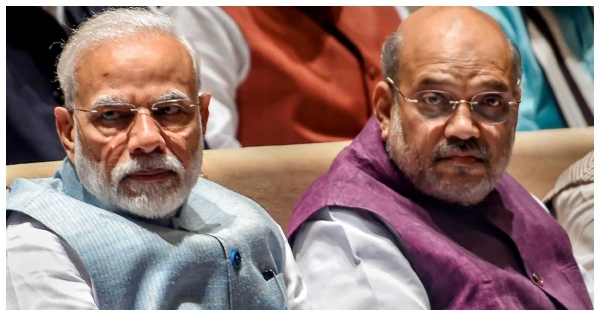
The sharp reaction to Union Home Minister Amit Shah’s assertion that the Uniform Civil Code will be implemented in the NDA-ruled states before 2029 reveals something more interesting than opposition to one proposed law. It reveals the persistence of a political argument that treats religious identity as superior to citizenship.
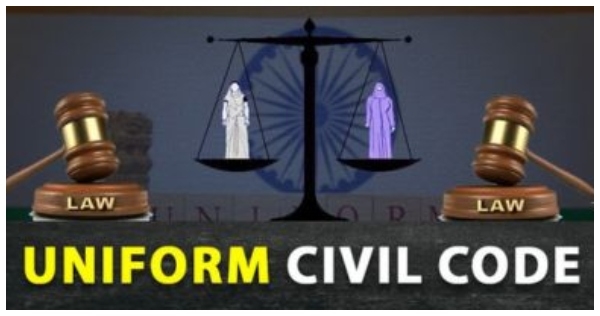 The first question the critics should answer is simple: Why is Article 44 in the Constitution at all? Article 44 expressly says: “The State shall endeavour to secure for the citizens a uniform civil code throughout the territory of India.” It is not a BJP invention, nor an RSS insertion, nor an afterthought of the Modi government. It is part of the Constitution itself.
It is true that Article 44 belongs to the Directive Principles and is not enforceable by itself in court. But that does not make it meaningless. The Constitution does not contain decorative provisions. Directive Principles establish constitutional goals towards which governance is expected to move.
Indeed, the Supreme Court has repeatedly reminded governments about this constitutional objective. In Mohd. Ahmed Khan v. Shah Bano Begum (1985), the Supreme Court famously observed that a common civil code would help national integration by removing conflicting loyalties to different laws. The observation was not an attack on any religion. It was a constitutional recognition that citizenship cannot remain permanently fragmented by separate civil regimes.
In Sarla Mudgal v. Union of India (1995), the Supreme Court again dealt directly with the problem created by different personal laws. The case concerned Hindu husbands converting to Islam to contract another marriage. The Court held that conversion did not dissolve the existing Hindu marriage and treated the use of conversion to circumvent monogamy as an abuse of law. It also drew attention to Article 44.
Then came John Vallamattom v. Union of India (2003). While dealing with a discriminatory provision of the Indian Succession Act, the Supreme Court again referred to Article 44 and the constitutional expectation of a uniform civil code.
And Shayara Bano v. Union of India (2017) demolished another convenient assumption that every practice contained in personal law is automatically protected merely because it is associated with religion. The Supreme Court invalidated instant triple talaq. The larger constitutional principle was unmistakable religious identity cannot become a shield for arbitrary or discriminatory treatment.
This is precisely where the anti-UCC argument collapses.
Article 25 guarantees freedom of conscience and the right freely to profess, practise and propagate religion. But it does not establish an unlimited right to insist that every civil consequence of religion must be governed by a separate legal regime. Article 25 itself is subject to public order, morality, health and the other provisions of Part III. The Constitution therefore protects religious freedom within a constitutional order, not outside it.
Marriage, divorce, inheritance, adoption and succession are not merely theological questions. They have enormous consequences for property, women’s rights, children, maintenance and family obligations. The State already legislates extensively in these areas.
The real constitutional principle is equality.
Article 14 guarantees equality before law and equal protection of laws. Article 15 prohibits discrimination on specified grounds, including religion and sex. If two citizens stand before the State in essentially identical civil circumstances, the question must eventually arise: how long can their civil rights depend upon the religion into which they were born?
The UCC should, therefore, not be sold merely as a BJP ideological project. It should be defended as a constitutional modernisation project. Nor does uniformity mean uniformity of culture, worship, food, dress or belief. A civil code regulates civil consequences. A Muslim can remain Muslim. A Hindu can remain Hindu. A Christian can remain Christian. The Constitution does not require cultural homogenisation. It requires constitutional citizenship.
The political opposition is free to challenge the contents of a proposed UCC. That is legitimate democracy. It can demand consultation, scrutinise provisions, raise concerns about tribal customs, gender justice or federal implementation. What it cannot logically claim is that India is constitutionally forbidden from having a common civil framework. Article 44 says the opposite.
The debate, therefore, should move beyond the tired accusation of “Hindu law”. The real question is whether a modern Republic should continue to maintain different civil rights and obligations for citizens on the basis of religious personal laws.
If equality is constitutional, if gender justice is constitutional, if individual dignity is constitutional and if national citizenship is constitutional, then the case for a common civil framework is not an assault on the Constitution. It is an attempt to fulfil the Constitution. The critics of Amit Shah should, therefore, answer the Constitution before answering Amit Shah.
The familiar charge has already surfaced - the UCC is an attempt to impose “Hindu law” on minorities; it threatens secularism; it violates religious freedom; it targets Muslims. These arguments may make good political slogans. They do not make good constitutional arguments.
It is true that Article 44 belongs to the Directive Principles and is not enforceable by itself in court. But that does not make it meaningless. The Constitution does not contain decorative provisions. Directive Principles establish constitutional goals towards which governance is expected to move.
Indeed, the Supreme Court has repeatedly reminded governments about this constitutional objective. In Mohd. Ahmed Khan v. Shah Bano Begum (1985), the Supreme Court famously observed that a common civil code would help national integration by removing conflicting loyalties to different laws. The observation was not an attack on any religion. It was a constitutional recognition that citizenship cannot remain permanently fragmented by separate civil regimes.
In Sarla Mudgal v. Union of India (1995), the Supreme Court again dealt directly with the problem created by different personal laws. The case concerned Hindu husbands converting to Islam to contract another marriage. The Court held that conversion did not dissolve the existing Hindu marriage and treated the use of conversion to circumvent monogamy as an abuse of law. It also drew attention to Article 44.
Then came John Vallamattom v. Union of India (2003). While dealing with a discriminatory provision of the Indian Succession Act, the Supreme Court again referred to Article 44 and the constitutional expectation of a uniform civil code.
And Shayara Bano v. Union of India (2017) demolished another convenient assumption that every practice contained in personal law is automatically protected merely because it is associated with religion. The Supreme Court invalidated instant triple talaq. The larger constitutional principle was unmistakable religious identity cannot become a shield for arbitrary or discriminatory treatment.
This is precisely where the anti-UCC argument collapses.
Article 25 guarantees freedom of conscience and the right freely to profess, practise and propagate religion. But it does not establish an unlimited right to insist that every civil consequence of religion must be governed by a separate legal regime. Article 25 itself is subject to public order, morality, health and the other provisions of Part III. The Constitution therefore protects religious freedom within a constitutional order, not outside it.
Marriage, divorce, inheritance, adoption and succession are not merely theological questions. They have enormous consequences for property, women’s rights, children, maintenance and family obligations. The State already legislates extensively in these areas.
The argument that UCC means “Hindu law imposed on Muslims” therefore begs the fundamental question: Which Hindu law? Modern Hindu personal law itself was extensively codified and reformed by Parliament through the Hindu Marriage Act, Hindu Succession Act, Hindu Adoption and Maintenance Act and Hindu Minority and Guardianship Act. Hindu society did not receive a frozen religious code immune from legislative reform. So why should civil law remain permanently divided merely because citizens belong to different religions?
The answer cannot be that Muslims have religious freedom. Hindus have religious freedom too. Christians have religious freedom too. Sikhs, Buddhists and Jains have religious freedom too. The Constitution protects individualsnot competing legal sovereignties within the Republic.
The real constitutional principle is equality.
Article 14 guarantees equality before law and equal protection of laws. Article 15 prohibits discrimination on specified grounds, including religion and sex. If two citizens stand before the State in essentially identical civil circumstances, the question must eventually arise: how long can their civil rights depend upon the religion into which they were born?
The UCC should, therefore, not be sold merely as a BJP ideological project. It should be defended as a constitutional modernisation project. Nor does uniformity mean uniformity of culture, worship, food, dress or belief. A civil code regulates civil consequences. A Muslim can remain Muslim. A Hindu can remain Hindu. A Christian can remain Christian. The Constitution does not require cultural homogenisation. It requires constitutional citizenship.
ALSO READ: Dindori Court Convicts Seven in Religious Conversion Case
The debate, therefore, should move beyond the tired accusation of “Hindu law”. The real question is whether a modern Republic should continue to maintain different civil rights and obligations for citizens on the basis of religious personal laws.
If equality is constitutional, if gender justice is constitutional, if individual dignity is constitutional and if national citizenship is constitutional, then the case for a common civil framework is not an assault on the Constitution. It is an attempt to fulfil the Constitution. The critics of Amit Shah should, therefore, answer the Constitution before answering Amit Shah.