UPI Payments: What the new charges mean for consumers
Ten years after its launch, UPI is changing the way its payment system is funded. The new charges are aimed at merchants and payment service providers, not ordinary consumers. Here is what you need to know.
Total Views |


When the Unified Payments Interface (UPI) was launched in 2016, it changed the way Indians paid for everyday purchases. A mobile phone and a bank account were enough to send money, pay a shopkeeper or settle a bill. Over the past 10 years, UPI has become part of daily life, from buying vegetables to paying school fees and shopping online.
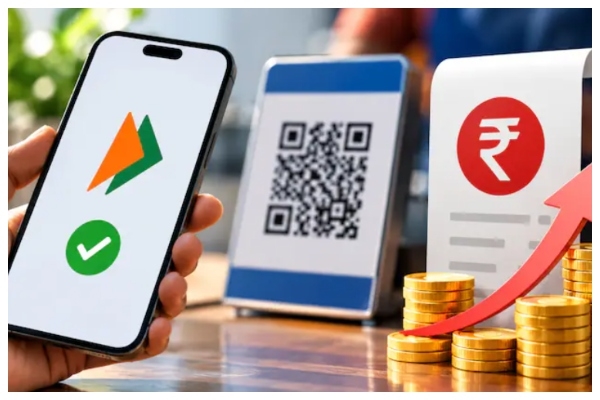
The important point for consumers is simple: UPI payments between individuals remain free, and the new merchant charges are not meant to be passed on to buyers.
The National Payments Corporation of India (NPCI) has announced charges on certain merchant transactions from October 15. The main provisions are:
These provisions are based on the announced MDR structure. The exact treatment of a particular payment depends on the merchant category and applicable rules.
No. The announced MDR is a merchant-side charge, not a fee that ordinary UPI users are expected to pay.
The Finance Ministry has stated that banks must ensure merchants do not pass the MDR on to customers. UPI application providers have also been prohibited from imposing platform fees or hidden charges on these transactions.
For example:
The main reasons given for introducing MDR are:
1. Supporting the cost of running UPI
The government has supported UPI payments through subsidies over the past decade. NPCI has argued that the system now requires substantial annual investment in server capacity, infrastructure and fraud prevention.
The cost of operating a large digital payment network cannot be ignored as transaction volumes continue to grow.
2. Reducing dependence on government support
The subsidy model helped UPI expand rapidly. The new MDR is intended to create another source of revenue for the payment ecosystem, reducing dependence on government funding. This is a shift in how the system is financed, not a decision to charge ordinary users for transferring money.
3. Paying the banks and payment companies involved
UPI payments involve more than the app visible on a consumer's phone. Banks and payment service providers support the movement of money and the payment network.
The MDR is distributed among these participants. It is not a tax collected by the government or NPCI.
4. Investing in security and expansion
Digital payments need reliable infrastructure and protection against fraud. The revenue from MDR is intended to support continued investment in technology, payment acceptance networks and security.
This matters as more businesses and consumers use digital payments.
Why Was UPI Free In The First Place? The zero-MDR model was a policy choice. Before January 2020, UPI merchant transactions could attract MDR. The Centre subsequently made MDR zero for UPI and RuPay debit-card transactions to accelerate digital payments. The government then compensated banks and other payment participants through an incentive scheme. Government payouts under the UPI and RuPay incentive scheme rose
Why was UPI free in the first place?
The zero-MDR model was a policy choice. Before January 2020, UPI merchant transactions could attract MDR. The Centre subsequently made MDR zero for UPI and RuPay debit-card transactions to accelerate digital payments.
The government then compensated banks and other payment participants through an incentive scheme. Government payouts under the UPI and RuPay incentive scheme rose each year.
FY2021-22: ₹1,389 crore paid under the UPI and RuPay incentive scheme.
FY2022-23: ₹2,210 crore paid, up from the previous year.
FY2023-24: ₹3,631 crore paid, marking a further increase.
FY2024-25: An estimated ₹1,500 crore approved for a scheme focused on low-value UPI transactions involving small merchants.
FY2026-27: ₹2,000 crore allocated to support the zero-MDR framework.
Small merchants are an important part of India's cashless payment system. A vegetable seller, tea stall or small kirana shop may have limited margins and modest monthly receipts.
The exemption for qualifying merchants is intended to protect these businesses from additional payment costs.
The announced ₹1 lakh monthly receipt threshold means that eligible small merchants can continue accepting UPI without MDR. A dedicated fund has also been announced to support small merchants.
According to NPCI, the announced 0.4% MDR remains lower than traditional card-based transaction fees. NPCI has cited typical credit card MDRs of 1.5% to 2.5%, while debit card MDRs can be capped at up to 0.9%.
The comparison explains why UPI remains attractive to merchants even when a charge applies.
For consumers, the practical advantage remains convenience: no need to carry cash, remember card details or handle change.
UPI has spent the past decade making digital payments easy and accessible. The new MDR structure is an attempt to address the cost of maintaining and expanding that system.
For consumers, the message is reassuring: the announced changes are primarily about how UPI is funded, not about charging people for using it. The system is expected to remain a convenient way to pay, while banks, merchants and payment companies share more of the cost of keeping it running.
The system has also required continuous investment in banks, technology, payment networks and security. For the past decade, the government and banks have supported the cost of keeping UPI payments running. A new merchant discount rate (MDR) has now been introduced to help distribute this cost across the payment ecosystem.
The important point for consumers is simple: UPI payments between individuals remain free, and the new merchant charges are not meant to be passed on to buyers.
What are the new charges?
- UPI payments up to ₹2,000: No MDR on merchant payments.
- Payments above ₹2,000: An MDR of 0.4% of the transaction amount, subject to an overall cap of ₹300.
- Payments to friends and family: Person-to-person UPI transfers remain free
- Small merchants: Vegetable vendors, tea shops, kirana stores and milk booths with monthly UPI receipts up to ₹1 lakh will be exempt from MDR.
- Mutual funds and stockbrokers: MDR of 0.02%, subject to a cap of ₹300.
- Selected services: A flat charge of ₹5 for certain utility payments, fuel purchases, insurance premiums, rail tickets and government services.
These provisions are based on the announced MDR structure. The exact treatment of a particular payment depends on the merchant category and applicable rules.
Will consumers have to pay?
The Finance Ministry has stated that banks must ensure merchants do not pass the MDR on to customers. UPI application providers have also been prohibited from imposing platform fees or hidden charges on these transactions.
For example:
- You send ₹500 to a friend. There is no charge.
- You pay ₹1,500 at a shop. No MDR applies.
- You buy a product worth ₹5,000 from a large retailer. The merchant may incur MDR, but it is not supposed to be added to your bill as a UPI charge.
- You pay a small vegetable vendor who qualifies for the exemption. No MDR applies to that merchant.
ALSO READ: Sweden’s Election: The Lesson of Immigration
Why have these charges been introduced?
UPI may appear simple to users, but every payment involves a network of banks, technology companies and payment service providers. The system needs to process transactions, maintain servers, prevent fraud and remain available throughout the day.
1. Supporting the cost of running UPI
The government has supported UPI payments through subsidies over the past decade. NPCI has argued that the system now requires substantial annual investment in server capacity, infrastructure and fraud prevention.
The cost of operating a large digital payment network cannot be ignored as transaction volumes continue to grow.
2. Reducing dependence on government support
The subsidy model helped UPI expand rapidly. The new MDR is intended to create another source of revenue for the payment ecosystem, reducing dependence on government funding. This is a shift in how the system is financed, not a decision to charge ordinary users for transferring money.
3. Paying the banks and payment companies involved
UPI payments involve more than the app visible on a consumer's phone. Banks and payment service providers support the movement of money and the payment network.
The MDR is distributed among these participants. It is not a tax collected by the government or NPCI.
4. Investing in security and expansion
Digital payments need reliable infrastructure and protection against fraud. The revenue from MDR is intended to support continued investment in technology, payment acceptance networks and security.
This matters as more businesses and consumers use digital payments.
Why Was UPI Free In The First Place? The zero-MDR model was a policy choice. Before January 2020, UPI merchant transactions could attract MDR. The Centre subsequently made MDR zero for UPI and RuPay debit-card transactions to accelerate digital payments. The government then compensated banks and other payment participants through an incentive scheme. Government payouts under the UPI and RuPay incentive scheme rose
Why was UPI free in the first place?
The zero-MDR model was a policy choice. Before January 2020, UPI merchant transactions could attract MDR. The Centre subsequently made MDR zero for UPI and RuPay debit-card transactions to accelerate digital payments.
The government then compensated banks and other payment participants through an incentive scheme. Government payouts under the UPI and RuPay incentive scheme rose each year.
Payment each year (In past five years):
FY2022-23: ₹2,210 crore paid, up from the previous year.
FY2023-24: ₹3,631 crore paid, marking a further increase.
FY2024-25: An estimated ₹1,500 crore approved for a scheme focused on low-value UPI transactions involving small merchants.
FY2026-27: ₹2,000 crore allocated to support the zero-MDR framework.
ALSO READ: Kerala: CPI(M) Turns to Hindutva After the Electoral Rout
Why are small shops exempt?
The exemption for qualifying merchants is intended to protect these businesses from additional payment costs.
The announced ₹1 lakh monthly receipt threshold means that eligible small merchants can continue accepting UPI without MDR. A dedicated fund has also been announced to support small merchants.
Is UPI still cheaper than cards?
The comparison explains why UPI remains attractive to merchants even when a charge applies.
For consumers, the practical advantage remains convenience: no need to carry cash, remember card details or handle change.
What should consumers remember?
- UPI transfers to friends and family remain free.
- Merchant payments up to ₹2,000 have no MDR.
- The announced MDR is a merchant-side charge.
- Banks have been advised to prevent merchants from passing it on to consumers.
- UPI apps are not supposed to add hidden charges.
- Small qualifying merchants remain exempt.
- Consumers should check the final payment amount before approving a transaction.
The larger picture
For consumers, the message is reassuring: the announced changes are primarily about how UPI is funded, not about charging people for using it. The system is expected to remain a convenient way to pay, while banks, merchants and payment companies share more of the cost of keeping it running.