Why do well-off Indians still keep cribbing?
Even with all this, an urban fellow does not feel that he is very well off and nothing much has happened to his lifestyle!
NewsBharati 17-Sep-2026 11:01:11 AM
Total Views |


Today, people living in tier I cities have almost everything that is required of a citizen.
Every well-off person brought up in a city was not born with a silver spoon in his mouth, but he had the opportunity to go from earlier brass taps to today's silvery Jaguar taps. A toilet at home- mostly attached to each bedroom. Electricity, road connectivity, access to railways and a safe train journey were a given.
Grocery shops, rations, bread, eggs and butter were available to most middle-class people.So much has happened in the last ten years which has improved our lifestyle; yet I find that many of us keep cribbing all the time.
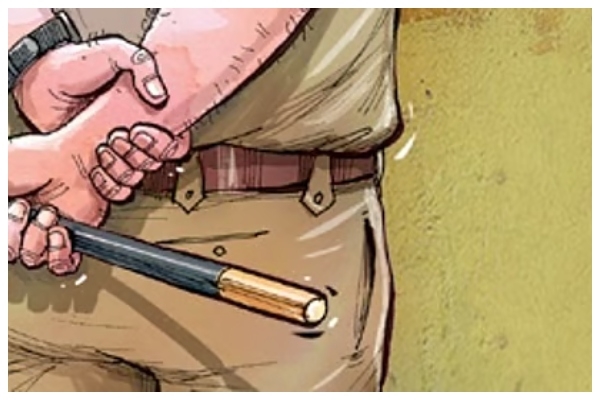
Off late, things have changed in a big way across the nation in the urban landscape. Now everyone has a mobile phone, a computer/laptop at home, a colour TV, a music system, a big refrigerator, air conditioners, piped gas/cylinder, an oven, a microwave, a mixer. We have access to good doctors, clinics, path labs and food delivery in minutes. We are spoilt for choice of entertainment on TV. Bandwidth through fibre or otherwise at phenomenally good speed is available. We had a bank account from our school/college days- now we have plastic currency called cards.
Even with all this, an urban fellow does not feel that he is very well off and nothing much has happened to his lifestyle!
The rural landscape has changed in a big way
And that matters the most to most
Around 2011, 69% of the 1.21-billion population lived in villages and Tier 1 cities, and metros expanded rapidly, resulting in high GDP growth driven largely by urban services, leaving rural regions anchored in traditional agrarian economic models. They required a change, and if done, could feel the impact- they were the deprived lot.
A change was needed to uplift the bottom of the pyramid.
To give a perspective: The number of towns or cities for a population of 1.45 billion people is still very small, and is in the thousands only. This is my India. Our Bharat lives in more than 6.5 lakh villages, small and large.
Conditions for those living in villages were rather poor earlier in comparison, and one could rate them at two or three on a scale of ten, while a town would score around 8 points.
Digital and financial inclusion was a game changer
Basic amenities that used to define the hardships of rural life have seen unprecedented improvements.
The upliftment of life for a villager has been very tangible, and a villager is much happier than a person born and brought up in a big town.
Life in Indian villages has undergone a major structural shift over the last 5–10 years. What was once defined by severe infrastructure deficits such as unpaved roads or no roads at all, unreliable power, and lack of piped water—has transitioned into an ecosystem with core physical, digital, and financial amenities.
The life of a villager in India has undergone a profound transformation, moving away from isolated, purely agrarian lifestyles into a highly connected, diversified, and digitized reality. Driven by digital inclusion and economic shifts, the modern Indian villager operates in a world vastly different from that of previous generations.
Driven by major national initiatives and digital penetration, the standard of basic living facilities in rural India has improved across key areas. Naysayers were against Digital India, but the Modi government had a vision and a visionary plan. First, lay the digital pipe and then pump in the data. Most of us could not fathom this idea when thousands of miles of fibre were being laid and reached up to the last mile. This is like you are preparing for a wedding and first roll out the wiring and test that current flows to every nook and corner of the venue. Once this is done, you need to connect bulbs and the whole venue is lit up! How will a farmer use this was the question: ‘Do not underestimate the power of a common man.’ Was the answer, and it worked perfectly well, putting data/information in the hands of a man sitting in a remote village. Today, a common man is buying a kg of rice or a cup of tea and paying digitally. For him, it is magic.
Over 59.09 crore bank accounts have been opened for those not having access to the formal economy. The average balance per account is around ₹5,356. Around 78% of these accounts are located in rural and semi-urban areas. Life has radically changed for a rural guy who never knew what a bank looks like. Over 600,000 villages in India are now covered by a physical bank branch, a BC agent outlet, or a mobile banking facility.
Improved roads mean many villagers operate on a "circular migration" pattern. They live in the village but commute daily to nearby towns or factories for work, seamlessly blending rural living with urban income.
Rural electrification and concrete roads have unlocked physical mobility, ensuring that medical emergencies, school transportation, and getting farm yields to market are no longer dependent on favourable weather. Ten crore toilets have been built, and villagers no longer have to go out in the open to defecate.
Road construction under the PM Gram Sadak Yojana has connected previously remote hamlets to nearby towns, improving transport for agricultural produce, emergency healthcare, and daily commutes.
Health care
Over the last decade, routine inoculation in rural India has undergone a major transformation. Targeted government interventions, digital supply chain tracking, and grassroots mobilisation have driven measurable structural gains in rural health outcomes.
Mission Indradhanush, launched in late 2014, targeted specifically pockets with low coverage, high-risk populations, and hard-to-reach rural/tribal terrains.
Data show full vaccination coverage among children aged 12–23 months grew from ~62% to over 76% nationwide, with rural areas recording a sharper rate of improvement compared to urban centres.
Every well-off person brought up in a city was not born with a silver spoon in his mouth, but he had the opportunity to go from earlier brass taps to today's silvery Jaguar taps. A toilet at home- mostly attached to each bedroom. Electricity, road connectivity, access to railways and a safe train journey were a given.
Grocery shops, rations, bread, eggs and butter were available to most middle-class people.So much has happened in the last ten years which has improved our lifestyle; yet I find that many of us keep cribbing all the time.
I really do not understand why.
The change
Off late, things have changed in a big way across the nation in the urban landscape. Now everyone has a mobile phone, a computer/laptop at home, a colour TV, a music system, a big refrigerator, air conditioners, piped gas/cylinder, an oven, a microwave, a mixer. We have access to good doctors, clinics, path labs and food delivery in minutes. We are spoilt for choice of entertainment on TV. Bandwidth through fibre or otherwise at phenomenally good speed is available. We had a bank account from our school/college days- now we have plastic currency called cards.
Even with all this, an urban fellow does not feel that he is very well off and nothing much has happened to his lifestyle!
“A great obstacle to happiness is to expect too much happiness.”
Bernard de Fontenelle
He fails to see the number of highways built; the airport numbers have shot up, the new parliament, improvement in railways, railway stations, more IITs and IIMs, Faceless Tax Administration & E-Governance, Unified Payments Interface (UPI) & Digital Ecosystem, Rapid Metro Rail Expansion, augmented defence production, automated Tolls, Ayushman Bharat Health Centres: Cashless health coverage up to ₹5 lakh per family and local primary health centres expanded healthcare access for informal urban workers. 5G rollout & High-Speed Mobile Data, Solar rooftop Incentive, LED penetration. Obtaining a passport is easier and streamlined. The highest railway bridge, the tallest statue in the world and space missions are top-of-the-line achievements. For an educated Indian, ‘Make in India’ is only a slogan, though our defence production has gone up manyfold.The rural landscape has changed in a big way
And that matters the most to most
Around 2011, 69% of the 1.21-billion population lived in villages and Tier 1 cities, and metros expanded rapidly, resulting in high GDP growth driven largely by urban services, leaving rural regions anchored in traditional agrarian economic models. They required a change, and if done, could feel the impact- they were the deprived lot.
A change was needed to uplift the bottom of the pyramid.
ALSO READ: UPI Payments: What the new charges mean for consumers
To give a perspective: The number of towns or cities for a population of 1.45 billion people is still very small, and is in the thousands only. This is my India. Our Bharat lives in more than 6.5 lakh villages, small and large.
Conditions for those living in villages were rather poor earlier in comparison, and one could rate them at two or three on a scale of ten, while a town would score around 8 points.
Digital and financial inclusion was a game changer
Basic amenities that used to define the hardships of rural life have seen unprecedented improvements.
The upliftment of life for a villager has been very tangible, and a villager is much happier than a person born and brought up in a big town.
Life in Indian villages has undergone a major structural shift over the last 5–10 years. What was once defined by severe infrastructure deficits such as unpaved roads or no roads at all, unreliable power, and lack of piped water—has transitioned into an ecosystem with core physical, digital, and financial amenities.
The life of a villager in India has undergone a profound transformation, moving away from isolated, purely agrarian lifestyles into a highly connected, diversified, and digitized reality. Driven by digital inclusion and economic shifts, the modern Indian villager operates in a world vastly different from that of previous generations.
Driven by major national initiatives and digital penetration, the standard of basic living facilities in rural India has improved across key areas. Naysayers were against Digital India, but the Modi government had a vision and a visionary plan. First, lay the digital pipe and then pump in the data. Most of us could not fathom this idea when thousands of miles of fibre were being laid and reached up to the last mile. This is like you are preparing for a wedding and first roll out the wiring and test that current flows to every nook and corner of the venue. Once this is done, you need to connect bulbs and the whole venue is lit up! How will a farmer use this was the question: ‘Do not underestimate the power of a common man.’ Was the answer, and it worked perfectly well, putting data/information in the hands of a man sitting in a remote village. Today, a common man is buying a kg of rice or a cup of tea and paying digitally. For him, it is magic.
Over 59.09 crore bank accounts have been opened for those not having access to the formal economy. The average balance per account is around ₹5,356. Around 78% of these accounts are located in rural and semi-urban areas. Life has radically changed for a rural guy who never knew what a bank looks like. Over 600,000 villages in India are now covered by a physical bank branch, a BC agent outlet, or a mobile banking facility.
Improved roads mean many villagers operate on a "circular migration" pattern. They live in the village but commute daily to nearby towns or factories for work, seamlessly blending rural living with urban income.
High-speed internet has turned some villages into creative hubs. Villagers earn primary incomes creating hyper-local content for global audiences. Government welfare, subsidies, and pensions are credited directly into villagers' bank accounts, dramatically cutting down the middleman corruption that historically plagued rural distribution networks.
The widespread expansion of the Ujjwala Yojana has replaced hazardous mud stoves with LPG gas cylinders, fundamentally altering health dynamics for rural women. Simultaneously, the Jal Jeevan Mission has brought piped, safe drinking water directly into households.Rural electrification and concrete roads have unlocked physical mobility, ensuring that medical emergencies, school transportation, and getting farm yields to market are no longer dependent on favourable weather. Ten crore toilets have been built, and villagers no longer have to go out in the open to defecate.
ALSO READ: BRICS: When Politics Came Before the Nation
Health care
Over the last decade, routine inoculation in rural India has undergone a major transformation. Targeted government interventions, digital supply chain tracking, and grassroots mobilisation have driven measurable structural gains in rural health outcomes.
Mission Indradhanush, launched in late 2014, targeted specifically pockets with low coverage, high-risk populations, and hard-to-reach rural/tribal terrains.
Data show full vaccination coverage among children aged 12–23 months grew from ~62% to over 76% nationwide, with rural areas recording a sharper rate of improvement compared to urban centres.
‘True gratitude often comes from those who expect the least and appreciate the most.’
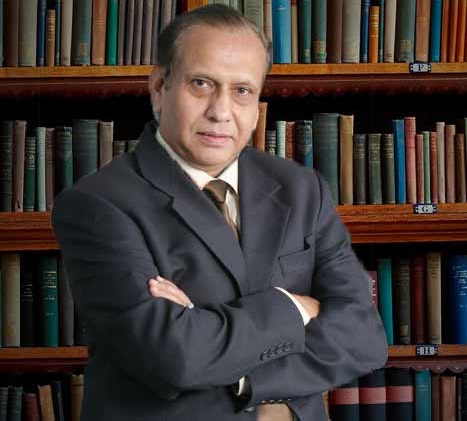
Virender Kapoor
A thinker, educationist and an inspirational guru. Kapoor is an Indian who wears many hats. An educationist of repute, he was the Director of a prestigious management Institute under the Symbiosis umbrella. He has emerged as a leading think tank in human behavior, motivation and success. As a celebrity author, his name appears with the likes of Thomas Friedman and Dale Carnegie. He has authored more than 30 books as of now which are on Amazon worldwide and several of his books are in the pipeline.