West Bengal: Maoist leader Asim Mandal held after 15 years underground, wanted in 55 cases and carrying Rs 2.20 crore bounty
Kolkata Police STF arrested CPI (Maoist) leader Asim Mandal alias Akash from Patashpur in Purba Medinipur on September 17. He was wanted in around 55 cases across West Bengal, Jharkhand and Odisha and carried a combined bounty of Rs 2.20 crore in Jharkhand and Odisha.
Total Views |


A senior CPI (Maoist) leader who had remained underground for more than 15 years has been arrested in West Bengal. Asim Mandal alias Akash was taken into custody by the Kolkata Police Special Task Force (STF) from Lalat village in the Patashpur area of Purba Medinipur.
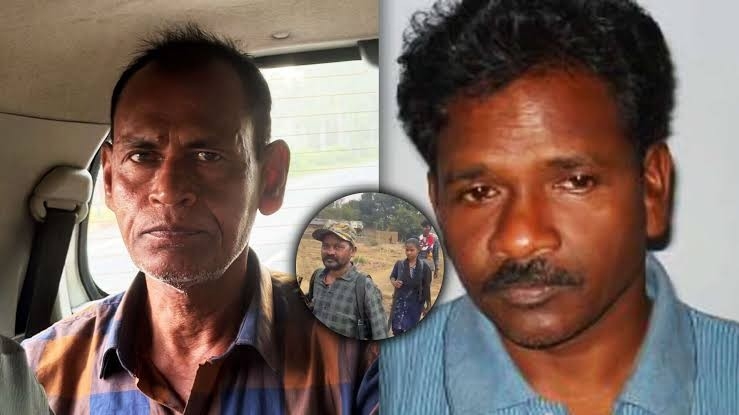
Maoist leader Asim Mandal alias Akash arrested by Kolkata Police STF after 15 years underground, (Image: TOI)
Mandal is described as a Central Committee member of CPI (Maoist) and secretary of the outfit's West Bengal State Committee-I. Police records cited in reports link him to around 55 cases registered across West Bengal, Jharkhand and Odisha. A combined reward of Rs 2.20 crore had been announced for information leading to his capture, with Rs 1 crore from Jharkhand and Rs 1.20 crore from Odisha.
STF tracks Mandal to Patashpur
The arrest was made on September 17 after the Kolkata Police STF received information that Mandal was staying in the area.
According to police officials, the STF used intelligence inputs and technical information to track his movements. Officers followed the leads before reaching Lalat in Patashpur, where Mandal was taken into custody.
Rs 2.20 crore bounty in Jharkhand and Odisha
Mandal had a combined bounty of Rs 2.20 crore on him in two states. Jharkhand had announced a reward of Rs 1 crore, while Odisha had announced Rs 1.20 crore.
There was no separate bounty on Mandal from the West Bengal government, according to reports quoting Kolkata Police officials.
His arrest is significant because he had remained underground for many years and was wanted in cases registered across three states.
From student activism to Maoist leadership
Mandal is originally from West Midnapore in West Bengal. Reports say he became associated with the Maoist movement during his student years in the 1980s.
He later became active in different parts of West Bengal and Jharkhand and rose through the ranks of the CPI (Maoist). He was associated with the Lalgarh movement and later took important responsibilities in the organisation's Bengal unit.
Reports said Mandal became secretary of the CPI (Maoist)'s West Bengal State Committee around 2010. After senior Maoist leader Kishenji, also known as Mallojula Koteswara Rao, was killed in 2011, Mandal remained underground and continued to be on the radar of security agencies.
Wanted in around 55 cases
Police and security agency records have linked Mandal to around 55 cases across West Bengal, Jharkhand and Odisha.
Reports say the cases include allegations related to attacks on security personnel and other violent incidents linked to Maoist activities.
Mandal is also reported to have used several aliases, including Timir and Manoj.
Police question Mandal about Maoist network
After his arrest, investigators are questioning Mandal about the Maoist network and his alleged activities across the three states.
Police are looking for information about other cadres, communication channels, weapons and possible hidden material or dump sites in forest areas. Investigators are also examining whether Mandal maintained links with active Maoist groups during his years underground.
Mandal's wife was arrested in 2010
Mandal's wife has also been linked by police to Maoist activities. She is reportedly from the Patashpur area.
Media reports said she was arrested by the Kolkata Police STF in 2010 and remains in judicial custody. Police are also looking at this background while investigating Mandal's activities and connections.
Arrest comes amid security operations
Mandal's arrest comes amid continued security operations against Maoist networks in the wider West Bengal-Jharkhand belt.
Several Maoist associates have reportedly been arrested or surrendered during recent operations. Security agencies have been working to identify remaining cadres and disrupt the organisation's networks in the region.
The arrest has also drawn a political response, with West Bengal Chief Minister Suvendu Adhikari praising the Kolkata Police STF and saying that attempts to expand extremist networks in the state would not be allowed.
Investigation now focuses on wider network
With Mandal in custody, investigators are now trying to establish his present organisational links and identify other people who may still be active.
Police are examining his communication records, past movements and alleged links across West Bengal, Jharkhand and Odisha. They are also looking into how Mandal managed to remain underground for more than 15 years and who may have helped him during this period.