The Umar Khalid Syndrome
NewsBharati 19-Sep-2026 15:36:33 PM
Total Views |


Why is Umar Khalid being repeatedly carried into India's university campuses? That is the question the latest controversy over the proposed screening of Prisoner No. 626710 is Present at IIIT-Hyderabad raises. The Central Board of Film Certification flagged the proposed screening, saying public exhibition of an uncertified film would violate the Cinematograph Act unless a specific exemption had been obtained. The institute subsequently cancelled the proposed screening and made it clear that no official permission had been given for it.
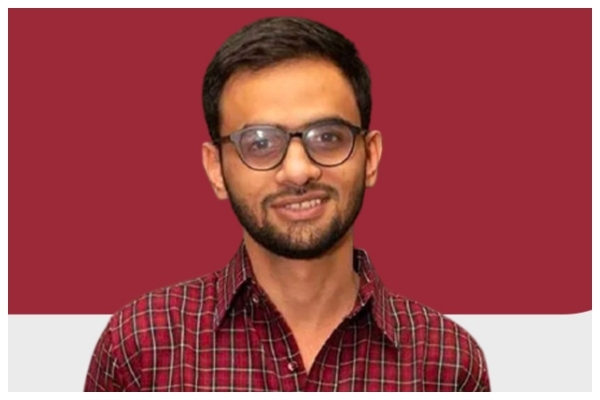
 Khalid has been in custody since September 2020 in the case concerning the alleged larger conspiracy behind the northeast Delhi riots. The chargesheet invokes multiple provisions of the IPC, UAPA and other laws. In January 2026, the Supreme Court declined bail to Khalid and other accused in the case after examining the prosecution material and the roles attributed to the accused. The Court was dealing with bail not determining guilt and that distinction must be respected. Khalid remains entitled to a fair trial and the presumption of innocence.
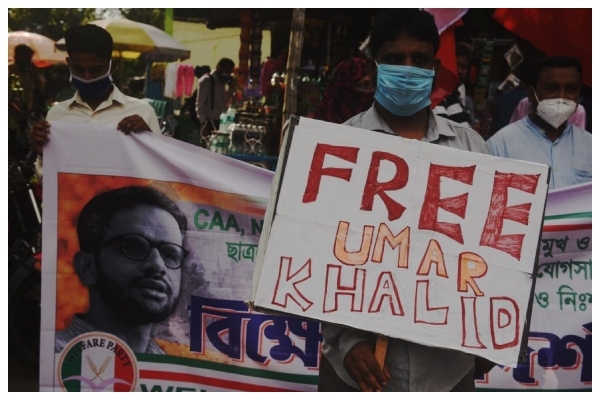
But the same constitutional principle works in the other direction. Presumption of innocence does not mean presumption of political sainthood. That is precisely what the Khalid-supporting ecosystem appears determined to manufacture. First comes the prisoner number. Then comes the documentary. Then comes the university auditorium. Then comes the language of the “political prisoner”. Finally comes the demand that anyone questioning the narrative should be branded an enemy of freedom. This is how political rehabilitation works.
India has produced political prisoners, revolutionaries and freedom fighters who sacrificed their lives for national independence. To casually place a contemporary accused in the same symbolic category is not merely an exercise in free expression. It is an attempt at political equivalence. The question is not whether Khalid's supporters have the right to defend him. They do. The question is whether they have the right to predetermine the moral verdict through campus politics, documentaries and ideological mobilisation. They do not.
A university should be a place where Khalid's speeches, political ideas, the anti-CAA movement, the Delhi riots, the prosecution's case and the defence's arguments can all be examined. Students can disagree with the government. They can question the UAPA. They can criticise the police. They can demand accountability. But there is a vast difference between studying a controversial political figure and constructing a political cult around him. The distinction becomes even more important when sections of the political establishment begin joining the campaign.
Karnataka Congress president B K Hariprasad recently described Khalid as a “nationalist” amid the NLSIU controversy. That statement is itself a reminder of how quickly the debate is moving from questions of law and evidence to political certification of Khalid's credentials. Who gave politicians, activists and campus groups the authority to declare an accused a nationalist before the judicial process has established the relevant facts? This is the deeper ideological problem.
A documentary can tell one story. A court has to test evidence. That distinction is being deliberately blurred. And universities are particularly vulnerable to this politics because campuses provide something that political rallies cannot: intellectual legitimacy. Once a controversial figure enters an elite university auditorium, surrounded by academics, students and the language of freedom, his political image acquires a veneer of scholarly respectability. The campus becomes not merely a venue but a legitimising institution. This is why the battle over Umar Khalid is ultimately bigger than Umar Khalid. It is about the ideological use of India's universities.
Universities must protect dissent. But dissent cannot mean immunity from scrutiny. Academic freedom cannot mean freedom from facts. And intellectual inquiry cannot mean selecting only those facts that support a predetermined political narrative. There is an even more disturbing tendency at work - the conversion of every legal action against a particular ideological constituency into evidence of a fascist state. If that logic is accepted, the judiciary becomes irrelevant. Investigation becomes illegitimate. Trial becomes persecution. Evidence becomes propaganda. And political activism becomes its own certificate of innocence. That is not liberalism. That is not constitutionalism. It is politics masquerading as jurisprudence. Khalid supporters should not be allowed to convert that constitutional protection into political immunity.
And India's universities should ask themselves a basic question before turning their auditoriums into stages for such campaigns -Are they educating students about a controversial case or manufacturing the next political martyr? India's democracy is strong enough to tolerate Umar Khalid's politics. It is also strong enough to scrutinise them.
What democracy cannot afford is a parallel political court in which activists decide the accused is a hero, filmmakers provide the mythology, universities provide the legitimacy and anyone who questions the narrative is declared an enemy of freedom. The courtroom must decide Umar Khalid's guilt or innocence. The campus must not decide his sainthood.
But the film is only the immediate issue. The larger issue is the political project surrounding Umar Khalid. There is an unmistakable attempt to transform an accused in a grave criminal case into a political icon, and then to transform criticism of that icon into an attack on democracy. This is not an innocent process.
But the same constitutional principle works in the other direction. Presumption of innocence does not mean presumption of political sainthood. That is precisely what the Khalid-supporting ecosystem appears determined to manufacture. First comes the prisoner number. Then comes the documentary. Then comes the university auditorium. Then comes the language of the “political prisoner”. Finally comes the demand that anyone questioning the narrative should be branded an enemy of freedom. This is how political rehabilitation works.
The proposed screening at IIIT-Hyderabad was described as an event for “Political Prisoners' Day”. The same documentary had earlier been proposed for screening at the National Law School of India University in Bengaluru, where it was opposed by ABVP and subsequently postponed. The symbolism is deliberate. Umar Khalid is no longer being presented merely as a person facing prosecution. He is being placed inside a historical pantheon of political prisoners. That comparison deserves scrutiny.
ALSO READ: ABVP seeks probe into IIT-B student suicide after exam incident
A university should be a place where Khalid's speeches, political ideas, the anti-CAA movement, the Delhi riots, the prosecution's case and the defence's arguments can all be examined. Students can disagree with the government. They can question the UAPA. They can criticise the police. They can demand accountability. But there is a vast difference between studying a controversial political figure and constructing a political cult around him. The distinction becomes even more important when sections of the political establishment begin joining the campaign.
Karnataka Congress president B K Hariprasad recently described Khalid as a “nationalist” amid the NLSIU controversy. That statement is itself a reminder of how quickly the debate is moving from questions of law and evidence to political certification of Khalid's credentials. Who gave politicians, activists and campus groups the authority to declare an accused a nationalist before the judicial process has established the relevant facts? This is the deeper ideological problem.
For a certain section of India's political discourse, the state is legitimate only when it acts against its ideological opponents. When an individual associated with the radical Left or anti-establishment politics is investigated, arrested or prosecuted, the entire criminal-justice process is immediately converted into a narrative of persecution. The vocabulary is predictable: dissent, resistance, political prisoner, authoritarianism, censorship. But where is the vocabulary of responsibility? Where is the discussion of the consequences of political mobilisation? Where is the serious examination of the prosecution's allegations? Where is the space for victims of the Delhi violence in this carefully constructed cinematic narrative?
A documentary can tell one story. A court has to test evidence. That distinction is being deliberately blurred. And universities are particularly vulnerable to this politics because campuses provide something that political rallies cannot: intellectual legitimacy. Once a controversial figure enters an elite university auditorium, surrounded by academics, students and the language of freedom, his political image acquires a veneer of scholarly respectability. The campus becomes not merely a venue but a legitimising institution. This is why the battle over Umar Khalid is ultimately bigger than Umar Khalid. It is about the ideological use of India's universities.
ALSO READ: Social Media: Tool of Information or new Mental Battlefield?
And India's universities should ask themselves a basic question before turning their auditoriums into stages for such campaigns -Are they educating students about a controversial case or manufacturing the next political martyr? India's democracy is strong enough to tolerate Umar Khalid's politics. It is also strong enough to scrutinise them.
What democracy cannot afford is a parallel political court in which activists decide the accused is a hero, filmmakers provide the mythology, universities provide the legitimacy and anyone who questions the narrative is declared an enemy of freedom. The courtroom must decide Umar Khalid's guilt or innocence. The campus must not decide his sainthood.

Editor's Desk
Editor's Desk