Disha Salian Death Case: Bombay HC Orders CBI Investigation
Total Views |


Mumbai , September 2: The Bombay High Court on Wednesday directed the registration of an FIR into the death of Disha Salia, manager of Sushant Sing Rajput, and ordered the Central Bureau of Investigation (CBI) to conduct the probe. The court also made it clear that no individual should be named or treated as an accused in the FIR unless there is suitable material against them.
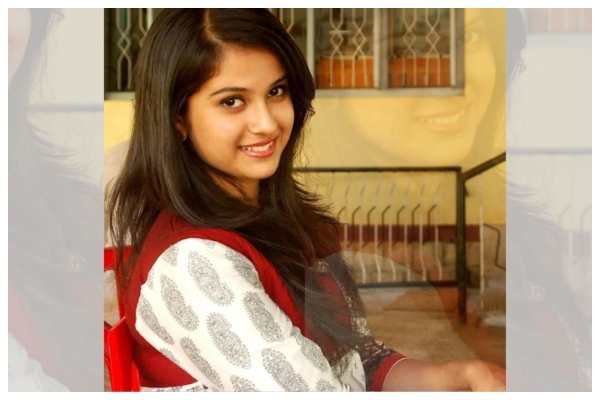
A bench of Justices S V Kotwal and R R Bhonsale directed a senior CBI officer to register the FIR and investigate the circumstances surrounding Disha Salian's death. The court further observed that no person should be detained merely on the basis of allegations unless there is reasonable suspicion supported by material.
The petition had also raised allegations against former Maharashtra Chief Minister Uddhav Thackeray's son Aditya Thackeray, describing him as an alleged suspect. However, the High Court's Wednesday order specifically clarified that no person should be treated as an accused without supporting material emerging during the investigation.
Representing the Maharashtra government, Chief Public Prosecutor Shishir Hirey maintained that the evidence collected so far indicated that Salian died by suicide following an alleged fall from the 12th floor of the residential building.
The State placed witness statements and forensic material before the court and argued that these findings did not indicate foul play or sexual assault. Hirey also submitted that the injuries, including a skull fracture, were consistent with a fall from such a height.
ALSO READ: “I Would Feel Like a Coward”: Swara Bhasker erupts controversy over Padmaavat’s Jauhar scene AGAIN
However, the High Court raised questions after examining documents including the panchnama, photographs of the body and other material collected during the inquiry. The bench questioned certain aspects of the evidence, including whether the injuries were consistent with a fall from the stated height and details concerning the clothes she was wearing.
Based on this evidence, the father now raised suspicion over his daughter's death and thus, the Police was bound by the Lalita Kumari judgment and lodged an FIR. The plea was vehemently opposed by senior advocate Sudeep Pasbola, who argued on behalf of Thackeray that the instant proceedings were politically motivated. During the hearing, the judges had orally observed that the allegations made by the father could be correct or false but the police should have lodged an FIR and given a final closure to the family over their daughter's death, especially in view of the fact that the police continued enquiring into the ADR for nearly five to six years.
However, Hiray clarified that the ADR was closed in October 2020 itself and was reopened only after the newly formed government in the State, took note of several allegations being made on social media about the manner in which the initial probe was carried out. He further clarified that even in the further enquiry no strong evidence was found to prosecute anyone for murder charge.
Thackeray's Counsel Calls Allegations Politically Motivated
Senior counsel Sudeep Pasbola, appearing for Aditya Thackeray, argued that the allegations against his client were motivated by political rivalry and were not supported by sufficient material.
He submitted that the State's inquiry was not prohibited by law but could not continue indefinitely. He also argued that if the petitioner believed an FIR should have been registered, he had an alternative legal remedy of approaching a Magistrate with a private complaint.
Salian's counsel Nilesh Ojha, however, argued that since the family was seeking a CBI investigation, approaching the High Court was justified, as a Magistrate could not directly order a CBI probe.
The High Court said its concern was not with the political dimensions of the matter but with ensuring that the law was properly followed and that the family received closure.
The court also directed that if the investigation does not uncover evidence of an offence, an appropriate summary report should be filed.
#Breaking: Bombay High Court orders CBI investigation in the death of Disha Salian, former manager of actor Sushant Singh Rajput, who died in alleged mysterious circumstances by falling from the 14th floor of a highrise in suburban Malad.
— Live Law (@LiveLawIndia) September 2, 2026
High Court clarified that NO ONE MUST… pic.twitter.com/EPOLILfL5K
The order came on a petition filed by Satish Salian, Disha Salian's father, who had sought a detailed investigation into his daughter's death, alleging that suspicious circumstances surrounded the incident. He had specifically sought a CBI probe and argued that registration of an FIR was necessary for a complete investigation and to provide closure to the family.
During the three-day hearing, the bench questioned the Maharashtra government's continued reliance on an inquiry under Section 174 of the erstwhile Criminal Procedure Code (CrPC).
The court observed that such an inquiry is primarily intended to ascertain the apparent cause of death at the initial stage following an Accidental Death Report (ADR). The bench questioned why the inquiry had continued for years, particularly after it was initially closed within three months and subsequently reopened in 2023 following claims and discussions on social media.
ALSO READ: Mamata’s Niece Found Dead
The court clarified that it was not reaching any conclusion regarding the circumstances of Salian's death at this stage, but was examining whether the investigation carried out so far was sufficient.
Background of the story
Disha Salian died on June 8, 2020, after falling from a building in Mumbai's Malad area. Her father has alleged that she was sexually assaulted and murdered, and has claimed that there were suspicious circumstances surrounding her death.
His petition also alleged that the death of Disha Salian and the subsequent death of actor Sushant Singh Rajput were interconnected and part of a larger conspiracy.
The hearing also brought the Sushant Singh Rajput case back into focus. Rajput's death in June 2020 had triggered a nationwide controversy and multiple investigations.
The CBI had investigated the case for several years and was reported last year to have closed its probe, with actor Rhea Chakraborty receiving a clean chit in the matter.
With the Bombay High Court now directing an FIR and a fresh CBI investigation into Disha Salian's death, the circumstances surrounding the June 2020 incident are set to undergo a renewed examination.