The protest that has emerged from the suicide case from IIT Bombay, resemble just the same regular 'protest' playbook. IIT Bombay is just a new playground for the playbook of the left-liberal ecosystem. While Jawaharlal Nehru University (JNU) used to be the traditional epicenter for ideological agitation, which is presently occupied with a different
high-profile criminal case no one wants to pay attention to, these roaches had to shift to a new playground. Besides, the recent victory of ABVP at DUSU elections is evident that Delhi, certainly, isn't an inhabitable environent for the roaches right now.
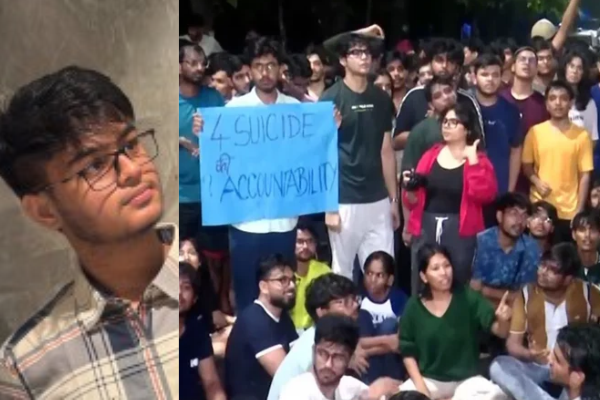
Second-year B.Tech student, Sahil Ravindra Wakode, was found dead, hanging from a ceiling fan in his room in Hostel Number 4 on the Powai campus. The tragic event took place on a Friday, just hours after the student was caught using a mobile phone and ChatGPT during an examination.
Within hours, protests erupted on campus. The parents alleged institutional harassment and caste-based discrimination.
An FIR was filed, naming IIT-B professor Suryanarayana Doolla as an accused.
A standoff between students and faculty quickly took over the campus. Interestingly this protest was not started by core engineering students dealing with rigorous technical workloads. It was spearheaded by the Humanities department. It should be noted that this department has long been criticized as a
breeding ground for ideological radicalism.
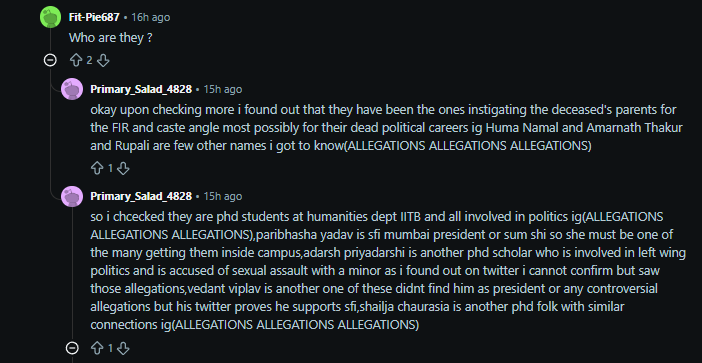
The relentless pressure mounted by this ecosystem eventually broke the administration. On Sunday night, IIT Bombay Director Prof. Shireesh Kedare caved to the heat and signed a sweeping 18-point charter of demands following a tense three-hour meeting at the main gate. But when investigative handles and digital commentators pulled back the curtain on platforms like
Reddit and X, the true operators were exposed: seasoned partisan activists from front organizations like SFI, AISA, and Marxist student fronts who hijacked the entire agitation purely for ideological mileage.
At the very forefront of this manufactured agitation stood a cadre of radical ideologues, proving that the protests had little to do with genuine student welfare and everything to do with the usual "
dimagi naxals" operating on campus.
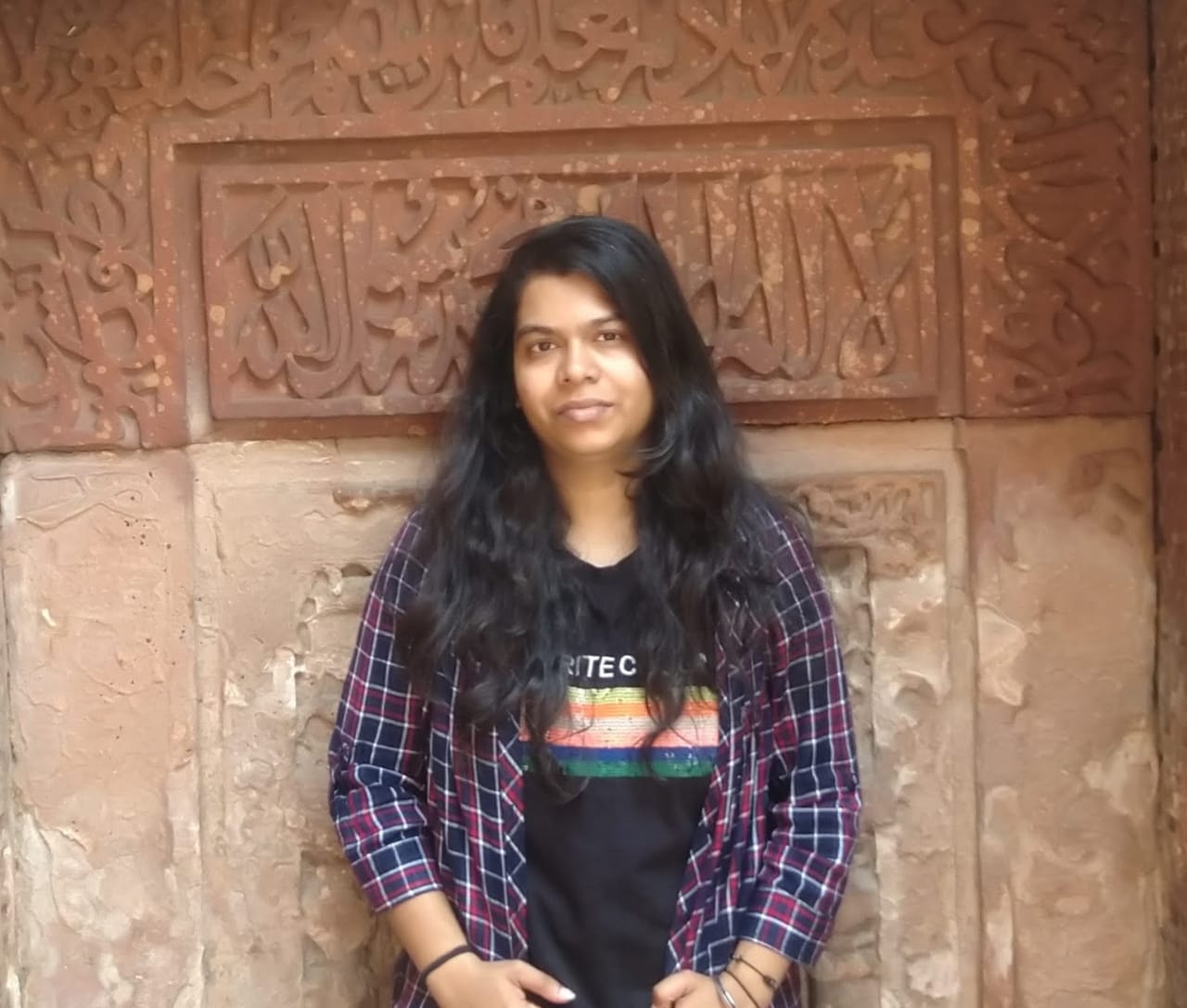
Leading the charge on the ground was Huma Namal, a PhD scholar in Humanities and an active member of SFI, who is also tied to 'The Collective—a Marxist student union' with a documented history of defending and condoning extremist elements.
Then second on the list is Vedant Viplav, a doctoral candidate in Philosophy and an SFI activist whose extensive social media footprint lays bare a hardline ideological orientation aimed squarely at keeping campus friction alive.
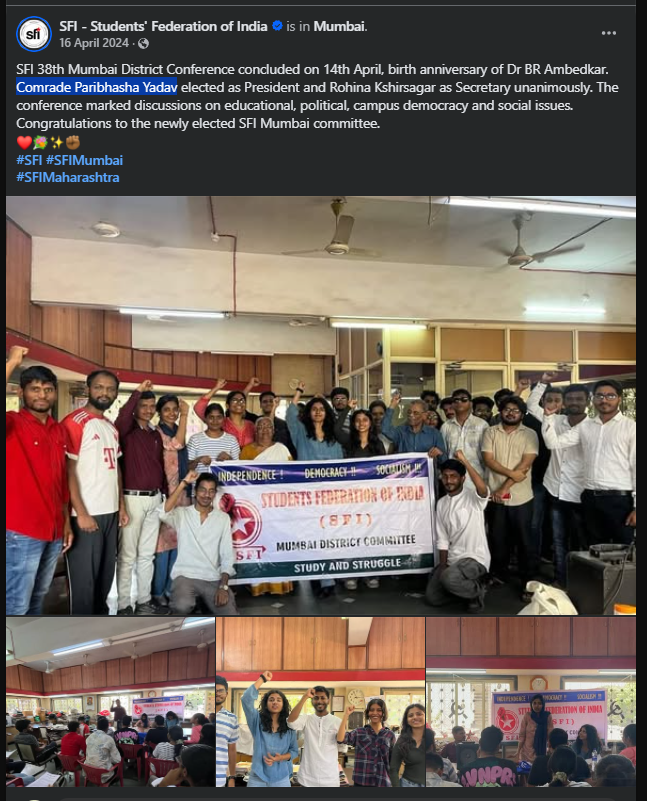
The machinery behind the unrest extended deep into partisan leadership roles, most notably through the third name,
Paribhasha Yadav. A research scholar in humanitarian sociology and the SFI Mumbai District President, Yadav’s rapid rise through ideological party conferences underscores how premier campus bodies are routinely co-opted for political mobilization rather than academic discourse.
Fourth is Amarkant Thakur, whose prominent role in leading the IIT Bombay agitation comes paired with a controversial public track record of inflammatory statements targeting Hindu faith, traditions, and sacred phrases.
Involvement of deep state?
Adding a grim dimension to this network of self-appointed campus moral guardians is Darsh Priyadarshi, another PhD scholar deeply embedded in left-wing campus circles who has faced severe allegations regarding sexual misconduct with a minor. The presence of foreign-linked or overseas figures meddling in sensitive local student matters raises serious red flags about the true motives behind these agitations. When individuals detached from the everyday academic realities of Indian institutions involve themselves in local campus standoffs, it points to a calculated design.
Hypocrisy of Abhijeet Dipke
What is even more interesting is the blatant hypocrisy of Abhijeet Dipke. This is the same person who rode a high-voltage campaign all the way to New Delhi, aggressively leading protests and forcing the Union Education Minister to resign over examination paper leaks. Back then, he positioned himself as the ultimate crusader for academic integrity, demanding strict accountability and zero tolerance for any compromise in exams.
Yet look at his stance now. When it comes to IIT Bombay, his CJP network takes the exact opposite route, turning around to defend and justify exam malpractice on campus while attacking the professor for doing his job. How does someone who weaponized paper leaks to oust a cabinet minister suddenly turn around and normalize cheating when it suits his political optics? This selective outrage exposes a convenient narrative agenda, proving that figures like Dipke are not interested in student welfare or clean systems at all. They are simply hunting for the next controversy to stay relevant, shifting their stance wherever the political winds blow.
This entire network hints at the possible involvement of the deep state orchestrating unrest behind the scenes.
The core issue was swiftly weaponized by partisan student fronts and activist networks who spun a convenient narrative to suit their own agenda. When Sahil Wakode was caught red-handed using a mobile phone to upload exam questions to ChatGPT, the normal academic protocol should have dealt with the malpractice .This manufactured outrage allowed radical factions to hijack a genuine moment of grief, turning an unfortunate personal tragedy into a high-voltage political platform to keep campus unrest permanently boiling.
When you step back and look at the entire puzzle, it becomes clear that we are witnessing a systematic attack on India's premier educational institutions. The tragic loss of a young student is being treated not as a solemn moment for grief and institutional introspection, but as raw fuel for a pre-written political script. From radical campus fronts and Marxist student unions turning humanities departments into safe spaces for perpetual agitation, to foreign-linked actors and hypocritical online agitators changing their stances on exam integrity just to suit their media optics, every single piece points to a dangerous design. If these elite campuses are allowed to be completely hijacked by the Dafli gang and their puppet-masters, the future of academic excellence and national stability in India's top-tier institutes will face an unprecedented crisis. It is time to strip away the mask of student welfare and expose the real architects of campus chaos before this destructive playbook reaches every corner of higher education.
If slogans like "Azadi, azadi," "Naam rahega Allah ka," or chants targeting patriarchy start echoing through the crowds, nobody should be surprised, because that has always been the real, underlying agenda of these protests.