“No Hindu Should Be Humiliated, No Law Should Be Misused”
NewsBharati 23-Sep-2026 13:07:19 PM
Total Views |


The Supreme Court’s refusal to entertain a PIL challenging the 2018 amendments to the Scheduled Castes and Scheduled Tribes (Prevention of Atrocities) Act should not be viewed merely as another legal contest between those defending the law and those alleging its misuse. The issue is much larger. It touches on a fundamental question confronting Hindu society - can a civilisation with such discrimination remain united if caste continues to be converted into a source of humiliation, bitterness, resentment and political mobilisation? The answer has to be an unequivocal no.
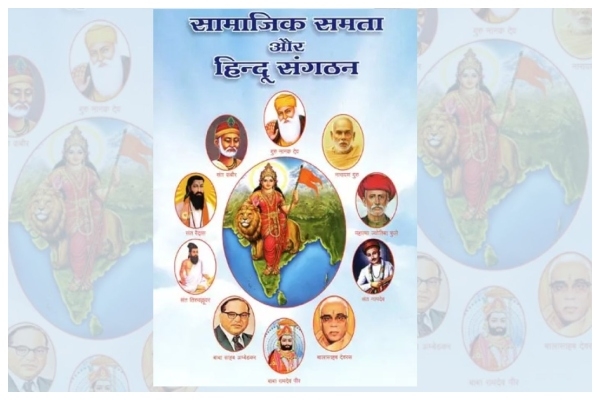
A law can punish an offender. It cannot manufacture fraternity. A court can deliver justice. It cannot create affection. A government can provide safeguards. It cannot compel one human being to respect another. That transformation has to come from within society.
Article 17 of the Constitution abolished untouchability. The constitutional promise of fraternity, dignity and equality therefore gives the struggle against caste discrimination a dimension far beyond electoral politics. For Hindu society, the responsibility is simultaneously constitutional, social and civilisational.
There is something deeply tragic when a Hindu looks at another Hindu and sees first his caste rather than his humanity. There is something even more tragic when political calculations teach them to see each other as permanent adversaries. Hindu unity cannot be built by asking those who have suffered humiliation to forget it. It can be built only by ensuring that such humiliation disappears. But there is another side to this difficult question which cannot be ignored. A stringent law must protect the genuinely oppressed. At the same time, every powerful law must remain within the discipline of justice and due process.
The Supreme Court on Tuesday declined to entertain a PIL challenging the 2018 amendments, which removed the requirement of a preliminary inquiry before registration of an FIR and prior approval before arrest in cases under the Act, while restoring the statutory bar on anticipatory bail. The Court noted that the constitutional validity of the framework had already been upheld in 2020 and that safeguards against misuse exist through judicial remedies.
This distinction is vital. Protection of the vulnerable and protection against misuse are not opposing principles. Both belong to the rule of law. There must be no hesitation in punishing genuine atrocities. Equally, there should be no hesitation in preventing a false complaint, personal vendetta or illegitimate use of a protective law from destroying an innocent person’s liberty and reputation. Justice cannot mean protection for one side and indifference to the rights of the other.
But the larger danger lies beyond individual cases. Caste is a social faultline. Like every faultline, it can be deepened by political forces that find advantage in keeping society divided. There is nothing wrong with democratic representation of historically deprived communities. Every community has the right to articulate its grievances and aspirations. The danger begins when grieving becomes a permanent political industry; when caste identity becomes a durable instrument of mobilisation; and when historical wounds are repeatedly converted into contemporary political antagonism.
That is where the idea of the “internal enemy” acquires meaning. The internal enemy is not the Dalit. It is not the upper caste. It is not the tribal or any other Hindu. The internal enemy is the politics that deliberately turns one Hindu against another.
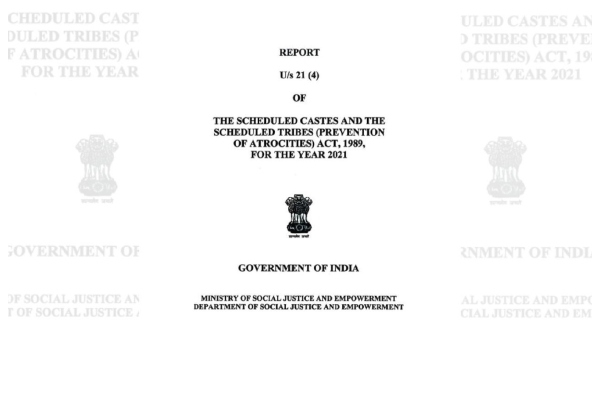
This is not an argument for weakening the Atrocities Act. Nor is it an argument for placing the law beyond legitimate scrutiny. It is an argument for something larger - a society in which the law protects the vulnerable while justice protects everyone.
Hosabale’s message is important precisely because it shifts the debate from legislation to social conduct. If all are children of “Mother India” and God, as he said in Bhopal, then no Hindu can be treated as inferior because of birth. The real battle against caste discrimination will therefore not be won merely in Parliament or the courts. It will be won in homes, temples, villages, neighbourhoods, workplaces and everyday human relationships.
Hindu society must have the courage to confront discrimination within itself without allowing that fight to become permanent hostility between its own members. The wounds of the past must be healed, not converted into weapons for the politics of the present. No space for caste discrimination. No compromise on genuine atrocities. No misuse of protective law. And no political licence to turn Hindu fault lines into permanent divisions. That is the path from caste conflict to Hindu fraternity.
The Atrocities Act exists because caste-based humiliation and violence have been a painful reality. No civilised society can look away when a person is assaulted, humiliated or denied dignity because of his birth. Protection of historically disadvantaged communities from caste-based atrocities is therefore not merely a statutory obligation; it is a moral responsibility.This is why the recent words of RSS Sarkaryavah Dattatreya Hosabale deserve attention. Speaking in Bhopal, he described caste discrimination and untouchability as a “stigma on Hindu society” and said discrimination based on birth is not part of Hindu culture. He stressed that the problem cannot disappear through laws or preaching alone - change has to begin with individual conduct, behaviour and the home. That is perhaps the most important way of approaching the caste question.
A law can punish an offender. It cannot manufacture fraternity. A court can deliver justice. It cannot create affection. A government can provide safeguards. It cannot compel one human being to respect another. That transformation has to come from within society.
Article 17 of the Constitution abolished untouchability. The constitutional promise of fraternity, dignity and equality therefore gives the struggle against caste discrimination a dimension far beyond electoral politics. For Hindu society, the responsibility is simultaneously constitutional, social and civilisational.
There is something deeply tragic when a Hindu looks at another Hindu and sees first his caste rather than his humanity. There is something even more tragic when political calculations teach them to see each other as permanent adversaries. Hindu unity cannot be built by asking those who have suffered humiliation to forget it. It can be built only by ensuring that such humiliation disappears. But there is another side to this difficult question which cannot be ignored. A stringent law must protect the genuinely oppressed. At the same time, every powerful law must remain within the discipline of justice and due process.
ALSO READ: India and New Zealand Seal Historic FTA for Massive Growth
This distinction is vital. Protection of the vulnerable and protection against misuse are not opposing principles. Both belong to the rule of law. There must be no hesitation in punishing genuine atrocities. Equally, there should be no hesitation in preventing a false complaint, personal vendetta or illegitimate use of a protective law from destroying an innocent person’s liberty and reputation. Justice cannot mean protection for one side and indifference to the rights of the other.
But the larger danger lies beyond individual cases. Caste is a social faultline. Like every faultline, it can be deepened by political forces that find advantage in keeping society divided. There is nothing wrong with democratic representation of historically deprived communities. Every community has the right to articulate its grievances and aspirations. The danger begins when grieving becomes a permanent political industry; when caste identity becomes a durable instrument of mobilisation; and when historical wounds are repeatedly converted into contemporary political antagonism.
That is where the idea of the “internal enemy” acquires meaning. The internal enemy is not the Dalit. It is not the upper caste. It is not the tribal or any other Hindu. The internal enemy is the politics that deliberately turns one Hindu against another.
External threats to the nation may be visible and identifiable. Internal social fragmentation is subtler. A society can be weakened without a single shot being fired if its members are persuaded to see one another permanently through the prism of caste, grievance and political hostility. The answer, therefore, cannot be counter-caste politics. It has to be a social fraternity.
The responsibility belongs to everyone. The Hindu who discriminates because of caste has a responsibility. The person who remains silent when discrimination occurs has a responsibility. The political leader who deliberately converts caste resentment into an instrument of mobilisation has a responsibility. And anyone who knowingly misuses a protective law for an illegitimate purpose also has a responsibility.
This is not an argument for weakening the Atrocities Act. Nor is it an argument for placing the law beyond legitimate scrutiny. It is an argument for something larger - a society in which the law protects the vulnerable while justice protects everyone.
ALSO READ: NB EXCLUSIVE: Delhi Police saving Christian Missionaries? Clean cheat in Hyatt case without any investigation
Hindu society must have the courage to confront discrimination within itself without allowing that fight to become permanent hostility between its own members. The wounds of the past must be healed, not converted into weapons for the politics of the present. No space for caste discrimination. No compromise on genuine atrocities. No misuse of protective law. And no political licence to turn Hindu fault lines into permanent divisions. That is the path from caste conflict to Hindu fraternity.

Editor's Desk
Editor's Desk