UCC: Ramesh Debates the Route, But Where Is Congress’s Constitutional Answer?
Total Views |


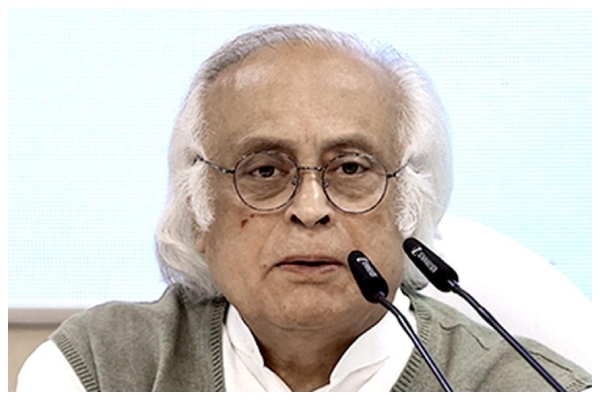
Jairam Ramesh's latest attack on the Uniform Civil Code raises an important question, but not necessarily the one he thinks it does. His objection is that different States pursuing different versions of a UCC would produce “non-uniform” Uniform Civil Codes. He has also questioned the manner of consultation and accused the government of using the UCC to “divide, disrupt and divert” public attention.
Indeed, the Supreme Court has repeatedly drawn attention to this obligation. In Sarla Mudgal v Union of India (1995), the Court described Article 44 as an “unequivocal mandate” and questioned why successive governments had left it in what the judgment called “cold storage”. The Court also pointed to the earlier codification of Hindu personal law through legislation in the 1950s and questioned the continued absence of a common civil framework for all citizens.
The judicial history did not begin with Sarla Mudgal. The Supreme Court had already spoken about the need for a common civil code in cases such as Mohd. Ahmed Khan v Shah Bano Begum and Jordan Diengdeh v S.S. Chopra. Whatever one's political position on UCC, therefore, it cannot honestly be presented as a constitutional idea suddenly manufactured by the Modi government.
This brings the debate directly to Congress. The Congress governed India for the overwhelming part of the period between the adoption of the Constitution and 2014. It had parliamentary majorities, political authority and decades in which it could have attempted to translate Article 44 into legislation. It did undertake substantial codification of Hindu personal law in the 1950s. Yet the larger project of a common civil code applicable across communities was never pursued.
Jawaharlal Nehru himself explained in Parliament in 1954 that he did not consider the time ripe to push a UCC. Four decades later, the Supreme Court in Sarla Mudgal was still asking why Article 44 remained in cold storage.
That history raises a legitimate political question for Congress: if Article 44 is constitutionally sound, why was the constitutional commitment repeatedly deferred when Congress itself had the opportunity to act?
The answer cannot simply be that UCC is politically divisive. Constitutional reform is often contentious. The relevant question is whether the Constitution envisages reform. Article 44 plainly does.
Ramesh's present argument also needs to be tested against the constitutional distribution of legislative power. His question how can there be a uniform code if every State creates a different one? has force as a question of national uniformity. But it does not establish that States are constitutionally prohibited from legislating in this field.
Entry 5 of the Concurrent List covers marriage and divorce, adoption, wills, intestacy and succession, joint family and partition, and other matters relating to personal law. These are subjects on which both Parliament and State legislatures have legislative competence.
The Supreme Court made precisely this point in Anoop Baranwal v Union of India in January 2023. A challenge had argued that, because Article 44 concerns a UCC, only the Union could establish a committee for the purpose. The Court rejected that challenge, referring to Article 162 and Entry 5 of the Concurrent List and holding that the constitution of the Uttarakhand committee could not, by itself, be challenged as ultra vires.

This distinction is crucial. A State-level UCC cannot by itself become a UCC “throughout the territory of India”. But that does not make State legislation constitutionally impossible. It means that the question of a genuinely nationwide code remains one that Parliament can address.
There are, in fact, ongoing Supreme Court proceedings arising from Uttarakhand legislation and related litigation. The State of Uttarakhand v Anuradha Dutta proceedings remain pending in the Supreme Court and were listed again in September 2026. But those proceedings arise from challenges to a 2024 Uttarakhand High Court judgment concerning university-service matters; they should not be presented as a pending Supreme Court case squarely deciding whether Parliament alone has power to enact a UCC.
That clarification makes the larger argument stronger, not weaker. The real issue is therefore not whether Jairam Ramesh has identified a legitimate problem with multiple State codes. He has identified a question of uniformity. But it is a question about the route and architecture of UCC, not an answer to the constitutional commitment embodied in Article 44.
If Congress believes that UCC should be achieved only through Parliament, it should say so and explain the legislative model it proposes. If it believes that existing personal laws should simply be reformed individually, it should explain why Article 44 should remain unimplemented. If it accepts the principle of uniform civil law but opposes the present State-led approach, it should put forward its alternative.
What cannot be avoided indefinitely is the constitutional question itself.
Ramesh's intervention therefore opens a question that reaches far beyond his immediate criticism of the Maharashtra committee - is Congress opposed to the present method of pursuing UCC, or has it abandoned the constitutional objective itself?
The distinction matters.
Because if the objection is merely that several States cannot produce one genuinely uniform national code, the obvious constitutional response is not to bury Article 44 again. It is to ask whether Parliament should finally do what successive governments, including long periods of Congress rule, chose not to do.
The debate over UCC cannot remain a debate over who is using the bulldozer. The harder question is why Article 44 was left standing at the roadside for 75 years — and whether Congress now has a constitutional alternative beyond opposing the vehicle.
Congress appears to be searching for procedural objections to the UCC rather than taking a direct position on the constitutional principle itself. The reason may lie in the political arithmetic of its traditional vote-bank politics. Congress perhaps knows that the UCC debate is increasingly difficult to resist, but remains reluctant to acknowledge that political reality.
These are questions about method, procedure and political intent. They do not, however, answer the central constitutional question - what does Congress make of Article 44 of the Constitution?
Article 44 is unambiguous in its language: “The State shall endeavour to secure for the citizens a uniform civil code throughout the territory of India.” It is true that Article 44 is part of the Directive Principles and, under Article 37, is not enforceable by a court. But non-justiciability does not make a constitutional provision meaningless. It remains a constitutional direction to the State.Indeed, the Supreme Court has repeatedly drawn attention to this obligation. In Sarla Mudgal v Union of India (1995), the Court described Article 44 as an “unequivocal mandate” and questioned why successive governments had left it in what the judgment called “cold storage”. The Court also pointed to the earlier codification of Hindu personal law through legislation in the 1950s and questioned the continued absence of a common civil framework for all citizens.
The judicial history did not begin with Sarla Mudgal. The Supreme Court had already spoken about the need for a common civil code in cases such as Mohd. Ahmed Khan v Shah Bano Begum and Jordan Diengdeh v S.S. Chopra. Whatever one's political position on UCC, therefore, it cannot honestly be presented as a constitutional idea suddenly manufactured by the Modi government.
This brings the debate directly to Congress. The Congress governed India for the overwhelming part of the period between the adoption of the Constitution and 2014. It had parliamentary majorities, political authority and decades in which it could have attempted to translate Article 44 into legislation. It did undertake substantial codification of Hindu personal law in the 1950s. Yet the larger project of a common civil code applicable across communities was never pursued.
Jawaharlal Nehru himself explained in Parliament in 1954 that he did not consider the time ripe to push a UCC. Four decades later, the Supreme Court in Sarla Mudgal was still asking why Article 44 remained in cold storage.
ALSO READ: “No Hindu Should Be Humiliated, No Law Should Be Misused”
The answer cannot simply be that UCC is politically divisive. Constitutional reform is often contentious. The relevant question is whether the Constitution envisages reform. Article 44 plainly does.
Ramesh's present argument also needs to be tested against the constitutional distribution of legislative power. His question how can there be a uniform code if every State creates a different one? has force as a question of national uniformity. But it does not establish that States are constitutionally prohibited from legislating in this field.
Entry 5 of the Concurrent List covers marriage and divorce, adoption, wills, intestacy and succession, joint family and partition, and other matters relating to personal law. These are subjects on which both Parliament and State legislatures have legislative competence.
The Supreme Court made precisely this point in Anoop Baranwal v Union of India in January 2023. A challenge had argued that, because Article 44 concerns a UCC, only the Union could establish a committee for the purpose. The Court rejected that challenge, referring to Article 162 and Entry 5 of the Concurrent List and holding that the constitution of the Uttarakhand committee could not, by itself, be challenged as ultra vires.
The constitutional position, therefore, is more nuanced than the political argument suggests. A State can legislate in areas within its Concurrent List competence; Parliament can legislate nationally. Where overlapping laws create repugnancy, Article 254 provides the constitutional mechanism, including the consequences of Presidential assent to certain State laws.
This distinction is crucial. A State-level UCC cannot by itself become a UCC “throughout the territory of India”. But that does not make State legislation constitutionally impossible. It means that the question of a genuinely nationwide code remains one that Parliament can address.
There are, in fact, ongoing Supreme Court proceedings arising from Uttarakhand legislation and related litigation. The State of Uttarakhand v Anuradha Dutta proceedings remain pending in the Supreme Court and were listed again in September 2026. But those proceedings arise from challenges to a 2024 Uttarakhand High Court judgment concerning university-service matters; they should not be presented as a pending Supreme Court case squarely deciding whether Parliament alone has power to enact a UCC.
That clarification makes the larger argument stronger, not weaker. The real issue is therefore not whether Jairam Ramesh has identified a legitimate problem with multiple State codes. He has identified a question of uniformity. But it is a question about the route and architecture of UCC, not an answer to the constitutional commitment embodied in Article 44.
If Congress believes that UCC should be achieved only through Parliament, it should say so and explain the legislative model it proposes. If it believes that existing personal laws should simply be reformed individually, it should explain why Article 44 should remain unimplemented. If it accepts the principle of uniform civil law but opposes the present State-led approach, it should put forward its alternative.
ALSO READ: India and New Zealand Seal Historic FTA for Massive Growth
For decades, the political argument surrounding UCC has moved between caution, minority concerns, electoral calculations, personal-law autonomy and the fear of social conflict. But Article 44 survived all those political changes. The Supreme Court repeatedly brought it back into the national conversation. Now States have begun acting within their constitutional legislative field.
The distinction matters.
Because if the objection is merely that several States cannot produce one genuinely uniform national code, the obvious constitutional response is not to bury Article 44 again. It is to ask whether Parliament should finally do what successive governments, including long periods of Congress rule, chose not to do.
The debate over UCC cannot remain a debate over who is using the bulldozer. The harder question is why Article 44 was left standing at the roadside for 75 years — and whether Congress now has a constitutional alternative beyond opposing the vehicle.
Congress appears to be searching for procedural objections to the UCC rather than taking a direct position on the constitutional principle itself. The reason may lie in the political arithmetic of its traditional vote-bank politics. Congress perhaps knows that the UCC debate is increasingly difficult to resist, but remains reluctant to acknowledge that political reality.