NB Inpics : World Rhino Day: Story of a Species making a comeback
A rhino standing in the tall grass of Kaziranga is more than a wildlife photograph.It is a picture of survival. Kaziranga has become closely associated with India"s fight against rhino poaching.
Total Views |


There is something almost prehistoric about the greater one-horned rhinoceros.Heavy. Quiet. Unhurried. Yet behind that armour-like body is one of India’s most remarkable wildlife conservation stories.
_202609231609127611_H@@IGHT_0_W@@IDTH_600.png "rhino")
Once pushed dangerously close to extinction, the greater one-horned rhino is now back in numbers. The global population has crossed 4,000, with Assam alone holding nearly 80% of the world’s population. And much of that story begins in the grasslands of Assam.
The face of Kaziranga
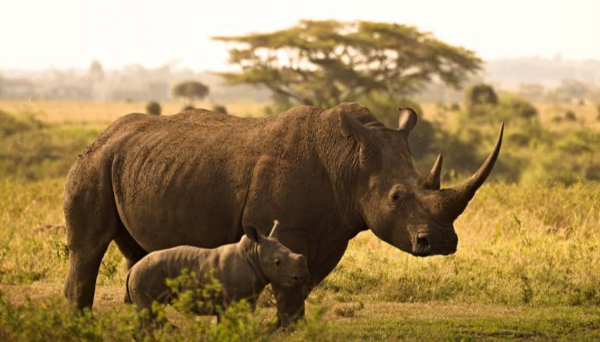
One generation protects the legacy while the next carries it forward
A rhino standing in the tall grass of Kaziranga is more than a wildlife photograph.It is a picture of survival. Kaziranga has become closely associated with India's fight against rhino poaching. Forest personnel, local communities and conservation workers have spent years protecting these animals from a threat that once hung heavily over their future. The park's anti-poaching work has received national and international recognition.
Beyond Assam
_202609231558364276_H@@IGHT_501_W@@IDTH_399.jpg "rhino")
India jurassic world: Hidden in the green, a survivor carries centuries of wilderness
The story does not end in Kaziranga.Rhinos are also protected in parts of Bihar and West Bengal. Conservation efforts have helped maintain populations and create safe spaces for the species beyond its strongesthold in Assam.India’s rhino story is becoming a story of many states working towards the same goal.
West Bengal’s Grasslands
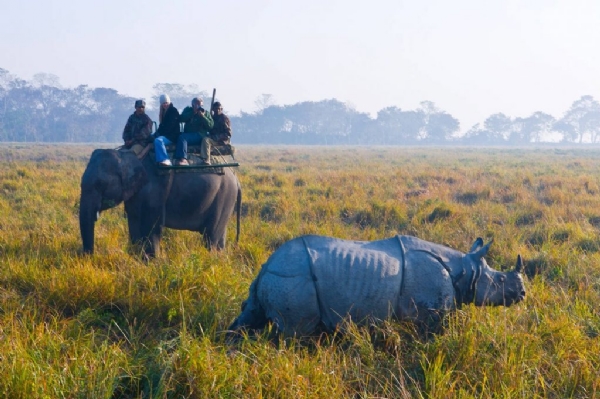
Not just a crossing — a reminder of who the forest belongs to
In West Bengal, rhinos have found protected landscapes where they can feed, move and raise their young. Seeing a rhino in these grasslands is a reminder that wildlife conservation is not about one park or one state. It is a larger effort spread across India.
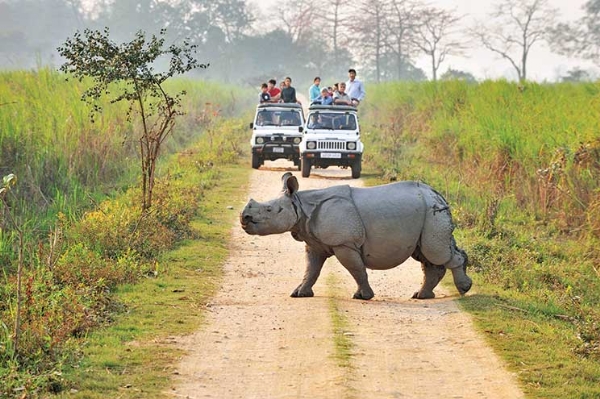
A road pauses, when the star arrives
Bihar’s Rhino Landscape
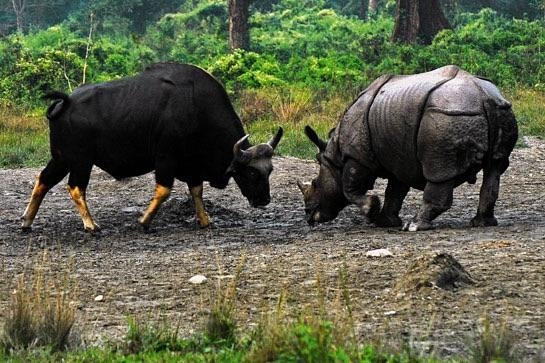
Two giants, one wilderness, no borders
Bihar, too, remains part of this story. Protected areas such as Valmiki Tiger Reserve provide important habitat for the greater one-horned rhino. Here, the animal forms part of a wider landscape where forests, rivers, grasslands and wildlife exist together.
Dudhwa's return
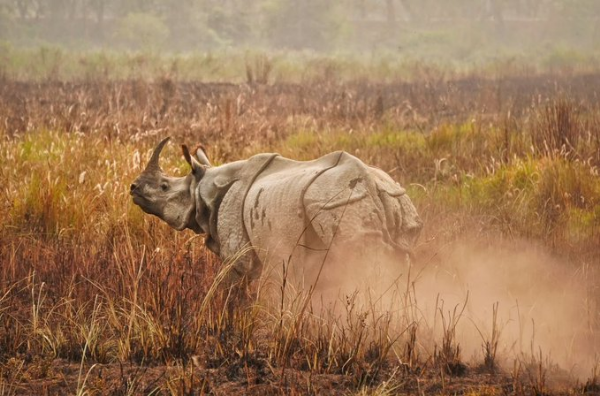
Dry summer, dusty trails, wild resilience
Dudhwa is particularly significant because reintroduction is not simply about moving an animal from one place to another.It is about giving it a landscape where it can survive.The success of rhino reintroduction in Dudhwa has been highlighted as an important achievement in India's wildlife management efforts.
A symbol of hope

A glimpse of the wild at its most powerful — every species holding its place
The greater one-horned rhinoceros carries its own history on its thick skin.But its future is being written today.
From Assam to Uttar Pradesh, Bihar and West Bengal, India’s conservation story is showing what can happen when protection continues year after year.This World Rhino Day, the message is a hopeful one: The rhino is not just surviving. It is coming back.