Vienna’s 42% Question: When Islam Changes a City’s Demography
Total Views |


The most revealing number in Vienna today may not be a population figure. It is a school figure.
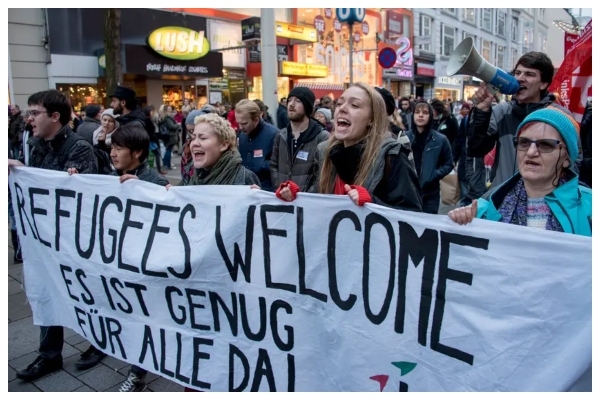
The trajectory is unmistakable. The Muslim share in Vienna’s public compulsory schools increased from 38.5 per cent in 2021–22 to 42 per cent in 2025–26. During the same period, the Catholic share fell from 20.7 to 16.7 per cent. The proportion without religious affiliation increased from 21.4 to 23.2 per cent.
Thus, Vienna is experiencing three changes simultaneously: the growth of Islam, the decline of Christianity and the expansion of secularism. The first of these, however, is occurring particularly strongly among children and adolescents.
Why?
The answer begins with migration. Vienna itself acknowledges that its population growth over recent decades has been driven largely by international immigration, including migration associated with the wars and conflicts in the former Yugoslavia, Syria and Afghanistan. At the beginning of 2025, 40.9 percent of Vienna's residents were born abroad and 46.3 per cent had a migration background. The city had more than two million inhabitants.
The age structure matters enormously. Migration has not simply added adults to Vienna's population; it has added relatively young populations and families. Among children and young people under 20 in Austria, Syrians constituted the largest foreign-nationality group in 2026, according to the Austrian Integration Fund.
Fertility also contributes to the demographic effect. Austria's overall fertility rate was only 1.31 children per woman in 2024. But women born in Afghanistan, Syria and Iraq averaged 3.30 children, compared with 1.22 among women born in Austria. Women born in Turkey averaged 1.80. It means that migration from particular countries, the younger age profile of migrant populations and differing fertility patterns combine to produce a disproportionately large Muslim presence among school-age children.
And here the debate becomes more uncomfortable. Demography has consequences for institutions, social norms and identity. A school in which almost half the children identify as Muslim is inevitably a different social environment from a school in which Muslims constitute a small minority. Pretending otherwise does not promote integration; it prevents society from understanding what integration now has to accomplish. There are already indications that the challenge is not simply one of numbers.
A Vienna study of more than 1,200 young people from ten origin groups found that most young Viennese were democratically oriented and open to pluralism. But it also identified specific risk patterns involving weak educational outcomes, inadequate social integration, authoritarian socialisation and digital radicalisation. Among Muslim respondents, more than half agreed that Muslim women should wear the headscarf in public; nearly two-thirds considered strict observance of Islamic rules in all areas of life important; and 43 per cent expressed a worldview blaming the West for problems in the Islamic world. These findings concern the surveyed respondents and should not be generalised to all Muslims. But they cannot simply be ignored.
They raise a fundamental question - What exactly does integration mean? If integration means merely finding employment, learning enough German to function and avoiding criminality, it is an inadequate concept for a liberal democracy. Integration must also involve acceptance of constitutional equality, freedom of conscience, equality between men and women, freedom of expression, religious pluralism and the supremacy of civil law.
This is where criticism of aspects of contemporary Islamic conservatism becomes legitimate and necessary. A religious doctrine or interpretation that places religious commandments above democratically enacted civil law, restricts women's autonomy, or treats apostasy, blasphemy or dissent as illegitimate is in tension with the liberal constitutional order. That tension should be discussed openly rather than concealed behind the vocabulary of multiculturalism.
There is another warning sign - segregation. The distinction between public and private schools is striking. ORF reported that while Muslims constituted about 42 per cent of pupils in Vienna's public compulsory schools, Catholic pupils constituted 45 per cent in private schools.
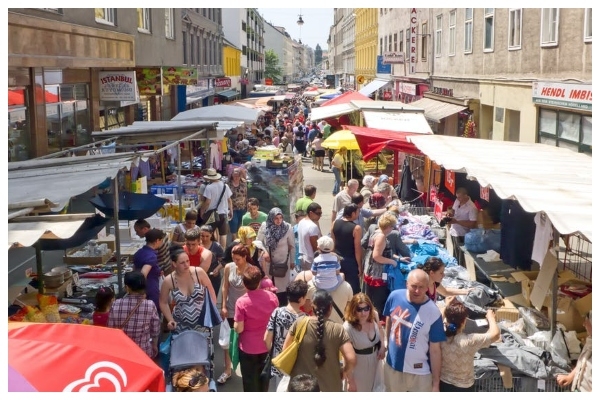
Vienna's own data already tells us that the demographic transformation is real. The Muslim share of pupils has risen steadily, while Christianity has declined and secular affiliation has expanded. Migration is changing the city's age structure and religious composition. The mistake would be to look at the 42 per cent figure and either celebrate it as an inevitable multicultural future or condemn it as an inevitable cultural catastrophe.
Neither conclusion follows from the number. But one conclusion does - Vienna can no longer treat demographic change as a marginal issue. When nearly half the pupils in some categories of public schools identify as Muslim, the question is no longer simply how immigrants adapt to Vienna. It is also what kind of Vienna the next generation will inherit. A confident liberal society should have no fear of asking that question including difficult questions about Islam, religious conservatism, segregation, women's equality and the boundaries of multiculturalism. Demographic change is not destiny. But ignoring its consequences is a choice.
In the 2025–26 academic year, 42 per cent of pupils in Vienna’s public compulsory schools identify as Muslim, making Islam the single largest religious affiliation among pupils. Christians account for 33 per cent, while 23.2 per cent have no religious affiliation. The transformation becomes even more striking in the Mittelschulen, where the Muslim share reaches 49.4 per cent, and in polytechnic schools, where it is 46.8 per cent.
These numbers should not be dismissed as merely another statistic about immigration. They point towards a profound demographic and cultural transformation of one of Europe’s historic capitals. The question is not whether Muslims have the right to live in Vienna. The question is what happens to a society when the religious composition of its youngest generation changes so dramatically and whether integration policy is capable of ensuring that demographic change does not become cultural segregation.
The trajectory is unmistakable. The Muslim share in Vienna’s public compulsory schools increased from 38.5 per cent in 2021–22 to 42 per cent in 2025–26. During the same period, the Catholic share fell from 20.7 to 16.7 per cent. The proportion without religious affiliation increased from 21.4 to 23.2 per cent.
Thus, Vienna is experiencing three changes simultaneously: the growth of Islam, the decline of Christianity and the expansion of secularism. The first of these, however, is occurring particularly strongly among children and adolescents.
Why?
The answer begins with migration. Vienna itself acknowledges that its population growth over recent decades has been driven largely by international immigration, including migration associated with the wars and conflicts in the former Yugoslavia, Syria and Afghanistan. At the beginning of 2025, 40.9 percent of Vienna's residents were born abroad and 46.3 per cent had a migration background. The city had more than two million inhabitants.
The age structure matters enormously. Migration has not simply added adults to Vienna's population; it has added relatively young populations and families. Among children and young people under 20 in Austria, Syrians constituted the largest foreign-nationality group in 2026, according to the Austrian Integration Fund.
ALSO READ: OIC’s Kashmir Obsession, Pakistan’s Diplomatic Isolation
And here the debate becomes more uncomfortable. Demography has consequences for institutions, social norms and identity. A school in which almost half the children identify as Muslim is inevitably a different social environment from a school in which Muslims constitute a small minority. Pretending otherwise does not promote integration; it prevents society from understanding what integration now has to accomplish. There are already indications that the challenge is not simply one of numbers.
A Vienna study of more than 1,200 young people from ten origin groups found that most young Viennese were democratically oriented and open to pluralism. But it also identified specific risk patterns involving weak educational outcomes, inadequate social integration, authoritarian socialisation and digital radicalisation. Among Muslim respondents, more than half agreed that Muslim women should wear the headscarf in public; nearly two-thirds considered strict observance of Islamic rules in all areas of life important; and 43 per cent expressed a worldview blaming the West for problems in the Islamic world. These findings concern the surveyed respondents and should not be generalised to all Muslims. But they cannot simply be ignored.
They raise a fundamental question - What exactly does integration mean? If integration means merely finding employment, learning enough German to function and avoiding criminality, it is an inadequate concept for a liberal democracy. Integration must also involve acceptance of constitutional equality, freedom of conscience, equality between men and women, freedom of expression, religious pluralism and the supremacy of civil law.
This is where criticism of aspects of contemporary Islamic conservatism becomes legitimate and necessary. A religious doctrine or interpretation that places religious commandments above democratically enacted civil law, restricts women's autonomy, or treats apostasy, blasphemy or dissent as illegitimate is in tension with the liberal constitutional order. That tension should be discussed openly rather than concealed behind the vocabulary of multiculturalism.
There is another warning sign - segregation. The distinction between public and private schools is striking. ORF reported that while Muslims constituted about 42 per cent of pupils in Vienna's public compulsory schools, Catholic pupils constituted 45 per cent in private schools.
Vienna cannot solve this problem by pretending that religious identity does not matter. Nor can it solve it by treating Muslims collectively as a threat. Both approaches are intellectually inadequate. The serious approach is more demanding: accept immigration, where lawful; respect religious freedom; but insist that every citizen and resident operates within the same constitutional culture.
The school is the critical battlefield not because Muslim children are a problem, but because children are where the future culture of a society is formed. German-language competence, common civic education, knowledge of Austrian constitutional principles and meaningful interaction between children of different religious backgrounds cannot be optional extras. Nor should schools become places where girls and boys encounter radically different expectations about freedom, gender and authority.
Vienna's own data already tells us that the demographic transformation is real. The Muslim share of pupils has risen steadily, while Christianity has declined and secular affiliation has expanded. Migration is changing the city's age structure and religious composition. The mistake would be to look at the 42 per cent figure and either celebrate it as an inevitable multicultural future or condemn it as an inevitable cultural catastrophe.
ALSO READ: Yuvakon Ki Goonj: Rahul Gandhi Hears the Youth, But Do They Hear Him?