Yuvakon Ki Goonj: Rahul Gandhi Hears the Youth, But Do They Hear Him?
Total Views |


Rahul Gandhi has discovered a new political constituency: Gen Z. His Chhatron Ki Goonj campaign is being projected as a nationwide effort to listen to students, understand their anxieties and make their concerns a political issue. From Kota to Dehradun, Prayagraj and Pune, and now Indore, Gandhi has been telling young Indians that their voice matters.
The Congress has ambitious plans for the campaign. According to reports, it intends to take Chhatron Ki Goonj across all States and eventually hundreds of districts. Gandhi's own campaign describes the initiative in sweeping terms paper leaks, unemployment, expensive education, hostels and a supposedly broken education system.
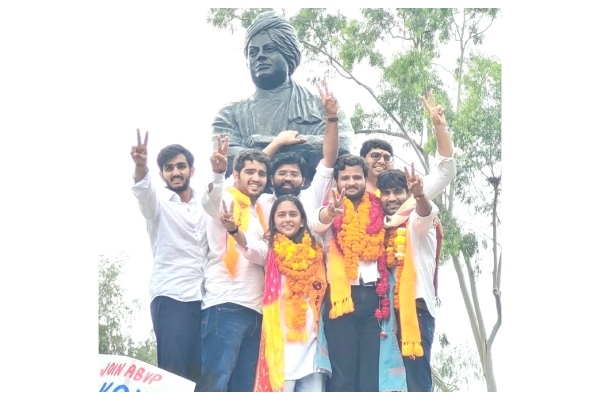
But there is an awkward question Rahul Gandhi cannot escape - if Congress is genuinely reconnecting with young Indians, why is its own student organisation struggling so badly where young people actually vote?The recent university elections provide an uncomfortable reality check. Delhi University is perhaps the clearest example. In the 2026 DUSU elections, Congress's student wing NSUI failed to win a single one of the four central-panel posts. ABVP won the presidency, secretary and joint-secretary posts, while the vice-president's position went to Independent candidate Deepanshu Shokeen.
The vice-presidential result is particularly revealing. Shokeen had sought the NSUI ticket but eventually contested independently. He won by a substantial margin, while the official NSUI candidate was nowhere close. The presidential contest was closer. ABVP's Yash Dabas defeated NSUI's Vijay Shankar Meena, 24,576 votes to 22,523. This is difficult to reconcile with the grand language of a political movement claiming to speak for the country's youth.
Kerala provides another dimension. In the recent Kerala University college-union elections, the Congress student organisation KSU won seven of 71 colleges, while SFI won 63 and ABVP one. In Alappuzha, SFI won all 18 colleges under Kerala University in the district.
ALSO READ: Fear of exodus! Hindu families put up 'house for sale' signs after tribal man's lynching by muslim men
In Kerala, a deeply entrenched Left student organisation continues to possess an organisational ecosystem that Congress's KSU has struggled to match. In Delhi, ABVP has demonstrated formidable campus organisation. And in DUSU, an independent candidate who had failed to secure the NSUI ticket managed to convert his personal campaign into victory.
The contrast between political branding and organisational reality is therefore becoming difficult to overlook. Rahul Gandhi speaks about listening to students. But politics is not merely about listening to young people at carefully organised public events. It is also about allowing young people to emerge from within the organisation, compete, lead and sometimes challenge the party establishment.
Rahul Gandhi's campaign has also developed a familiar political vocabulary. The "system" is blamed for paper leaks, unemployment, recruitment problems and the failures of education. At Indore, Gandhi again attacked what he described as a system hostile to questioning students.
These are undoubtedly legitimate subjects for political debate. Students have genuine concerns about employment, examinations, recruitment and the cost and quality of education. Gandhi is perfectly entitled to raise them. But there is a difference between identifying grievances and building political credibility around them.
Young Indians are not merely an audience to whom political leaders can deliver a message. They are increasingly politically aware, digitally connected and capable of judging competing narratives. They can listen to Rahul Gandhi in one city, vote for ABVP in another, support SFI in Kerala and choose an independent candidate in Delhi. Treating Gen Z as a homogeneous political constituency would therefore be a mistake. That is where the title Yuvakon Ki Goonj itself becomes ironic.
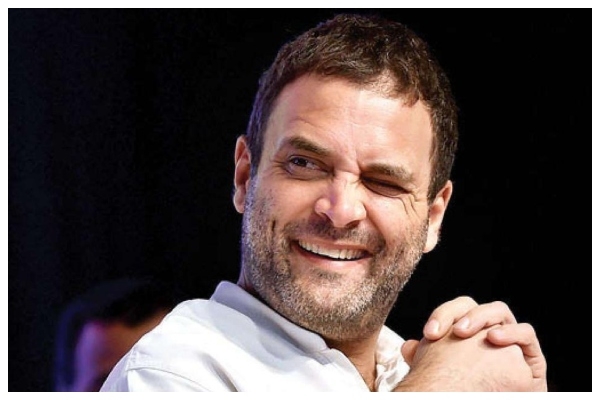
Rahul Gandhi wants to amplify the voice of the youth. Yet the more revealing question is whether his own political organisation has created enough space for that voice to rise from within Congress.
A successful student movement cannot be reduced to rallies, social-media campaigns and interactions with a national leader. It needs campus workers, local leaders, organisational discipline, credibility on student issues and, above all, the ability to persuade students when there is no Rahul Gandhi standing on the stage.
ALSO READ: Indian Railways’ big boost to Eastern Steel Sector as key South Chhattisgarh Rail Link completed
It has to rebuild the Goonj where elections actually take place.
The irony is hard to miss. Rahul Gandhi is travelling across India telling Gen Z, “I am listening to you.” The university elections are asking a different question: “Are you listening to what we are voting for?” And that is a question no political campaign can answer from a stage.