Ashok Singhal: The Organiser Who Gave the Ayodhya Movement Its Mass Reach
This was one of Singhal’s great organisational contributions. He helped convert Ayodhya from a localised dispute into a national movement.
NewsBharati 28-Sep-2026 18:48:28 PM
Total Views |


The centenary year of Ashok Singhal’s birth is an occasion to revisit not merely the life of a Vishwa Hindu Parishad leader, but the making of one of the most consequential mass movements in independent India. If the Ram Janmabhoomi movement is examined through the lens of organisation, mobilisation and sustained public engagement, Singhal’s contribution occupies a central place in its history.
Born in Agra on October 15, 1926, Singhal joined the Rashtriya Swayamsevak Sangh in 1942 and became a full-time pracharak after graduating from Banaras Hindu University. He worked in several parts of Uttar Pradesh and later became prant pracharak for Delhi and Haryana. His experience as an RSS organiser became crucial when he was assigned to the VHP.
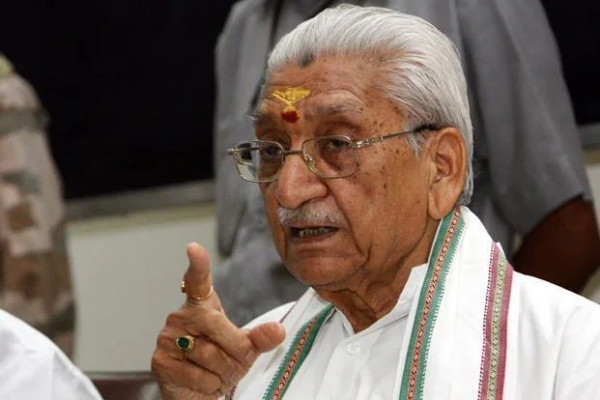
Singhal understood something that would prove decisive for the Ayodhya movement: an issue confined to litigation, political resolutions or the speeches of a few leaders could not become a nationwide social movement. It required organisation, religious leadership, communication, symbolism and sustained mobilisation.
He therefore worked to bring together the diverse streams of Hindu religious leadership. The VHP’s own records show his prominent role in the Dharma Sansads beginning in the 1980s. At the 1989 Dharma Sansad at Prayag, Singhal delivered the introductory address, while the gathering accepted the model design for the proposed Ram temple and resolved to take the Ayodhya issue beyond Uttar Pradesh. The programme of collecting consecrated Ram Shilas from villages across the country transformed the issue into a participatory campaign.
This was one of Singhal’s great organisational contributions. He helped convert Ayodhya from a localised dispute into a national movement.
The movement acquired an even greater public dimension in the late 1980s. Singhal was closely involved in the campaign around the opening of the locks and the subsequent mobilisation for the temple. He brought together sadhus belonging to different sects and helped create a common platform for religious leaders who did not always operate within a single organisational structure. Contemporary accounts also identify his role in bringing several prominent figures into the VHP’s campaign.
The 1989 shilanyas became another important moment. Singhal selected Kameshwar Choupal, a Dalit VHP worker from Bihar, to lay the foundation brick. Whatever the subsequent political interpretations of the movement, the symbolism was significant: the organisers sought to present the Ram temple campaign as a cause transcending caste divisions.
Then came 1990. The kar seva in October-November that year and the police action against kar sevaks transformed the political and emotional intensity surrounding Ayodhya. Singhal himself was injured during the police action. The image of an injured Singhal became one of the defining images of the movement. Prime Minister Narendra Modi, recalling Singhal’s contribution on the occasion of his birth centenary, specifically referred to his address at the 1991 Boat Club rally and to the image of the injured VHP leader during the movement.
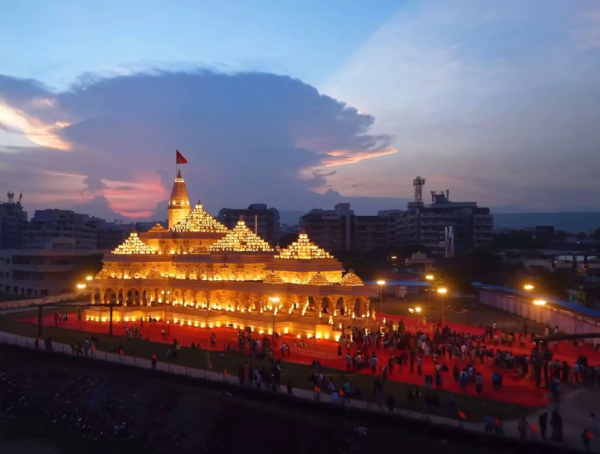
Singhal’s organisational approach was not limited to speeches. The movement required a network capable of mobilising volunteers across the country. The Bajrang Dal emerged in this period as the VHP’s youth organisation, with Vinay Katiyar playing a key role in its creation. Its initial purpose was explicitly connected with mobilising young people for the Ram Janmabhoomi movement.
The scale of mobilisation was extraordinary. The 1991 Dharma Sansad was followed by a massive rally at Delhi’s Boat Club, which the VHP records describe as involving more than 25 lakh people. The figures can be viewed in the context of the organisation’s own account, but there is little doubt about the extraordinary scale of the mobilisation that Ayodhya had generated by then.
December 1992 remains the most controversial and consequential chapter of the movement. The Babri Masjid was demolished on December 6, 1992, amid the gathering of kar sevaks in Ayodhya. The demolition was followed by prolonged political, legal and social consequences. Singhal was among the principal VHP leaders associated with the mobilisation, but the history of that day also involves numerous other political, religious and organisational actors and cannot be reduced to one individual.
Yet Singhal’s importance did not end in 1992. The Ayodhya issue continued through political negotiations, legal proceedings and repeated mobilisation. The VHP’s subsequent Dharma Sansads continued to keep the temple demand at the centre of its organisational agenda, with Singhal repeatedly addressing religious leaders and workers.
The eventual Supreme Court judgment in 2019 and the construction of the Ram Mandir provided the culmination of a movement that had lasted for decades. Singhal died in 2015 and therefore did not live to see the temple take shape. Modi, in his centenary tribute, observed that he would have been among the happiest to see the Ram Mandir become a reality.
That is perhaps the most poignant dimension of Singhal’s legacy.
The Ram Mandir that stands today in Ayodhya is the visible outcome of a long legal and political process. But behind that visible structure lies a history of mobilisation, organisation and social participation. Ashok Singhal was one of the principal architects of that mobilisation. His distinctive contribution was to give organisational form and nationwide reach to a cause that he regarded as a matter of civilisational and cultural identity.
His legacy, therefore, cannot be measured only by the office he held or the speeches he delivered. It has to be understood through the movement he helped build, patiently, relentlessly and over several decades. Ayodhya became a national question. Singhal was one of the men who made it a national movement, which will always be remembered as the most significant moment in Indian history.
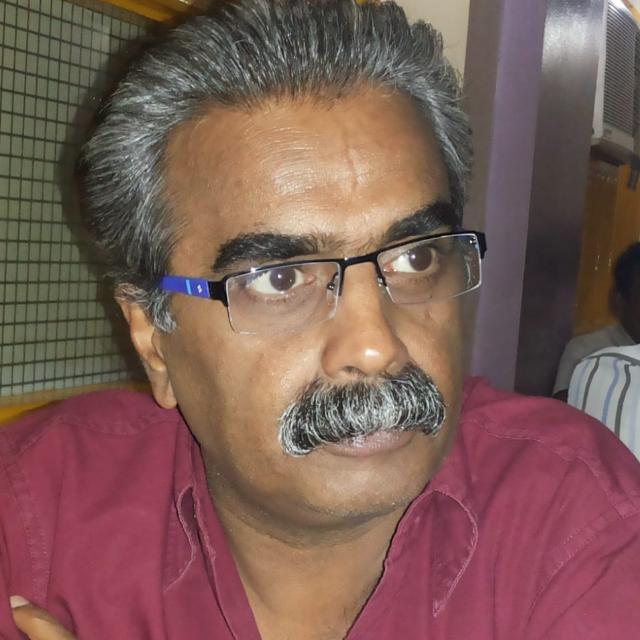
Satyajit Shriram Joshi
Satyajit Shriram Joshi is Pune based senior journalist.