From Waste to Energy: How India Is Turning Organic Waste into Fuel, Power and Manure
Several initiatives across the country demonstrate how this approach is being implemented at different scales
Total Views |


Across India, organic waste is increasingly being turned into fuel, electricity and manure, showing how scientific waste management can create useful resources while reducing environmental pressure.
Under the Swachh Bharat Mission, launched in October 2014, scientific management of municipal solid waste has remained a key objective. With the evolution of the mission, organic waste is increasingly being viewed not simply as waste, but as a resource for clean energy and agriculture.
One of the most practical examples is biogas, produced through the anaerobic decomposition of organic waste. The process generates a clean cooking fuel, while the leftover slurry can be used as an organic fertilizer. This reduces dependence on chemical inputs and provides farmers with an additional source of nutrients.
Several initiatives across the country demonstrate how this approach is being implemented at different scales.
At the Shrimati Manekba Vinay Vihar Educational Complex near Adalaj in Gandhinagar, Gujarat, the kitchen prepares food for more than 500 people every day. The campus operates two biogas plants with a combined capacity of 90 cubic metres per day. The plants use dung from 222 cows, along with kitchen waste and agricultural residue.
The biogas meets the campus's entire cooking-fuel requirement, eliminating the need for around 30 LPG cylinders every month. The initiative has been supported through the Gujarat government's Institutional Biogas Plant Scheme and the Gujarat Energy Development Agency (GEDA).
In Prayagraj, Uttar Pradesh, a multi-feedstock bio-CNG plant is taking waste-to-energy at a larger scale. The facility can process 343 tonnes of organic waste every day and produce around 21 tonnes of bio-CNG.
— Ministry of Information and Broadcasting (@MIB_India) September 28, 2026
The plant uses wet waste, paddy straw, cattle dung and poultry litter. Its public-private partnership model also allows it to collect organic waste from hotels, restaurants and residential complexes. Daily wet-waste supply has increased from 7–8 tonnes initially to around 125 tonnes.
Along with bio-CNG, the facility produces around 28 tonnes of compost every day, which is made available to local farmers. The project is also expected to provide clean energy access to around 45,000 households through piped gas and reduce carbon emissions by approximately 57,000 tonnes annually.
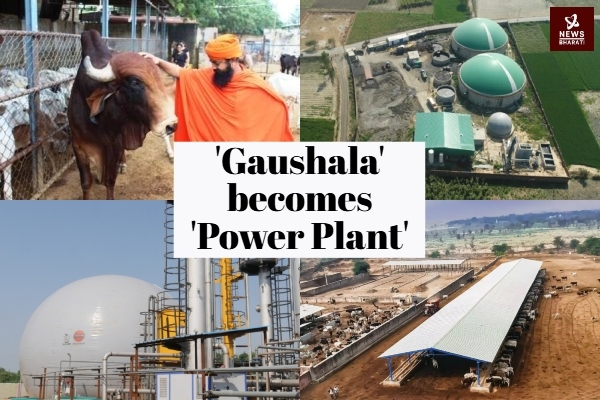
In Gwalior, Madhya Pradesh, Adarsh Gaushala has adopted another model. Home to more than 10,000 cattle, the gaushala inaugurated a 100-tonnes-per-day CBG plant in October 2024. The ₹31-crore facility, developed in collaboration with Indian Oil Corporation, processes cattle dung along with vegetable and fruit waste.
The plant converts around 100 tonnes of cattle dung into two tonnes of compressed biogas daily and produces 10–15 tonnes of dry bio-manure. The project also creates employment opportunities linked to green energy and sustainable waste management.
ALSO READ: NIA Court Sentences Four PFI Members to Life Imprisonment in Sasikumar Murder Case
Meanwhile, Bowenpally Vegetable Market in Hyderabad offers an example of how waste can directly power the place where it is generated. Around 10 tonnes of vegetable and fruit waste are collected at the market every day. The on-site biogas plant generates approximately 400–500 units of electricity and 30 kg of biofuel daily.
The electricity powers streetlights, stalls, the administration building and the water-supply network, while biofuel supports the market's commercial kitchen. The plant has also reduced the market's electricity bill by roughly half, from around ₹3 lakh a month.
The initiative has created work opportunities for women involved in waste segregation, machinery operations and administrative activities.
As such models expand, scientific waste management, community participation and supportive policies can help Indian cities move towards cleaner, more sustainable and resource-efficient systems.