Nepal, Sri Lanka, Bangladesh: What Is CJP Really Talking About?
Who authorised such a network? Who does it represent? What is its legal purpose? Is it a defence mechanism for protesters or part of a broader political mobilisation? The answers should come from CJP itself.
Total Views |


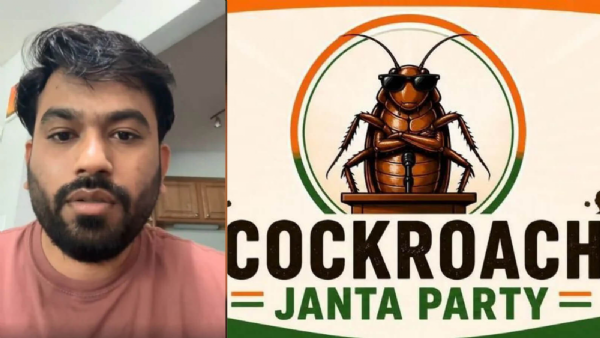
There is a point at which political protest stops being merely a protest over a policy or an institution and begins raising a much larger question about the methods being contemplated to achieve political change. The purported audio discussion involving supporters of the Cockroach Janta Party ( CJP ), reported ahead of its proposed October 2 mobilisation, raises precisely that question.
The most disturbing element is not the rhetoric against the Election Commission. Democracies can and do accommodate fierce criticism of constitutional institutions. The disturbing element is the reported reference to Nepal, Sri Lanka and Bangladesh as examples of a government collapsing within 30 days.
According to a report, a participant in the purported online discussion claimed that CJP had access to 300–500 Supreme Court lawyers and said that if the government acted against CJP supporters, it would collapse within 30 days, citing Nepal, Sri Lanka and Bangladesh. Another portion of the purported discussion refers to a nationwide network of about 2,000 lawyers. The report also says participants discussed support from several media platforms.
The question cannot simply be dismissed as political theatre. If people claiming to be part of a political movement are discussing the collapse of an elected government by invoking examples of dramatic political upheaval abroad, the public deserves to know whether those remarks represent the views of isolated individuals or reflect a broader strategy.
This question becomes more significant because the CJP leadership has itself adopted unusually confrontational positions on elections.
CJP founder Abhijeet Dipke has urged opposition parties to stop contesting elections if they believe the electoral process is rigged. His argument is that continued participation legitimises elections that the parties themselves claim are manipulated. He has also announced a nationwide protest beginning October 2 if Chief Election Commissioner Gyanesh Kumar did not resign.
There is a legitimate democratic argument to be made about electoral reform. There is also a legitimate democratic argument about the Election Commission's decisions, voter-list revision and the safeguards surrounding elections. Those questions must be debated through evidence, institutional scrutiny, courts, legislatures and peaceful public protest.
But there is a fundamental difference between challenging an election institution and questioning the legitimacy of the entire electoral system. There is an even greater difference between peaceful protest and rhetoric suggesting that an elected government could be brought down through a Nepal-, Sri Lanka- or Bangladesh-style upheaval. The distinction matters.
Sri Lanka's political crisis, Bangladesh's political upheaval and Nepal's political transformation each arose from their own specific historical, institutional and social circumstances. They cannot simply be imported as political templates into India. India is a constitutional democracy with regular elections, an independent judiciary, a federal structure, legislatures, political parties, a free press and multiple avenues for challenging governmental decisions.
India's governments change through elections. Governments are defeated on the floor of legislatures or at the ballot box. Constitutional institutions can be criticised and challenged. Protesters can march. Political parties can campaign. Courts can intervene. But the legitimacy of political power ultimately rests on the constitutional order. That is precisely why the alleged language in the purported recording deserves scrutiny rather than romanticisation.
The reported boast about hundreds of Supreme Court lawyers is another matter requiring clarification. Lawyers have every right to represent protesters and defend citizens. Legal assistance is an essential component of the rule of law. But a claim that hundreds or even thousands of lawyers are part of an organised political network raises obvious questions - Who authorised such a network? Who does it represent? What is its legal purpose? Is it a defence mechanism for protesters or part of a broader political mobilisation? The answers should come from CJP itself.
The same applies to the reported references to media support. Media organisations are not political armies. Journalists and platforms have the right to criticise governments, expose wrongdoing and support causes through legitimate journalism. But if anyone claims that particular media platforms are part of an organised strategy to manufacture a political narrative, that claim too must be established with evidence rather than insinuation.
CJP has also now said that Mumbai Police denied permission for its October 2 protest and that it would respond with a proposed “Jail Bharo Andolan”. That development makes the larger issue even more important. The right to peaceful protest must be protected. At the same time, protest cannot become a justification for intimidation, violence or an attempt to substitute street power for constitutional processes.
_202609291351544332_H@@IGHT_297_W@@IDTH_445.png "CJP")
There is nothing undemocratic about demanding accountability from the Election Commission. But democracy cannot be defended by simultaneously weakening faith in the mechanism through which democratic authority is ultimately determined.
If an organisation believes elections are rigged, the answer is evidence. If it believes voter lists are manipulated, the answer is verification, documentation and judicial or institutional challenge. If it believes the Election Commission has acted unlawfully, the answer is constitutional remedy. If it believes the government has lost legitimacy, the answer is political mobilisation leading ultimately to the electorate. The answer cannot be an imported template of regime change.
That is why the Nepal–Sri Lanka–Bangladesh reference is not a minor detail buried inside an alleged recording. It is the central question raised by the episode.
Was it merely irresponsible rhetoric by individuals? Was it political bravado? Was it a genuine discussion among CJP supporters? Or does it indicate something more organised about the movement's conception of political change?
CJP has an opportunity to answer these questions clearly. It should authenticate or reject the purported recording, identify whether the people heard in it are associated with the organisation, explain the references to hundreds of lawyers and clarify whether it endorses the idea that an elected government could be brought down through mass upheaval modelled on events in other countries.
Democracy is robust enough to withstand criticism. The Election Commission is robust enough to face scrutiny. Governments are accountable to citizens. But the constitutional system itself cannot be treated as disposable whenever political actors become dissatisfied with an electoral outcome.
That is the line India must watch carefully — not because protest should be suppressed, but because the right to protest and the right to replace a government are two different constitutional propositions. The first belongs to the street. The second belongs to the people.