Ujjain Mosque can never be an exception
Religious freedom cannot logically mean freedom to disregard every other law of the land. And this is precisely where the Ujjain controversy has acquired a larger significance.
Total Views |


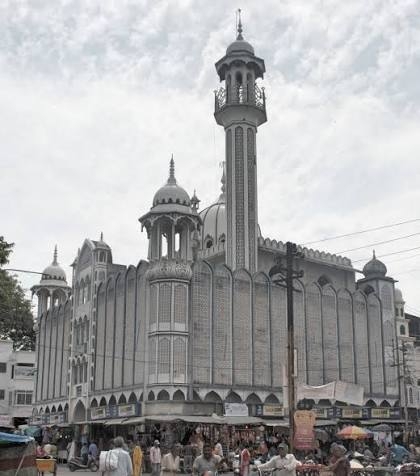
Ujjain has thrown up a very simple question, which nobody should be allowed to bury under the familiar language of communalism, secularism or victimhood. Why should the Shahi Masjid be treated differently? Is a mosque beyond the reach of the law ? The answer is no.
More than 10 temples have already been affected by the road-widening exercise in Ujjain. A mosque has also been affected. Around 80 religious structures across the city have faced action as part of the wider development exercise. The Madhya Pradesh High Court, while dismissing petitions challenging the removal of a portion of the Shahi Masjid, specifically noted that portions of 10 temples and one mosque on the same road had already been removed. It rejected the argument that the mosque was being singled out for discriminatory treatment.
Then comes an even more striking example. Chief Minister Mohan Yadav himself has allowed a portion of his ancestral house to be demolished because it falls within the road alignment. He did not invoke his position as Chief Minister. He did not ask for VIP treatment. He did not say that because the property was emotionally important to him, the development plan should be altered. He picked up a pickaxe and began the demolition himself. So the question naturally arises - if a Chief Minister's ancestral property is not above a public development project, why should a mosque be? If there is a mosque, which is treated as an exception, it is highly condemnable.
The Constitution guarantees freedom of religion. It does not grant immunity from municipal law, property law, road regulations, court orders or legitimate public-interest projects. Article 25 itself is subject to public order, morality and health. Religious freedom cannot logically mean freedom to disregard every other law of the land. And this is precisely where the Ujjain controversy has acquired a larger significance.
The mosque management and local protesters have argued that religious sites should be excluded from the road-widening exercise and questioned why the road cannot instead be widened from the opposite side. Those are legitimate questions to put before the administration and courts. Indeed, legal remedies exist precisely for such disputes but the legal remedy cannot be misused every time. Once the competent court has examined the matter and held that the statutory procedure was followed, the next step cannot be street resistance. It is here that the language of victimhood becomes highly objectionable.
The moment enforcement action touches a Muslim religious structure, the vocabulary changes. A municipal exercise becomes an attack on Muslims. A road-widening project becomes an assault on Islam. Administrative action becomes majoritarianism. And when police are deployed to enforce the law, allegations of “police excess” are immediately brought into the centre of the narrative.
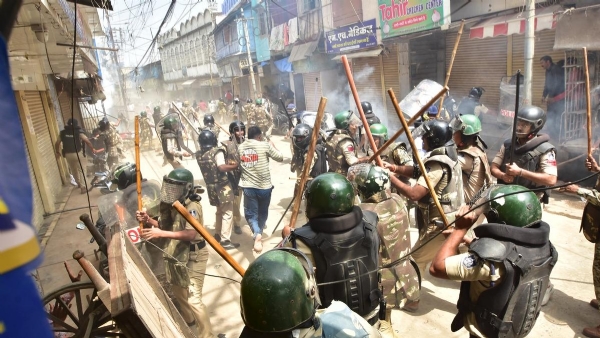
The pattern deserves scrutiny. On Monday, the protest over the proposed removal escalated, with stone-pelting reported and police using tear gas to disperse the crowd. If there was police excess, investigate it. But there is another more important question - who will investigate the conduct of those who resisted the lawful process and allegedly attacked the police? A democracy cannot have selective accountability. Police cannot be expected to enforce the law if every use of force against obstruction is automatically converted into evidence of oppression. At the same time, police action must remain proportionate and lawful.
The same law must govern both sides. This is not merely an Ujjain question. India has repeatedly seen religious constructions become politically untouchable once they acquire sufficient political protection. Encroachment becomes faith. Illegal construction becomes a sentiment. Enforcement becomes persecution. And resistance to enforcement becomes a badge of secularism. That logic is dangerous.
It ultimately tells the administration that the legality of an action depends not on the law but on the religious identity of the structure affected.
That cannot be the meaning of secularism. Secularism cannot mean special treatment for one community. If secularism means equality, then equality must be visible in the application of law. The State cannot discriminate against Muslims.
There is also a larger ideological question that cannot simply be dismissed as communal rhetoric. There are serious debates within Islamic political thought and Muslim-majority societies about the relationship between religious authority, secular constitutionalism, individual rights and democratic law. India should be able to discuss these questions honestly. Indian Muslims are also subject to the same laws. Citizenship brings rights and obligations together.
A mosque cannot demand what a temple cannot demand. A religious trust cannot demand what an ordinary property owner cannot demand. A political leader cannot demand what an ordinary citizen cannot demand. The Shahi Masjid controversy therefore needs to be stripped of its manufactured emotional excess. Investigate the entire matter. Investigate the stone-pelting and obstruction. Take action against anyone found guilty.
But do not create two legal standards—one for ordinary properties and another for religious properties.
The lesson from Ujjain should be brutally simple - Neither faith nor religious identity creates immunity from the law. If more than ten temples have given way, if other religious structures have been affected, and if the Chief Minister himself has surrendered part of his ancestral property, then the demand for a special exemption for the Shahi Masjid requires an answer. Why this exception? And if the answer is that the structure is a mosque, then the country has every right to ask an even more fundamental question - Since when did secularism mean that one religious community gets a veto over the law of the land?
--