Jadavpur: Where Red Is Commended & Saffron Is Condemned
Total Views |


Anandabazar Patrika (ABP) has chosen its words carefully. It called the violence at Jadavpur University “Gerua Gundami” saffron hooliganism. Hooliganism must certainly be condemned. Those responsible should be named and held accountable. But why drag gerua into it? Why make the colour of sanyas, sacrifice and renunciation synonymous with hooliganism? And why does ABP suddenly have such a short memory about Jadavpur University?
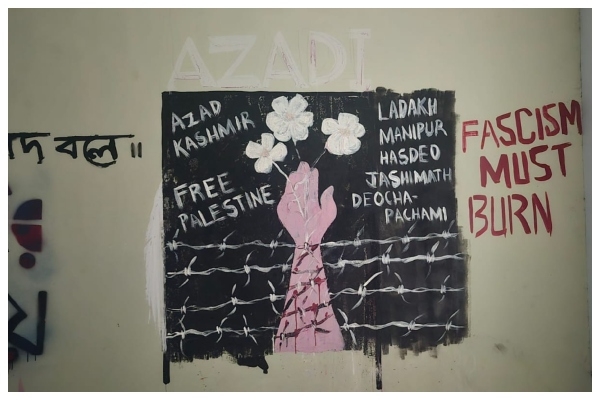
Recent reports from the campus included slogans such as “Kashmir Mange Azaadi” and “Red Salute Kishenji”. The administration subsequently removed controversial graffiti. Kishenji was not a harmless campus mascot; he was a prominent Maoist leader. So where was the outrage when red was being used to glorify a Maoist? Where was “Lal Gundami”? Where was the outrage over the romanticisation of revolutionary violence? This is where ABP’s selective journalism becomes impossible to ignore.
The newspaper is entitled to dislike the BJP. It can criticise Hindutva. It can attack ABVP. That is journalism. But journalism becomes propaganda when one ideology is permanently placed under a microscope while another receives a cultural exemption. Saffron is not the BJP. Red is not merely a colour either. If saffron can be used to identify a political organisation, red can equally identify a political tradition that dominated Bengal’s political and intellectual life for decades.
And Bengal knows what that tradition produced. The Left Front ruled Bengal for 34 years, during which political violence and cadre culture became familiar features of the state’s political vocabulary. Universities were not immune. Mamata Banerjee defeated the left politically, but defeating a party does not automatically dismantle every structure of political patronage and intimidation inherited from its era. Bengal saw another version of the same disease: the flag changed, the patronage changed, but elements of the culture survived.
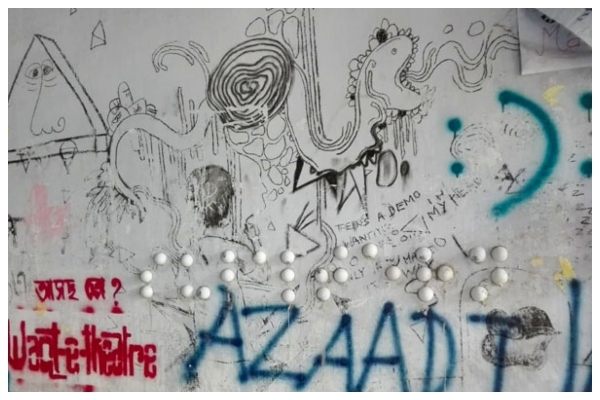
This is where the term “Dimagi Naxal” becomes relevant. A Dimagi Naxal need not carry a gun. He may carry a degree. He may occupy a classroom, write sophisticated essays and speak the language of revolution, freedom and resistance. But the underlying problem is the romanticisation of radical politics and an ideological hostility towards the Indian national idea. Democracy allows dissent; dissent is not a licence to glorify separatism. Academic freedom is not immunity from criticism. Revolutionary rhetoric does not become respectable merely because it is written on a university wall.
That is precisely why ABP’s “Gerua Gundami” headline is revealing. The newspaper saw the saffron shirt. It apparently did not see the larger political history. It saw ABVP. It did not seem equally interested in the radical Left ecosystem that has occupied Jadavpur’s political space for generations. It saw gundami. It did not ask whether there was Dimagi Naxalism behind some of the slogans and symbols.
That is selective outrage. And selective outrage is not journalism’s finest hour. Why is saffron always guilty while red is endlessly explained? Why does the colour of a student’s shirt become the headline while the ideological content of a slogan becomes a footnote? Why is “Kashmir Mange Azaadi” treated as campus expression while saffron politics is reduced to hooliganism? Jadavpur needs ideological cleansing as elements within its campus continue to patronise separatist and radical politics. Bengal needs neither Left-wing gundami nor Right-wing gundami. It needs universities where students debate India rather than dream of dismantling it. And it needs journalism that reports political violence without turning saffron into the criminal and red into the victim.
There is a larger warning here. Jadavpur is already being regarded as another JNU. The parallel is not about academic standards - both are distinguished universities. It is about a campus political culture in which ideological radicalism, confrontational activism and controversial slogans have repeatedly pushed themselves to the centre of public debate. JNU became nationally identified with the “Tukde-Tukde” controversy after 2016; Jadavpur now risks acquiring a similar political identity.
That is a reputation no serious university should want. ABP may call it “Gerua Gundami”. The more accurate description may be ABP’s selective memory and Jadavpur’s unfinished battle with Dimagi Naxalism.
Jadavpur is an institution of enormous academic reputation. But over decades it has also acquired a reputation for aggressive campus politics and radical left activism. Much of this political culture grew during Bengal’s 34 years of Left Front rule. The campus became not merely an academic space but an ideological battlefield. The defeat of the CPI(M) did not automatically end that culture. Political patrons changed; the culture did not disappear.
For fifteen years, the Mamata Banerjee government has had every opportunity to dismantle intimidation and ideological capture from campuses. But Jadavpur has repeatedly remained a centre of political confrontation, with rival student organisations fighting for space and influence. And now we are being asked to believe that the problem begins and ends with saffron.Recent reports from the campus included slogans such as “Kashmir Mange Azaadi” and “Red Salute Kishenji”. The administration subsequently removed controversial graffiti. Kishenji was not a harmless campus mascot; he was a prominent Maoist leader. So where was the outrage when red was being used to glorify a Maoist? Where was “Lal Gundami”? Where was the outrage over the romanticisation of revolutionary violence? This is where ABP’s selective journalism becomes impossible to ignore.
The newspaper is entitled to dislike the BJP. It can criticise Hindutva. It can attack ABVP. That is journalism. But journalism becomes propaganda when one ideology is permanently placed under a microscope while another receives a cultural exemption. Saffron is not the BJP. Red is not merely a colour either. If saffron can be used to identify a political organisation, red can equally identify a political tradition that dominated Bengal’s political and intellectual life for decades.
ALSO READ: MP High Court Hands Gwalior Woman’s Disappearance Case to CBI, Suspects Inter-State Human Trafficking
That is why the Jadavpur story cannot be reduced to one clash between Left and Right. It is the story of a university repeatedly allowed to become a political arena. This is where the expression “Tukde-Tukde mindset” enters the discussion. The term arose from the 2016 JNU controversy, not Jadavpur. But it came to represent a larger phenomenon in which hostility to the Indian state, separatist rhetoric and romanticisation of radical politics could acquire intellectual respectability.
Jadavpur need not formally be called a “Tukde-Tukde gang” to ask whether elements of that mindset have appeared there. When “Kashmir Mange Azaadi” appears on university walls and a Maoist leader receives a “Red Salute”, the country has every right to ask uncomfortable questions.
This is where the term “Dimagi Naxal” becomes relevant. A Dimagi Naxal need not carry a gun. He may carry a degree. He may occupy a classroom, write sophisticated essays and speak the language of revolution, freedom and resistance. But the underlying problem is the romanticisation of radical politics and an ideological hostility towards the Indian national idea. Democracy allows dissent; dissent is not a licence to glorify separatism. Academic freedom is not immunity from criticism. Revolutionary rhetoric does not become respectable merely because it is written on a university wall.
ALSO READ: In Maharashtra, Batata Wada Loses Its Government Job
That is selective outrage. And selective outrage is not journalism’s finest hour. Why is saffron always guilty while red is endlessly explained? Why does the colour of a student’s shirt become the headline while the ideological content of a slogan becomes a footnote? Why is “Kashmir Mange Azaadi” treated as campus expression while saffron politics is reduced to hooliganism? Jadavpur needs ideological cleansing as elements within its campus continue to patronise separatist and radical politics. Bengal needs neither Left-wing gundami nor Right-wing gundami. It needs universities where students debate India rather than dream of dismantling it. And it needs journalism that reports political violence without turning saffron into the criminal and red into the victim.
There is a larger warning here. Jadavpur is already being regarded as another JNU. The parallel is not about academic standards - both are distinguished universities. It is about a campus political culture in which ideological radicalism, confrontational activism and controversial slogans have repeatedly pushed themselves to the centre of public debate. JNU became nationally identified with the “Tukde-Tukde” controversy after 2016; Jadavpur now risks acquiring a similar political identity.
That is a reputation no serious university should want. ABP may call it “Gerua Gundami”. The more accurate description may be ABP’s selective memory and Jadavpur’s unfinished battle with Dimagi Naxalism.