TVK’s U-Turn Government: Who Is Running Tamil Nadu?
Total Views |


The Tamilaga Vettri Kazhagam (TVK) administration is increasingly facing the Opposition’s charge of being a “U-turn government” after reversing five government orders within just four months of assuming office. The latest reversal the withdrawal of its order exempting the Public (Law and Order) Department from the Right to Information Act has once again raised questions over the government’s decision-making process. The issue is not merely why an order was withdrawn, but why such a controversial order was issued in the first place. When a government repeatedly announces decisions and then retreats after criticism, a larger question inevitably arises: on-making.
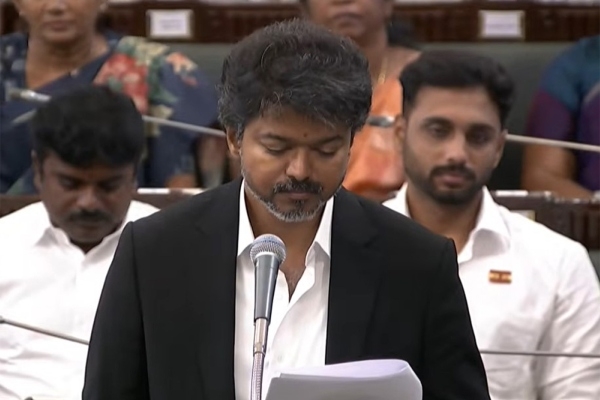
The more uncomfortable question is whether twho is actually driving the administration the political leadership, the bureaucracy, or pressures from outside the government?
The RTI episode is particularly embarrassing because transparency is supposed to be one of the basic tests of democratic governance. The Public (Law and Order) Department deals with matters that directly affect citizens, including police firing, custodial deaths, alleged torture and other sensitive law-and-order issues. The September 21 order sought to classify the department as an “Intelligence and Security Organisation” under Section 24(4) of the RTI Act. Within days, after criticism from political parties, activists and even allies, the government revoked it.
There is nothing inherently wrong with a government correcting an error. In fact, the willingness to reconsider a questionable decision can be a virtue. But five reversals in four months cannot be dismissed merely as routine administrative corrections. At some point, repeated correction begins to raise questions about the quality of the original decisihe political executive exercising adequate control over its own administration.
ALSO READ: FCRA: Congress Must Answer the Nation
The astrologer appointment makes the question even more difficult to ignore. The government had issued an order appointing Radhan Pandit Vettrivel, described as Chief Minister C. Joseph Vijay’s personal astrologer, as an Officer on Special Duty in the Chief Minister’s Office. The order was subsequently withdrawn amid criticism.
That episode was fundamentally different from the RTI controversy, but the political lesson was similar: announce first, face criticism later, withdraw thereafter. The government cannot build administrative credibility through such a cycle.
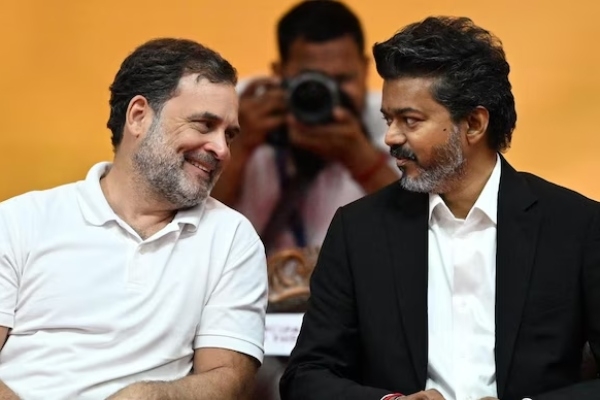
A new administration is entitled to make mistakes. But a government that repeatedly makes decisions without adequately anticipating their political, constitutional and administrative consequences risks creating an impression of improvisation. Governance cannot operate like a trial-and-error exercise in which public criticism becomes the final stage of policy scrutiny.
More importantly, the involvement of alliance partners deserves attention. The RTI decision did not merely invite criticism from the Opposition; sections of the ruling alliance also objected. Congress and other allies questioned the move. That makes the episode more than a routine confrontation between a government and its opponents. It suggests that the administration itself may not have a settled understanding of the political boundaries within which it is expected to function. And this is where the question of outside influence inevitably enters the political discussion.
ALSO READ; Woman Alleges Identity Concealment, Sexual Assault and Pressure to Convert in Madhya Pradesh
The legitimate question is not whether one particular community or organisation is secretly running the government. The legitimate question is much broader: does the elected political leadership have a clear policy direction of its own, or is it governing reactively under pressure from bureaucrats, allies, activists and organised interest groups? That distinction matters.
Vijay came to power promising a different political culture. The expectation surrounding a new political formation was that it would bring a new style of governance. But a new political party cannot become an alternative merely by changing the occupants of power. It must demonstrate that its administration can take considered decisions, defend them with reason and, when necessary, correct them transparently.
The RTI episode also deserves a straightforward explanation from the government. Why was the Public (Law and Order) Department sought to be brought under the special exemption? What was the precise administrative rationale? Who proposed it? Who approved it? Why was it necessary? And why was the government unable to anticipate the obvious transparency concerns before issuing the order?
The withdrawal answers only one question: the government realised that the decision had become politically untenable. It does not answer the more important question of how the decision became government policy in the first place. That is the real meaning of the “U-turn government” charge.
A government can survive one embarrassing reversal. It can explain away for a second. But when reversals become a pattern, they begin to say something about the system behind the decisions. The danger is not simply political embarrassment. It is the erosion of administrative authority.
Vijay's government therefore needs to move beyond explanations after controversy. It needs to demonstrate that decisions are made after proper scrutiny, that the political executive knows what it is approving, that bureaucracy remains accountable to elected authority, and that outside pressure does not substitute for coherent governance. A government cannot claim to represent change if it keeps changing its own decisions under pressure. The people did not elect a government to issue orders, face protests and withdraw them. They elected it to govern.