ISRO's EOS-05: A Watcher That Never Blinks
EOS-05 sits much higher up. It is about 36,000 kilometres above earth. At that height, it moves at the same speed the earth spins.
Total Views |


It was still dark on Thursday morning. At 2:55 am, a GSLV rocket lifted off from Sriharikota. Most of the country was asleep. They woke up to the news later. That is how it usually goes with ISRO launches now. They feel routine. But this one was not routine. What went up that night was EOS-05, and it is not just another satellite.
Eighteen minutes after liftoff, the satellite reached its orbit. ISRO chairman V. Narayanan sounded relieved. He told reporters the rocket had placed the satellite exactly where it needed to be. This was the 107th launch from Sriharikota. It was the 19th flight of the GSLV rocket. By weight, it was the heaviest thing this rocket has ever carried. That number matters. Behind it is a rocket that failed at this exact job twice before. ISRO had every reason to feel nervous walking into Thursday night.
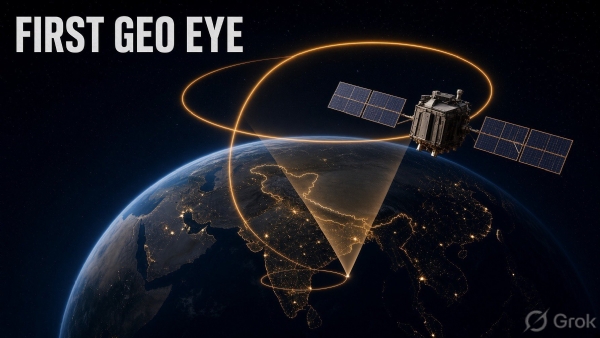
Here is the part that really explains why EOS-05 matters. It is not just about the camera. It is about where the satellite sits. Most of India's earth-watching satellites orbit a few hundred kilometres above us. They move fast. They go around the planet in about ninety minutes. That means they see any one place for just a few minutes. Then they are gone for days. It is like having someone check on your garden once a week instead of every day.
EOS-05 sits much higher up. It is about 36,000 kilometres above earth. At that height, it moves at the same speed the earth spins. So from down here, it never seems to move. It just stays over the same stretch of land. All the time. Not once a week. Not for ten minutes. It is built to stay there for ten years.
Why should this matter to a normal reader? Because a satellite that can look at the same spot again and again is a very different tool. It can check a chosen spot every five to ten minutes. It can scan the whole Indian landmass in about half an hour. It carries a strong telescope. The telescope gives it 42-metre resolution. This is said to be the sharpest camera flown this far from earth. It also carries special sensors. These sensors read light in hundreds of narrow bands. Most cameras cannot do this. It lets the satellite study things a normal photo cannot show. It can check soil moisture. It can check crop stress. It can spot dry patches before they turn into a real drought.
This kind of watching has real, everyday uses. Think about a cyclone building up over the Bay of Bengal. Right now, weather teams get updates every few hours from satellites passing overhead. With EOS-05 watching the same spot all the time, they can track a storm as it grows, almost minute by minute. That extra warning time can mean people get evacuated sooner. It can mean fishermen get called back before the sea turns bad. The same goes for forest fires. A fire that starts small in a remote forest can be spotted early, before it spreads across a whole district. Farmers and scientists will also use this satellite to study soil health and crop stress over huge areas, something that used to take much longer with satellites that only pass by once in a while.
This idea is not new, by the way. ISRO first planned a satellite like this back in 2012. The goal was simple even then. Build a satellite that sits still in the sky and watches the same ground all day, every day. It took fourteen years, one lost satellite, and a lot of patience to finally get here.
Now, here is a part ISRO does not talk about much. EOS-05 had an earlier version. It was called GISAT-1. That satellite never reached space. In August 2021, its rocket's cryogenic stage failed to fire. This happened 307 seconds after launch. The satellite was lost. That failure stayed with ISRO for five years.
It was not even the last failure. Just seven months before this launch, in January, another ISRO rocket failed during its third stage, and the satellite on board never made it to orbit either. That failure grounded an entire rocket fleet for months and left ISRO without a successful launch for a long stretch.
So when EOS-05 reached orbit cleanly this week, it meant more than just a successful launch. It carried more weight than the GSLV had ever carried before. It answered a question that had been sitting with ISRO since the start of the year. Did the fixes actually work? This time, the answer was yes.
There is a bigger point here too. Every part of this satellite was built in India. The telescope. The sensors. The satellite body. The rocket that carried it. All of it was made here, through five years that included setbacks and failed missions along the way. A country in a rush might have simply bought this kind of technology from someone else.
ISRO did not take that shortcut. It kept fixing the rocket instead, mission after mission, until it finally worked. That is the quiet version of self-reliance. It does not come with slogans. It comes with years of failed tests and second attempts that nobody claps for until they finally succeed.
Over the next ten years, this satellite will do most of its work without much noise. It will track storms as they form over the sea. It will catch forest fires early, before they turn into disasters. It will help scientists check soil health and crop conditions in places most of us will never visit. None of this will make daily headlines. But it will quietly save time, money, and in some cases, lives.
Was the long wait worth it? That is a fair que
stion. It deserves an honest answer, not just applause. Building something like this from scratch, and getting it wrong twice before