Why Krishna’s Janmashtami is celebrated at Shiva temples in Goa
That continuity is perhaps the most remarkable part of the story.
NewsBharati 05-Sep-2026 13:08:12 PM
Total Views |


Across Bharat, Gokulashtami or Krishna Janmashtami is associated with the birth of Sri Krishna, the eighth avatar of Lord Vishnu. Devotees fast through the day, sing bhajans, recount Krishna’s childhood stories and gather at temples to celebrate his birth at midnight. In many parts of the country, the festival is inseparable from images of Bal Krishna, the sound of devotional music and the breaking of the dahi handi.
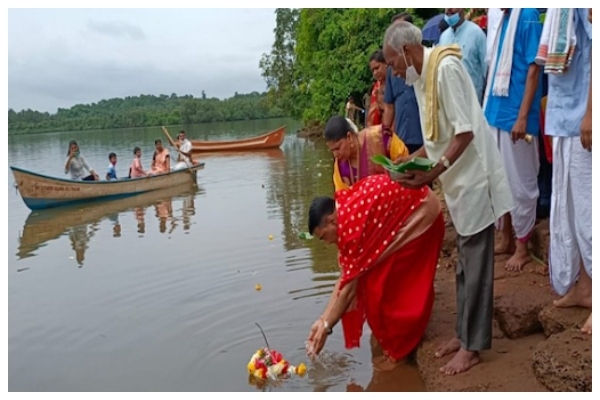
Goa Chief Minister Pramod Sawant and his wife Sulakshana perform traditional Janmashtami rituals at the holy Triveni Sangam and sacred Tirtha site in Narve. Pic Credit: GoaNews
But Goa preserves a remarkable tradition that adds an entirely different dimension to Gokulashtami.
In the villages of Narve in Bicholim and Opa-Khandepar in Ponda, Gokulashtami is associated with Saptakoteshwar, a form of Lord Shiva. At Narve, the festival is considered the most important annual celebration of the temple, even surpassing the prominence normally associated with Maha Shivaratri. Goa Tourism itself records that Gokulashtami is celebrated here because the day is traditionally believed to mark Shiva’s manifestation as Saptakoteshwar.
The story goes back to an ancient sacred landscape and the legend of the Saptarishis.
According to the Sthala Purana associated with Saptakoteshwar, seven sages performed intense tapasya to please Lord Shiva at a sacred confluence of rivers. Their penance continued for seven crore years. Pleased by their unwavering devotion, Shiva appeared before them and granted their wish that he remain at the sacred spot for the benefit of devotees. He manifested as Saptakoteshwar, the Lord associated with the seven crores.
This ancient legend explains the extraordinary connection between Gokulashtami and the Shaiva shrine. The day celebrated across Bharat as the birth of Krishna is, in the Saptakoteshwar tradition, also the day of Shiva’s manifestation in this particular form. Thus, a festival generally identified with Vaishnavism becomes one of the grandest occasions in a major Shaiva temple.
A sacred meeting of Hari and Hara
The deeper significance of the tradition lies in what it says about the religious culture of Goa.
The Saptakoteshwar tradition does not create a sharp boundary between Vishnu and Shiva. Instead, it brings the two streams of devotion together. The University of Goa’s research on the ancient Saptakoteshwar shrine at Opa notes that the Saptakoteshwar linga was understood as embodying not only Shiva but also Vishnu, Brahma and Bhairava a striking expression of the idea of Hari-Hara.
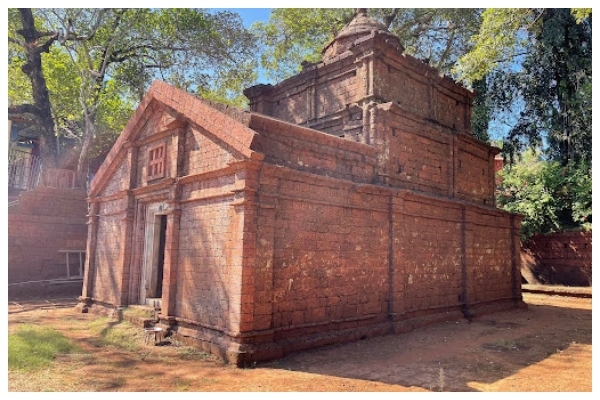
Saptakoteshwar temple at Khandepar, Ponda
At Opa-Khandepar, this symbolism becomes particularly visible. The ancient Saptakoteshwar temple stands on the banks of the Khandepar river, while the temple complex also contains shrines dedicated to other deities, including Keshava. Research from the University of Goa records that devotees consider bathing in the Khandepar river on Gokulashtami especially auspicious.
The result is a living example of the inclusive devotional traditions of Sanatana Dharma: the devotee may approach the Divine through Shiva or Vishnu, but devotion itself remains the central bond.
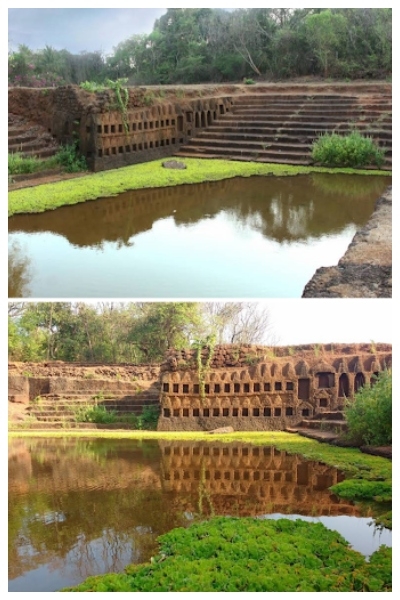
Ruins of Saptakoteshwar temple at Divar
From Divar to Narve
The story of Saptakoteshwar is also inseparable from Goa’s turbulent history.
The original shrine was located on Divar Island, historically known as Diwadi or Deepavati. The temple was associated with the Kadamba rulers, whose coins and inscriptions bear references to Saptakoteshwar. Historical and archaeological studies place the temple within Goa’s medieval Shaiva tradition.
Divar and Narve were once part of an important pilgrimage landscape. Koti Tirth, with its sacred tank and 108 devakoshtas or shrine niches, remains evidence of the religious importance of the region. Recent archaeological work at the old temple site has unearthed stone remains believed to date from the 14th to 16th centuries, providing fresh evidence of the ancient sacred complex.
The temple suffered destruction during successive political upheavals. The Saptakoteshwar linga was removed during the Portuguese period and eventually brought across the river to the Bicholim region. The present temple at Narve was rebuilt under the patronage of Chhatrapati Shivaji Maharaj in 1668. A Sanskrit Nagari inscription at the temple records the date associated with its reconstruction.
Yet the physical destruction of the old shrine did not erase its festival or its memory. Gokulashtami survived.
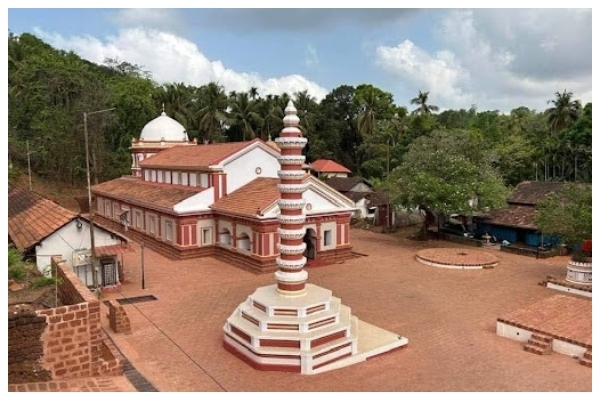
The Saptakoteshwar Temple, reconstructed by Chhatrapati Shivaji Maharaj at Narve in Bicholim taluka of Goa
A festival that carries memory
At Narve, Gokulashtami became more than a celebration of Krishna’s birth. It became a pilgrimage that carried forward the memory of an ancient sacred centre.
Historical accounts of the Narve Ashtami celebration describe devotees gathering near the Panchganga or Mandovi river, taking ritual baths, offering prayers and participating in the Ashtami feast. Processions of village deities, religious rituals and a large fair turn the occasion into a community-wide celebration.
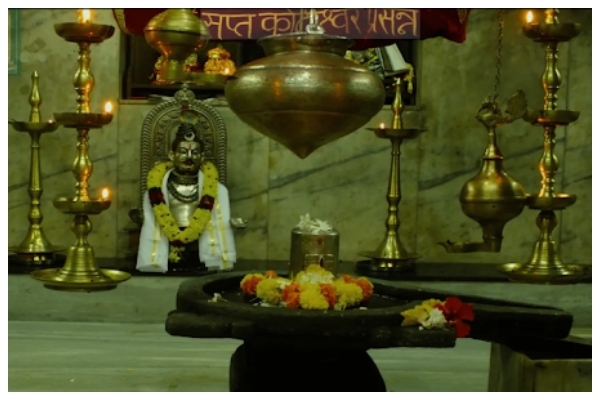
The sanctum of Saptakoteshwar temple in Narve, Goa
That continuity is perhaps the most remarkable part of the story.
A festival associated nationally with Krishna survives in Goa in a Shiva temple because, in the sacred geography and memory of Saptakoteshwar, the same day carries another meaning. Krishna and Shiva do not compete for the devotee’s reverence. The traditions meet.
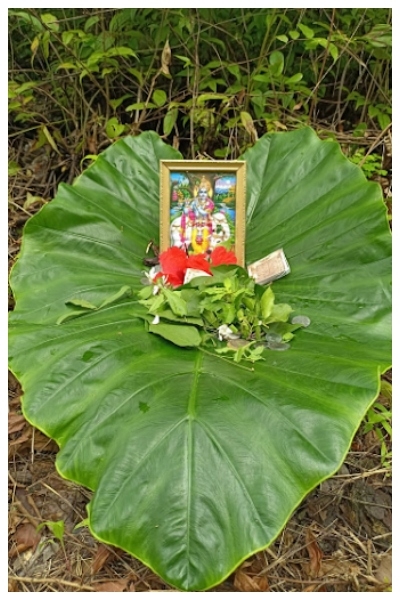
People’s celebration of Gokulashtami in Narve
And every year, when devotees gather at Narve and Khandepar on Gokulashtami, they continue a tradition in which Krishna’s Ashtami and Shiva’s Saptakoteshwar meet on the same sacred day.
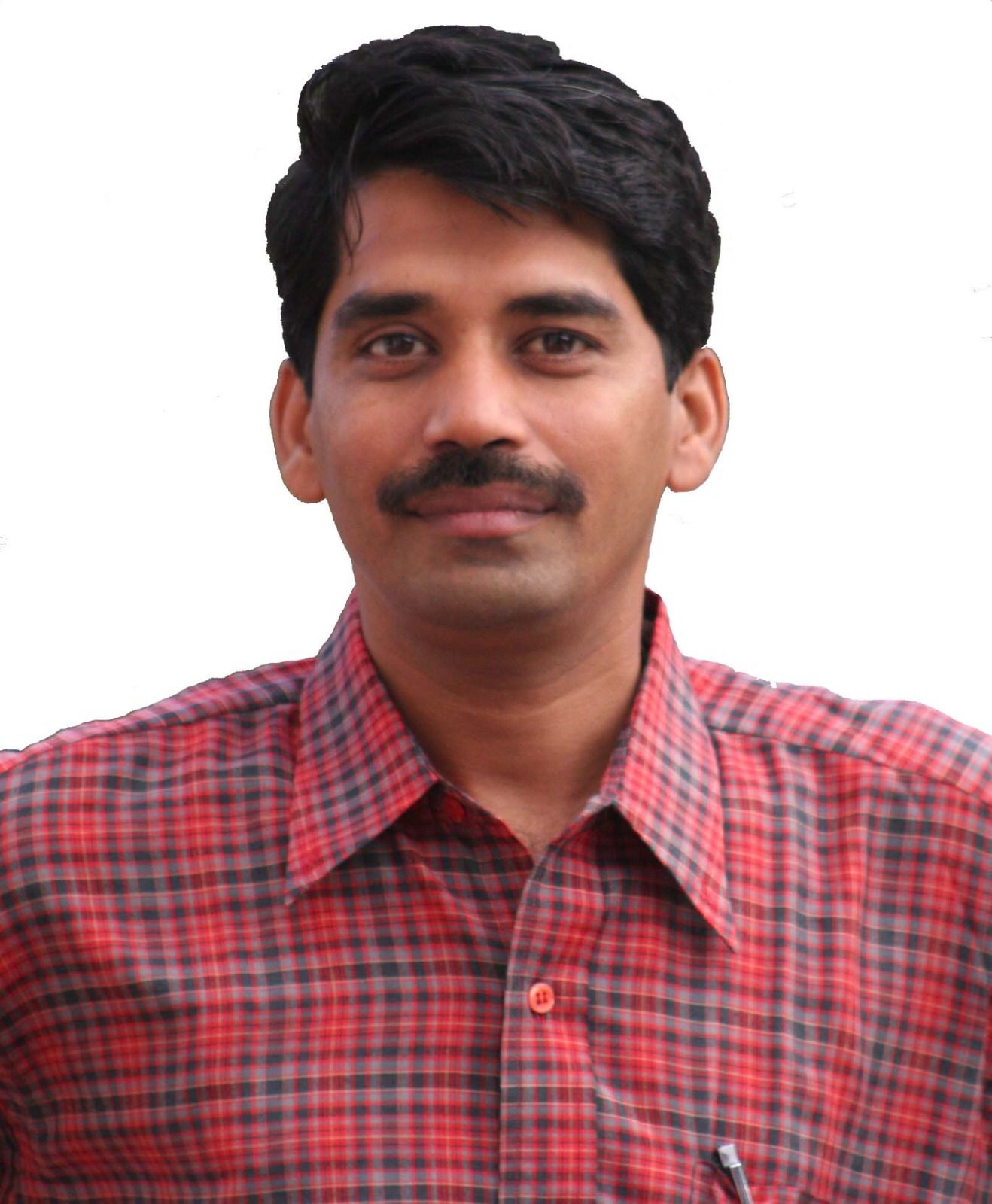
Rajesh Korde
Journalist having more than three decades of experience with many newspapers in Goa, Pune, Karnavati (Ahmedabad) and Abu Dhabi (UAE). A visting faculty at many Journalism Schools, is now pursuing third Masters – MA in Indology. Also an avid traveller and a photographer