Adhikari's decisive action! West Bengal takes legal affirmation to shield women from Child Marriage
Murshidabad, a Muslim-majority district, has emerged as a particular focus of the government"s crackdown. Adhikari has said that approximately 12,000 child marriages took place in the district over the past six months.
Total Views |


Kolkata, Sep 8: West Bengal has launched a major crackdown on child marriage and teenage pregnancies, with Chief Minister Suvendu Adhikari warning that those involved in marrying minors will face stringent legal action and could lose access to government welfare benefits.
The announcement comes against the backdrop of alarming figures of child marriage from the state. West Bengal has emerged as a national hotspot for teenage marriage and teenage pregnancies, according to data cited by the Chief Minister. The state government has said that around 60,000 institutional deliveries involving teenage girls were recorded over the past six months, with Murshidabad accounting for roughly 13,000 teenage deliveries.
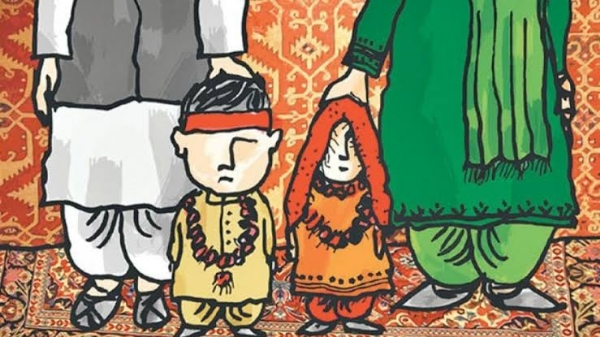
Murshidabad, a Muslim-majority district, has emerged as a particular focus of the government's crackdown. Adhikari has said that approximately 12,000 child marriages took place in the district over the past six months. The scale of the figure has put the spotlight on the need for much stricter enforcement of India's child-protection laws.
The government's message is particularly significant on the question of personal law. Authorities have made it clear that Muslim Personal Law cannot be invoked as an exemption from the Protection of Children from Sexual Offences (POCSO) Act. Recent judicial rulings have likewise reinforced that marriage cannot be used as a legal shield where a person below 18 is involved in sexual relations. The Kerala High Court, for instance, recently held that a minor wife remains protected under POCSO, irrespective of the personal law argument advanced by the accused.
Under the proposed enforcement drive, men involved in child marriages could face arrest and criminal proceedings, while husbands may be required to establish that their wives were above the legal age of marriage. The government has also indicated that people involved in child marriages could be excluded from government welfare benefits.
The move represents a significant shift from treating child marriage primarily as a social problem to treating it as a matter of enforceable law. India's Prohibition of Child Marriage Act fixes the minimum marriageable age at 18 for women and 21 for men, while POCSO provides protection to children below 18 from sexual offences. West Bengal's own Kanyashree programme also explicitly recognises delaying marriage until at least 18 as a central objective.
The demographic significance of the crackdown cannot be ignored. With Murshidabad reporting exceptionally high numbers and a substantial share of teenage pregnancies in West Bengal reportedly involving Muslim adolescents, the government's insistence that statutory child-protection laws apply uniformly sends a clear message: no community, custom or personal-law claim can override the protection owed to a child.